
Historic Centre of Florence
By Cindy Carlsson
What is the Historic Centre of Florence?
The Historic Centre of Florence World Heritage site includes nearly two square miles (505 ha) within the remains of the city’s 14th-century walls. Today, the area still retains much of the street layout, architecture, and even the artwork created here under the Medici family’s rule during the 15th and 16th centuries and earlier. The UNESCO site includes important museums, as well as historic churches, palaces, bridges, fountains, gates, and commercial areas.
Disclosure: This article contains affiliate links. Making a purchase through an affiliate link will mean a small commission for this website. This will not affect your price. Privacy policy.
Why is the Historic Centre of Florence a UNESCO World Heritage site?
Florence is a World Heritage Site for both its well-preserved built environment and its role in the development of European architecture, intellectual thought, and the fine arts – particularly during the Italian Renaissance. It’s the city at the heart of the Renaissance, filled with dramatic buildings and elaborate art. So much so that UNESCO gets a bit overwrought describing its artistry: “The urban complex of Florence is in itself a unique artistic realization, an absolute chef-d’œuvre, the fruit of continuous creation over more than six centuries.“
What can you expect on a visit to Florence’s Historic Center?
Let’s just get it out there: expect crowds. Florence is one of the most over-touristed cities in Europe, so you are unlikely to end up visiting when no one else is there. But don’t let that stop you. Book museums, tower climbs, and tours well in advance, then plan to spend the rest of your time just wandering.
The Renaissance is usually seen as beginning in Florence with a virtual explosion of art, architecture, science, and intellectual exchange. And that period of time can be seen in the art and architecture that surrounds you as you explore the city.
Amid the tourist crowds it may be hard to imagine Michelangelo, da Vinci, Dante, or Galileo walking these streets. But look beyond the crowds. Many streets have changed relatively little since the days when the Medici family was funding an artistic and intellectual revolution that brought Europe out of the Middle Ages.
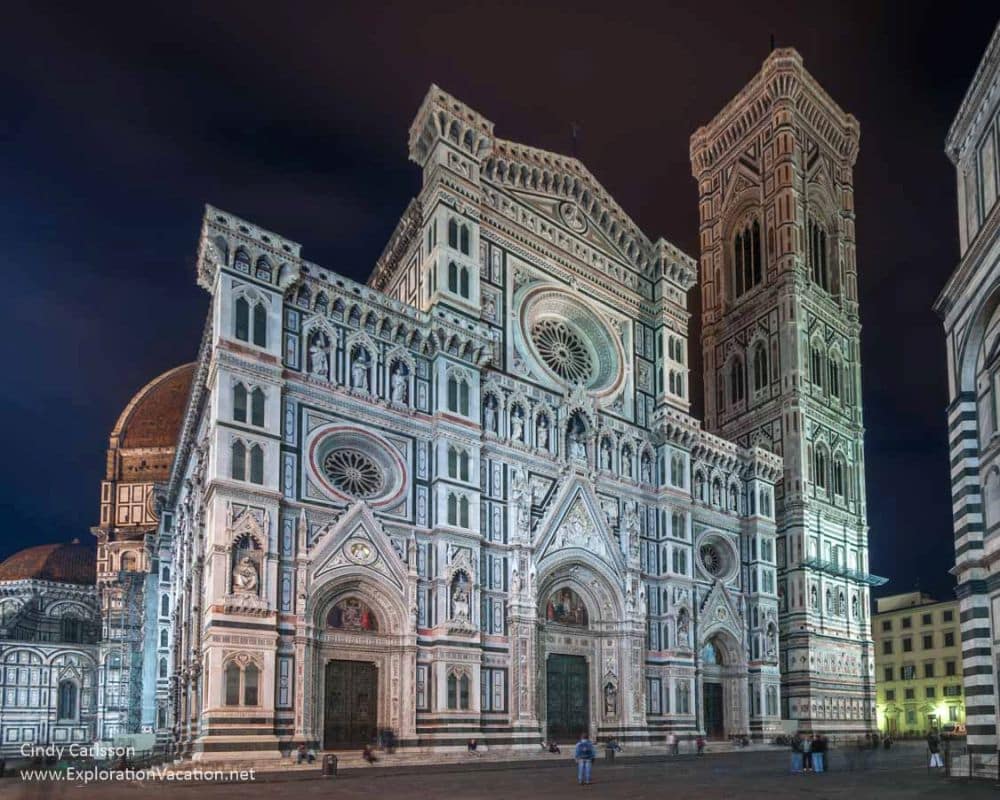
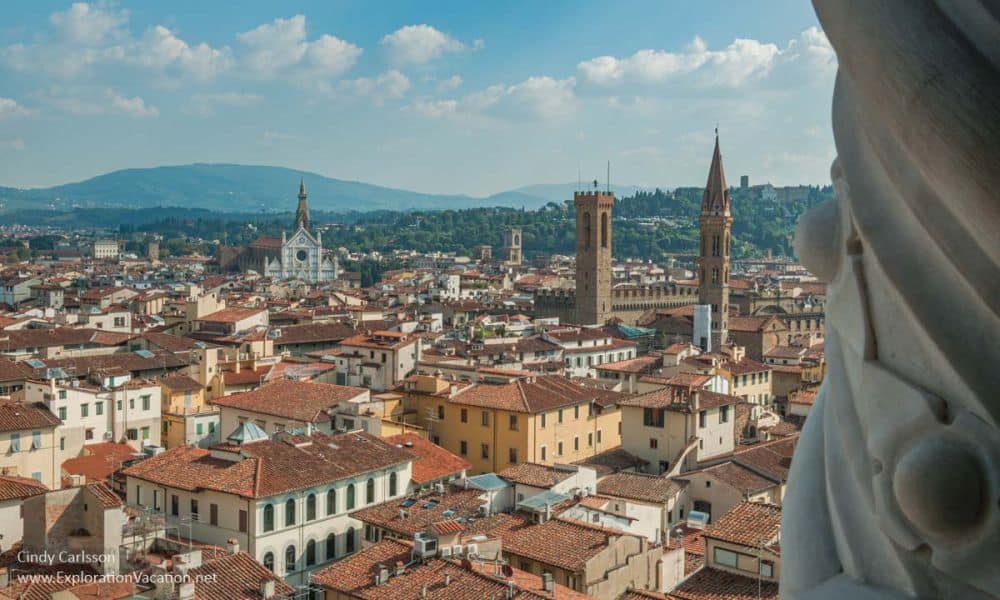
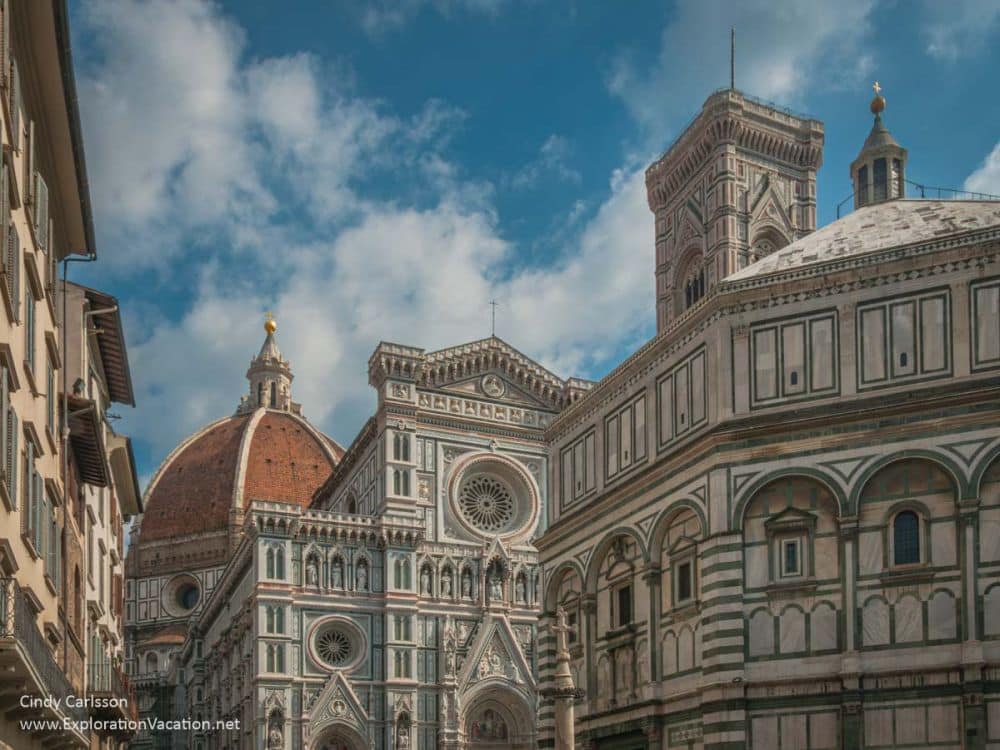
Whether you want to hit the tourist highlights or seek out the city’s hidden treasures, this is a city for walking. Wander the heart of the city, where you’ll find many of the best-known architectural highlights, including the Duomo a.k.a. the Cathedral of Santa Maria del Fiore, with its distinctive brick dome. You can just gawk at Giotto’s bell tower or climb to the top for wonderful views of the city. And, while you’re here, don’t miss the Baptistery of San Giovanni. Pre-book tickets to the Duomo, the bell tower and the baptistery.
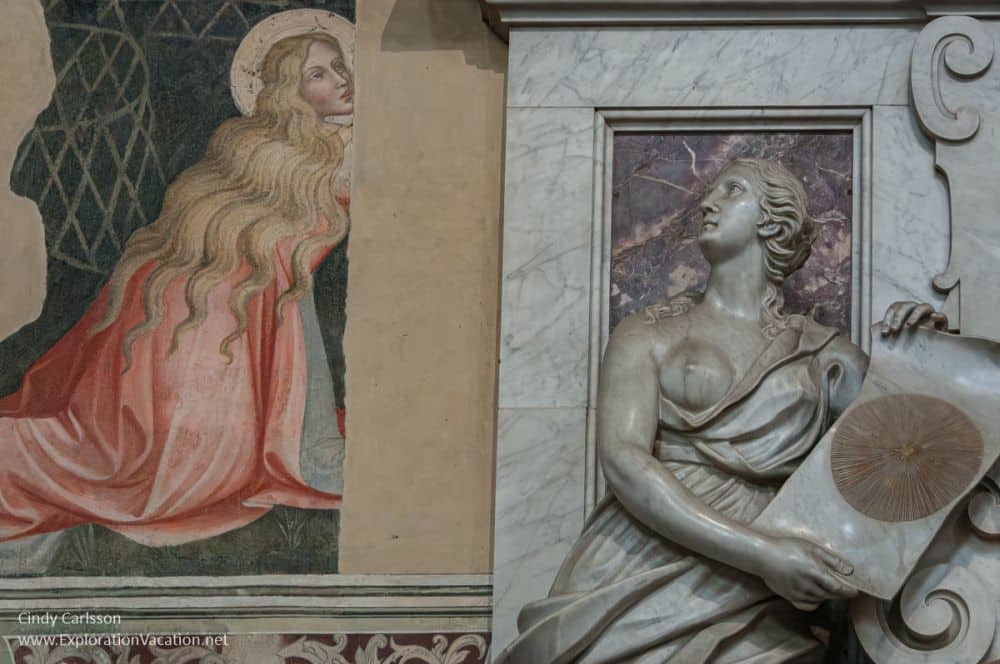
The Cathedral is large, but rather plain inside. So you might want to head over to the nearby Basilica of Santa Croce. There you’ll find the fancy tombs of Florence’s Renaissance elite, including those of Michelangelo and Galileo. Tickets for the Basilica of Santa Croce.
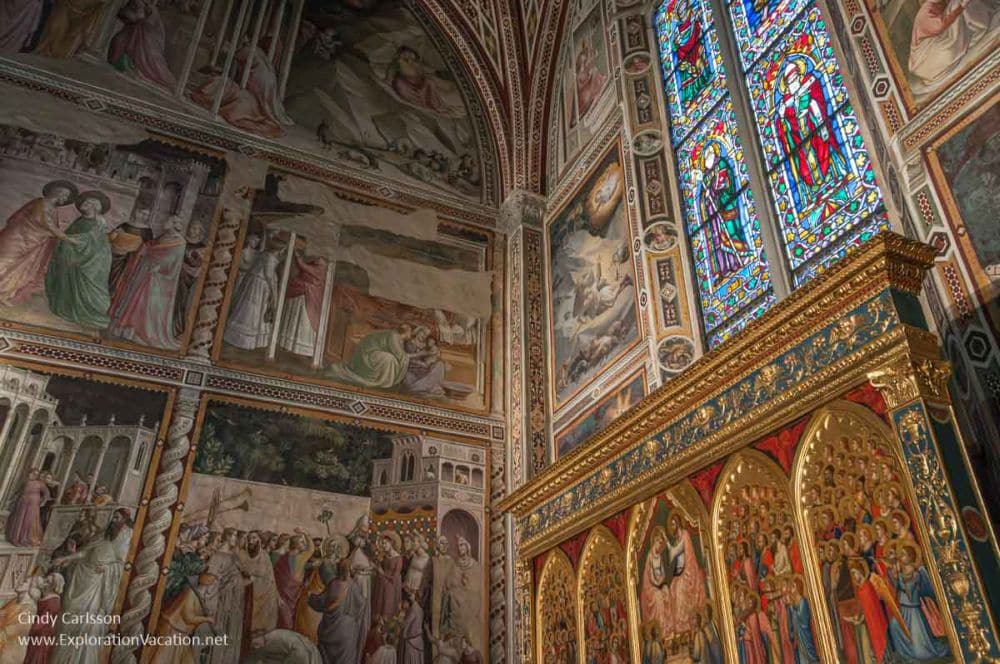
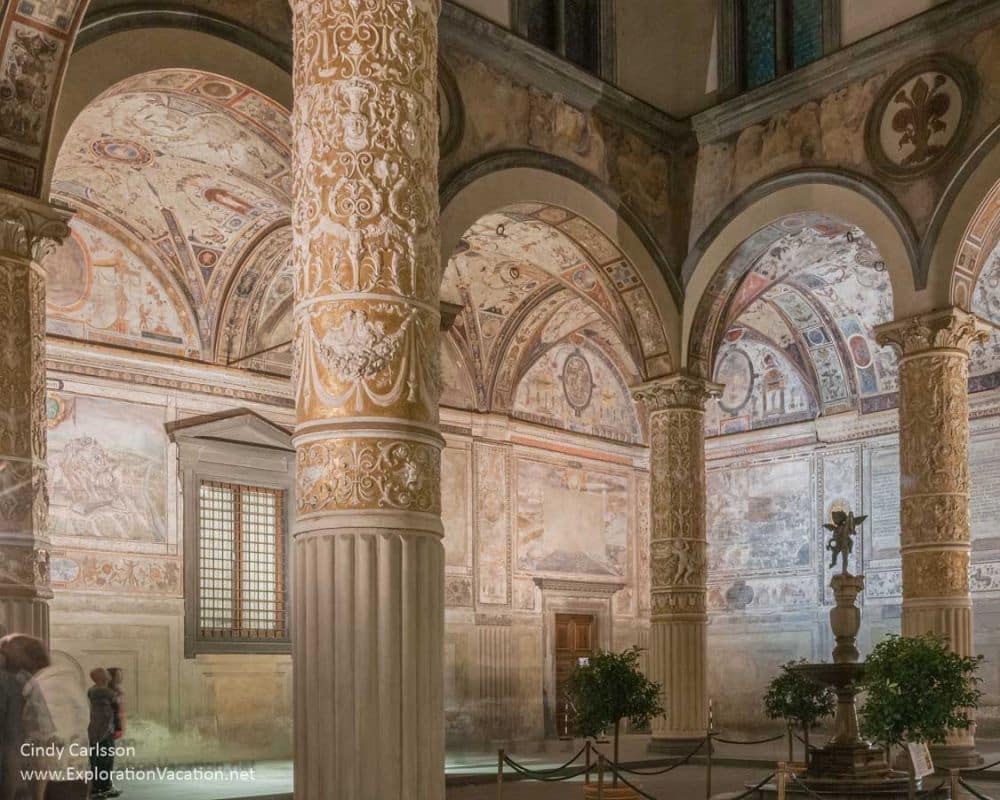
And be sure to book a tour of the impressive Palazzo Vecchio, Florence’s city hall. But stop by again after dark too. That’s when both the city hall’s gorgeous courtyard and the nearly-adjoining Loggia dei Lanzi open-air sculpture gallery are at their most atmospheric and least crowded.
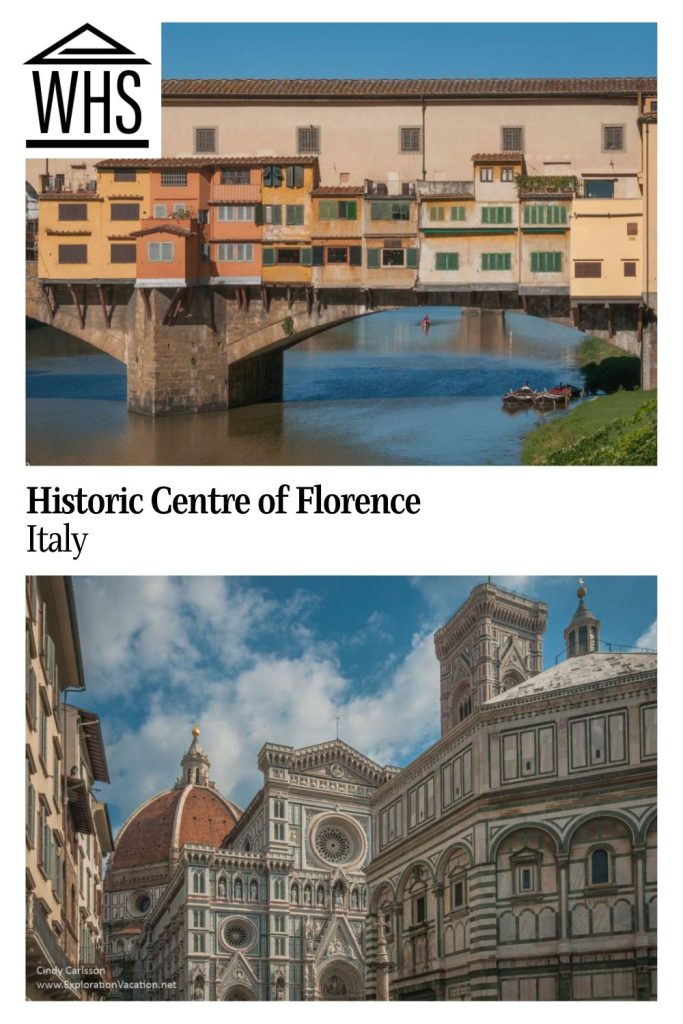
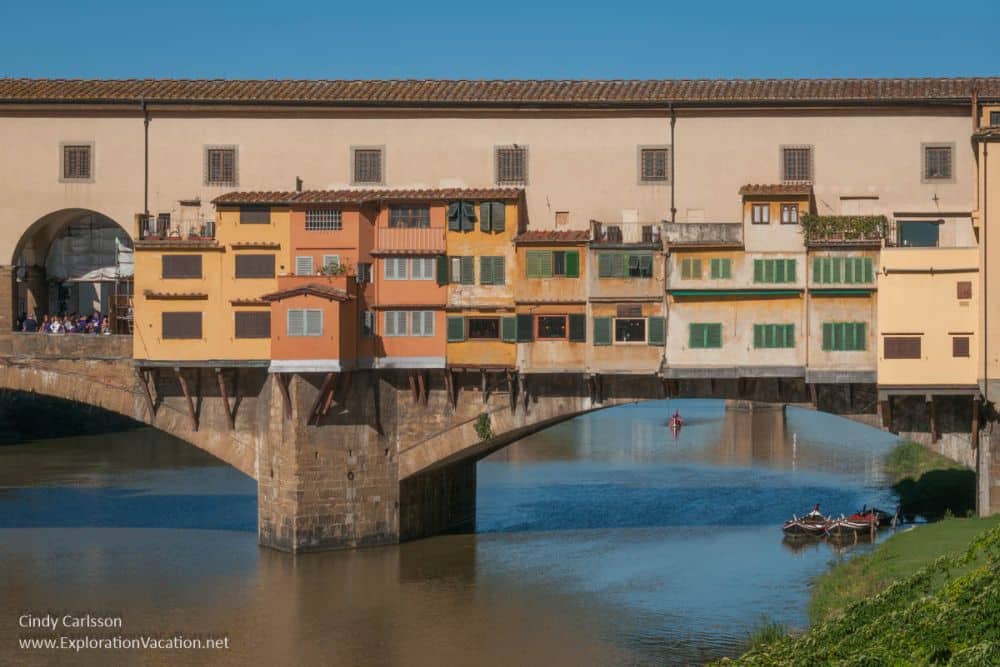
The Ponte Vecchio Bridge is on most must-see lists. It’s cool because it is the oldest bridge in the city and dates back to the 14th century. It also has an unusual central piazza with fine views over the Arno River. However, shop space on the bridge has been dedicated to goldsmiths and jewelry shops since the 16th century, so most of the bridge is a jewelry-shop-lined alley. That means you might find the bridge more interesting if viewed from a distance!
Need a break from all that art and architecture? Visit Boboli Gardens at the Pitti Palace. Book tickets for both ahead of time or sign up for a guided tour. Or maybe explore some of Florence’s shops featuring high-quality handmade leather goods, fashion, ceramics, and art of all types. Or just get lost in one of the city’s historic neighborhoods for a while.
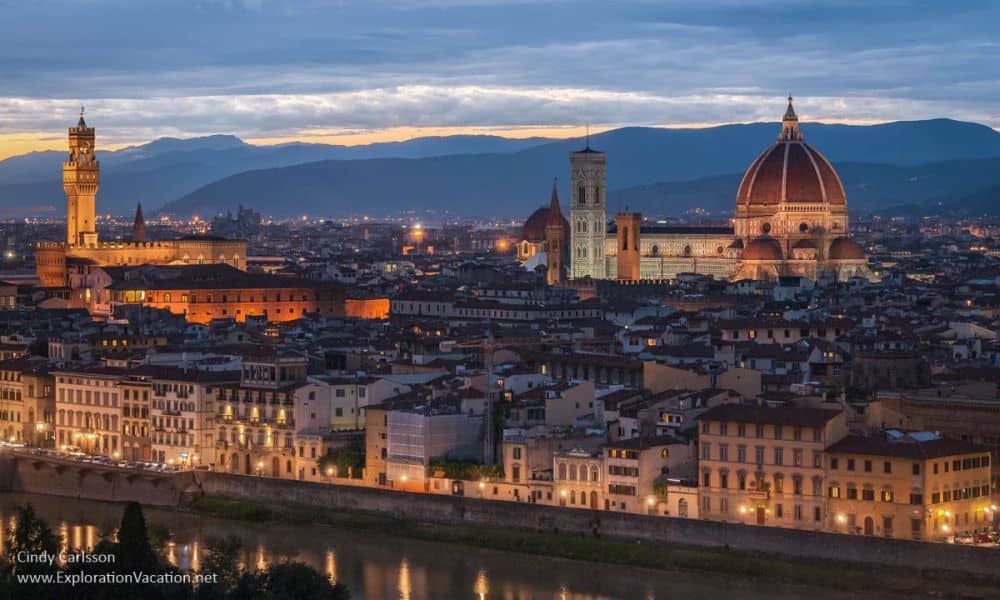
Evening was my favorite time in the city. Not only are there fewer tourists out, but the fading sun combines with the city lights to turn it into a magical place. Yes, there will still be crowds at Piazzale Michelangelo, but the view over the city as night falls can’t be beat.
Is Florence worth visiting? And what sorts of travelers would like Florence?
If you love Italian Renaissance art and architecture, Florence is worth traveling a very long way to visit. And give yourself at least three days in the city. The amount and quality of art and architecture you will see is stunning. It seems like every church, palace, and mansion is an architectural masterpiece filled with artistic masterpieces. And, of course, the city’s great museums like the Uffizi and the Accademia Gallery, home to Michelangelo’s David, are packed with works by the stars of the Italian Renaissance. Book Uffizi Galleries tickets here and Accademia Gallery tickets here.
It’s easy to feel overwhelmed in Florence. Give yourself time to absorb it all.
If you are fascinated by the Medici family, take a few days to search out connections to the powerful family that funded the Italian Renaissance.
Even if the art and architecture of the Italian Renaissance isn’t really your thing, Florence is an amazing city. If you are in the area and want to see Florence, skip the Uffizi. Instead, spend a couple of days exploring beyond the main tourist sites. Maybe visit the Galileo Museum (Book tickets here) or a medieval site, or spend an afternoon learning a traditional craft or cooking a local specialty.
However, if you only have one day and you are traveling during peak season, Florence may not be worth the crowds unless there is something you really, really want to see and this is your only opportunity.
In that case, determine in advance the one or two things you most want to see and the best way to do that with minimal crowds. If your must-sees are the same as everyone else’s (the Uffizi, the Duomo, Michelangelo’s David, etc.), add or substitute a sight or part of the city that isn’t on most tourist “must-see” lists. That will allow you to experience a bit of the city’s magic with less of the frustration and tension that crowds bring.
Tips for visiting the Historic Centre of Florence
Do your research well in advance. Many museums, iconic sites, tower and dome viewpoints, and even gardens require an advance booking. Sometimes you can get a last-minute booking through third party tour companies, but don’t count on it.
If you want to spend your time mostly admiring Italian Renaissance art or prowling around in museums, consider a winter visit. The weather can be cold, but nothing is likely to be really crowded.
At any time of year, you’ll have fewer crowds first thing in the morning or late in the afternoon/evening when day trippers and many tour groups have moved on. Find accommodations in the historic centre so you can easily enjoy the evenings and/or early mornings.
If you want to see lots of museums in a short time, it might be worthwhile to buy a FirenzeCard. It allows access to all of Florence’s approximately 60 museums for 72 hours. You would still need to make reservations for the Uffizi Galleries and the Accademia Gallery, but the card includes them in the package.
Don’t follow Google maps as you wander the city unless you want to be part of the tourist crowd. Google won’t take you past the most interesting sights or coolest local shops and restaurants between you and your destination. Instead, it will take you on the most traveled, fastest route … along with everyone else.
Florence gets very hot during the summer. Be prepared for the sun and plan indoor activities for mid-day when the heat is the most intense.
Wear good shoes. You will do a lot of standing and walking, often on cobblestones.
Florence has long been noted as a great food city, and I had one of my best meals ever here. But with more tourists and fewer residents, there are fewer really wonderful local restaurants. Do some research to find them or book a food tour that will introduce you to a few.
If you have four days or more, consider a day trip to explore more of the Tuscan countryside. (We did a Chianti wine tour that included some interesting sites and a little Medici history along with our wine tastings.) You can even make a quick visit to a World Heritage Site, including one or more of the Medici villas and gardens, the historic center of San Gimignano, the Piazza del Duomo in Pisa (also very crowded), the spa town of Montecatini Terme, Bologna, or Siena. While you can, theoretically, take a day trip to many other World Heritage Sites from Florence, most deserve far more time than the few hours you could give them traveling from Florence for a day.
Where is Florence?
Florence (Firenze) is located in Tuscany (Toscana) in central Italy.
You can fly directly into Florence’s Peretola International Airport (FLR) from a number of cities in Italy, many regions in Europe, or on a connecting flight from pretty much anywhere in the world. That’s especially true during the summer travel season.
But you are probably more likely to travel to Florence from Rome or other cities in Italy. And, for that, the train is often both the fastest and cheapest way to travel.
Travel time from central Rome is well under 2 hours by train. From Rome’s Fiumicino airport (FCO), you can take the train to Rome’s central terminal and transfer there to get to Florence. Use Omio to plan your train travel and book tickets.
You generally will not want a car in Florence. If you do have a car, plan to park on the edge of the city and just leave it there during your visit. If you drive into the historic city center, you’ll receive a fine – possibly many months later – for entering the Limited Traffic Zone (ZTL). Some hotels within the center can add your license plate number to a “white list.” That will give you enough time to drive in and park in their lot or to drop your luggage and drive back out. Parking garages can do the same, but you have to reserve a space ahead of time. You’re better off not driving here; walk or take a bus or taxi instead.
Want to drive into the Tuscan countryside? Rent a car for the day, book a tour or hire a driver. Visiting Florence as part of a central Italy road trip with a rental car? Consider starting your road trip when you leave Florence – rental car companies inside the ZTL can also add you to the “white list” to drive out of the zone – and ending it when you drop your car at the airport in your departure city at the end of your trip.
For more information about the Historic Center of Florence, see Florence’s official tourism website.
Have you been to Florence? If so, do you have any additional information or advice about this UNESCO World Heritage site? Please add your comments below!