
Historic Centre of Siena
By Cindy Carlsson
What is the Historic Center of Siena?
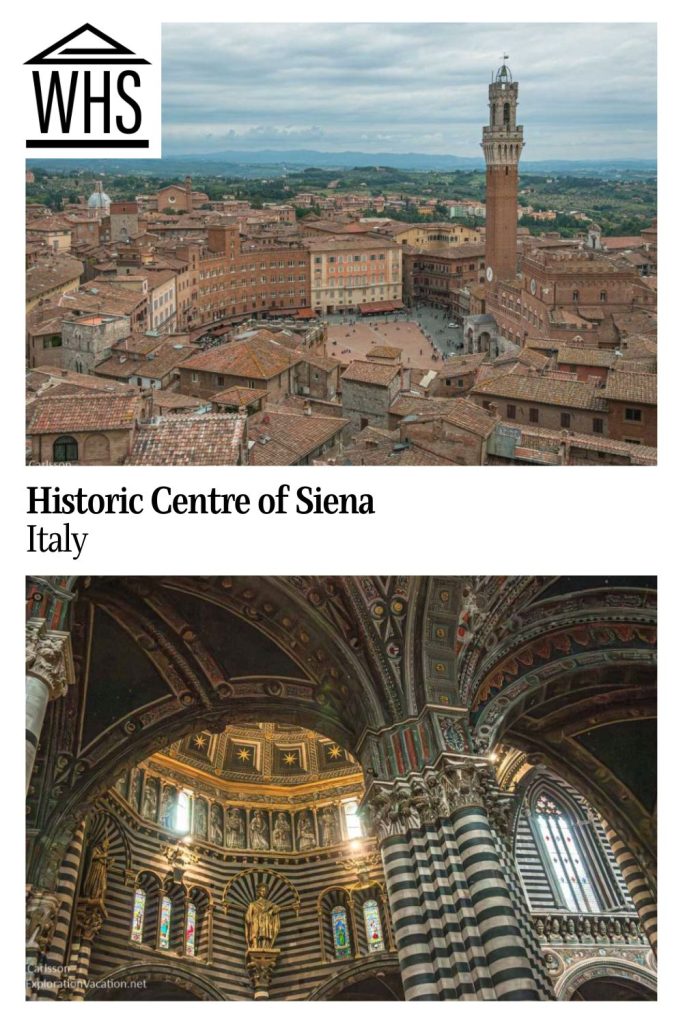
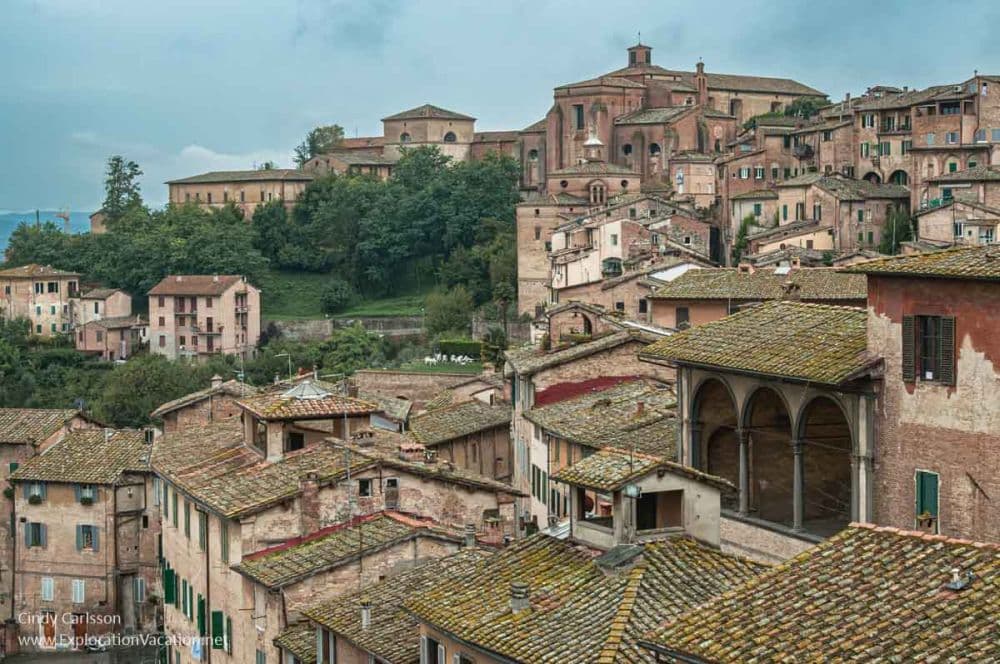
The Historic Center of Siena World Heritage Site includes the entire medieval city of Siena inside its fortified wall. Within this 170-hectare (over half a square mile) area, the city retains both its historic urban form and a Gothic appearance.
Disclosure: This article contains affiliate links. Making a purchase through an affiliate link will mean a small commission for this website. This will not affect your price. Privacy policy.
Why is the Historic Center of Siena a UNESCO World Heritage site?
Siena’s historic center is a World Heritage Site because it preserves a medieval city that is still largely complete. But Siena is not just any Italian city. It is a city that greatly influenced the art, architecture, and design of cities in Italy and beyond between the 13th and 17th centuries. And those original influences are still visible today.
UNESCO describes Siena as “the embodiment of a medieval city,” explaining: “Throughout the centuries, they preserved their city’s Gothic appearance, acquired between the 12th and 15th centuries. During this period the work of Duccio, the Lorenzetti brothers and Simone Martini was to influence the course of Italian and, more broadly, European art. The whole city of Siena, built around the Piazza del Campo, was devised as a work of art that blends into the surrounding landscape.”
What can you expect on a visit to Siena’s Historic Center?
In essence, the entire area within the walls is a living museum. That makes this a great place to just wander.
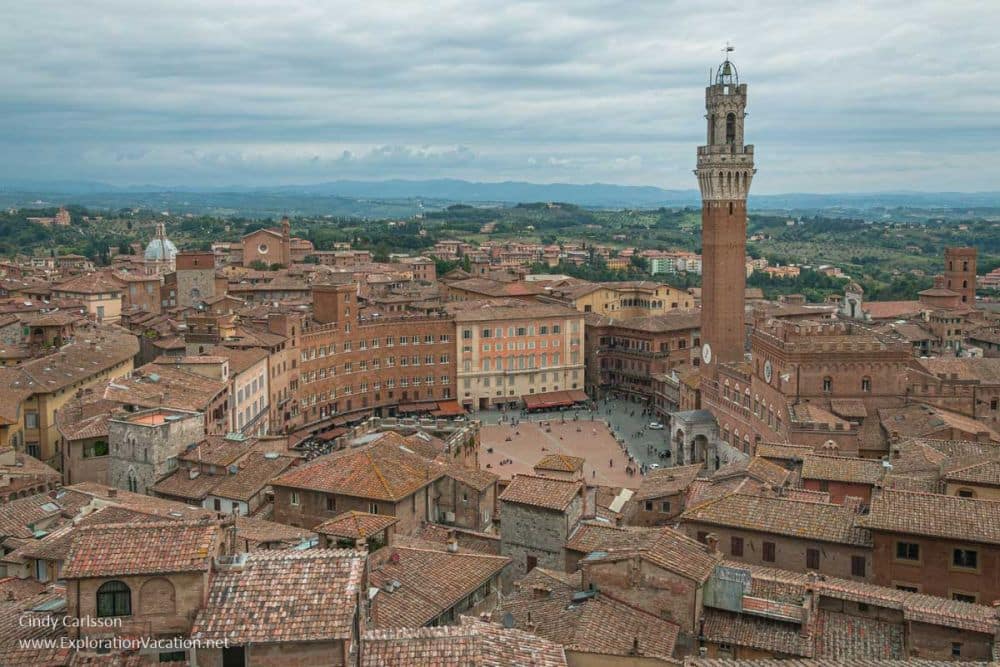
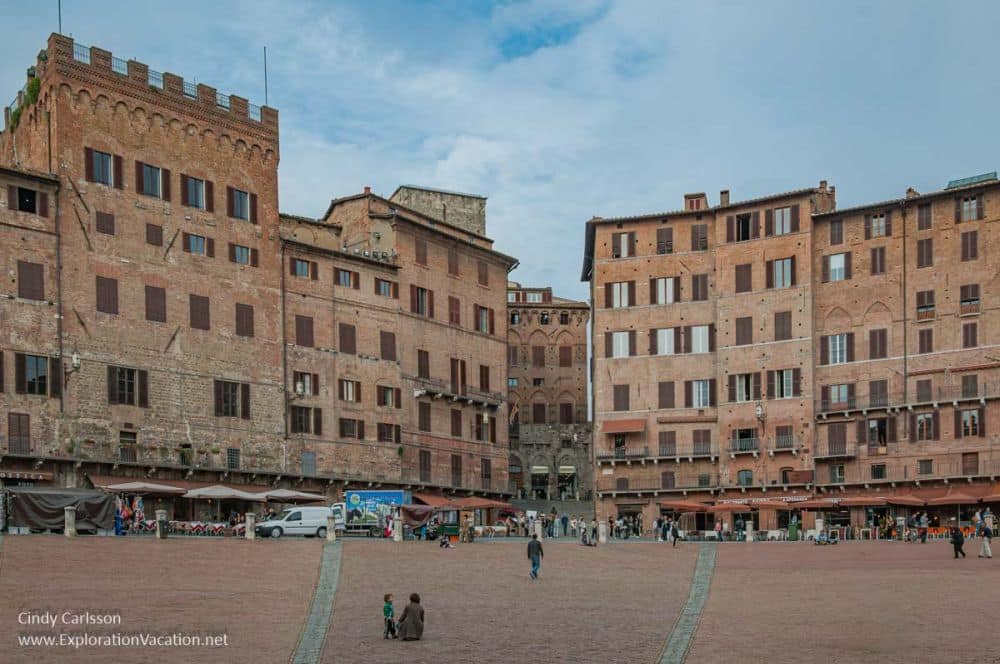
The most obvious place to begin a visit to Siena’s Historic Centre is the Piazza del Campo. This beautiful shell-shaped plaza is where Siena’s most important events have been held since the 13th century. Even when filled with tourists snapping selfies amid locals going about their business, there’s nothing else like this square. Its unusual shape and slope perfectly match the surrounding buildings, all of which had to meet strict design guidelines in order to create a harmonious public square.
The piazza seems to almost guide visitors to the Civic Museum of Siena in the Palazzo Pubblico. It’s the grandest building on the square and was once the seat of government. Inside you’ll find rooms decorated with elaborate frescoes. These include an unusual (and amusing) secular series portraying life under both good and bad government. Save time by buying your tickets to the Palazzo beforehand.
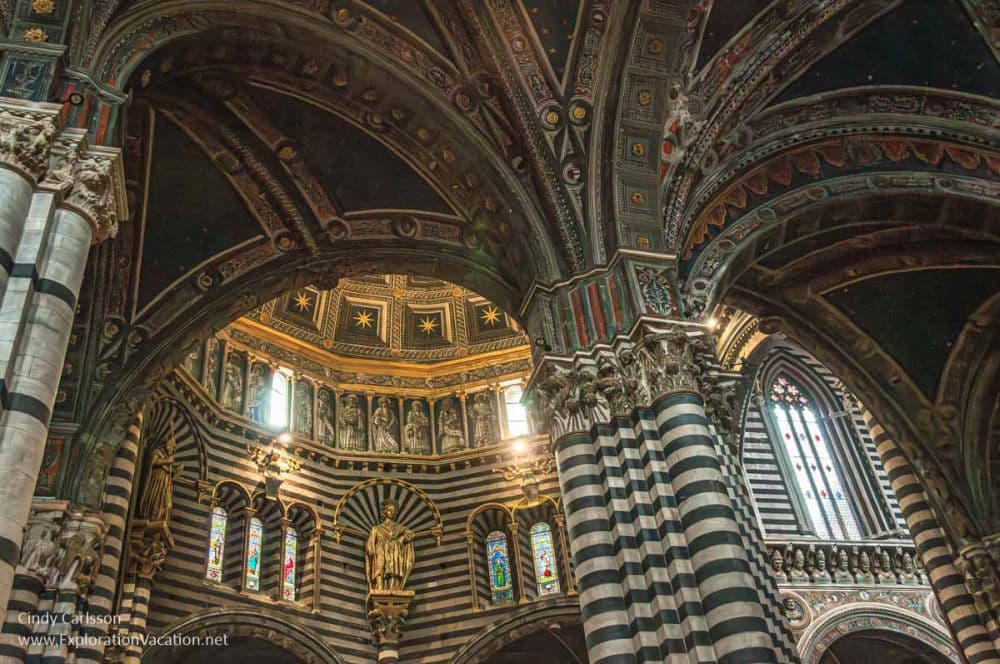
From here, I would suggest heading over to Siena’s great 13th-century cathedral. No matter how many grand cathedrals you’ve seen, Siena’s will rank as one of the grandest. You may only get to see a small portion of the intricate marble floor, but there is a mind-boggling amount of other art and architecture to marvel at. There’s also an elaborate baptistery (entered from the back) and a long-abandoned crypt below. And don’t miss the Piccolomini Library attached to the side of the cathedral. You’ll find a few wonderfully illustrated and/or otherwise important volumes on display, but you may be too busy looking at the walls and ceiling to notice them.
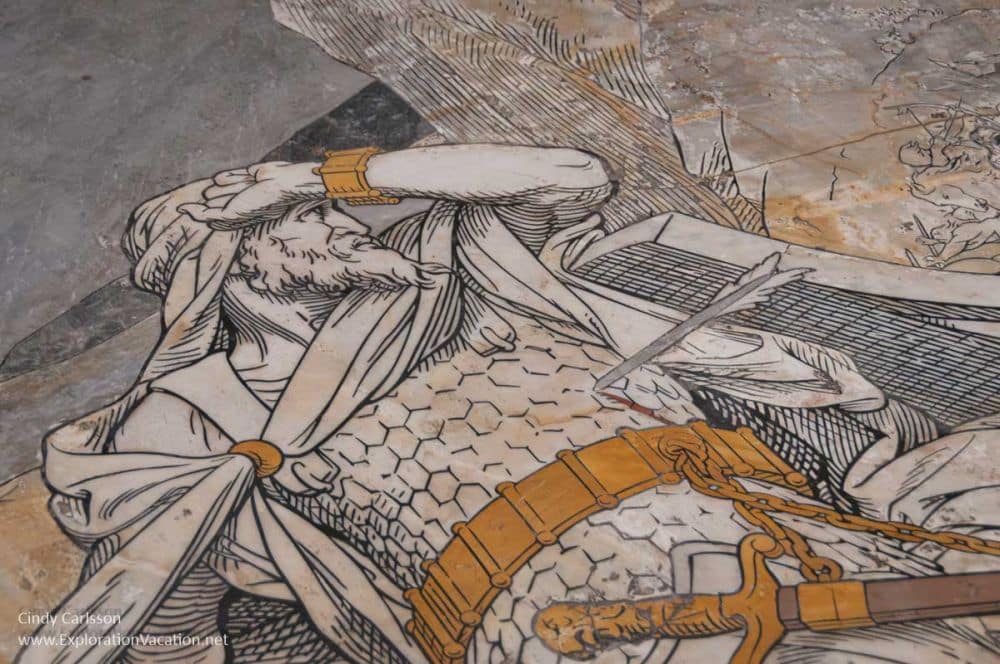
Avoid the lines by buying your tickets ahead of time: the one-day ticket to Siena cathedral and Piccolomini Library, or the three-day pass to all public areas of the cathedral complex.
Of course, there are more churches, museums, and medieval streets to explore. But maybe it’s time to take a higher-level look at this dense medieval city.
You can start by visiting the cathedral roof, where you get a peek inside the cathedral from above as well as great views of the surrounding city. Or head over to the cathedral museum and climb the narrow stairs for a view of the city that includes the cathedral. Too many stairs? Then try the Loggia dei Nove at the Palazzo Pubblico. From there you can look over the market area to the surrounding countryside.
Is the Historic Center of Siena worth visiting?
Combined with its ancient rival, Florence (also a World Heritage Site), the Siena World Heritage Site is a must-see for fans of the art and architecture of the Italian Renaissance. And if grand pageantry is your thing, you might want to add the twice-yearly Palio horse race to your bucket list.
But anyone interested in very old cities in general will find plenty to like just wandering about in the historic center of Siena.
Most visitors can see Siena’s highlights in a day. If you want to spend more time touring museums and gawking at architecture, plan at least one night in the city. And an overnight stay gives you a chance to soak in the atmosphere of this grand medieval city.
Tips for visiting the Historic Center of Siena
Do not drive through the gates into the center of Siena without the proper permit.
Siena is a small place with narrow streets. Expect crowds.
Siena is built on hills. Prepare to walk up and down them as you tour the city.
Consider taking a walking tour or food tour to introduce you to the city.
The Palio is held once in July and once in August. Sometimes races are also held at other times for very, very special occasions. All races begin with a great deal of pageantry and parading, which would be amazing to see – and they’re absolutely mobbed. Plan well ahead and be prepared for higher costs and unwalkable streets if this is something you want to see.
If you are visiting in the days shortly before or after the Palio, expect the Piazza del Campo to be off-limits and filled with workers. (They bury the part of the plaza where the horses race and then clean it all up again after.)
If you want to see the cathedral in its full glory, plan your visit for the brief period when the marble floors are exposed. This used to happen only in September, but now the floors are also uncovered in July and for a longer period in late summer/fall.
Book lodging just outside the city wall along a bus line to save money and make it easy to get in and out of the city.
If you love Siena’s medieval architecture, San Gimignano isn’t far away. Like Siena, it’s a UNESCO site because of its architecture, particularly its many towers. Another UNESCO site nearby is the Val d’Orcia, a beautiful agricultural landscape of rolling farmland and charming medieval towns.
Where is Siena?
Siena is in Tuscany, about 340 km (150 miles) north of Rome and 75 km (45 miles) south of Florence.
From Florence, the drive will usually take at least an hour. The trip is about the same by bus. The train takes about 1½ hours.
The drive time from Rome is over 2½ hours. The bus will take just slightly longer. However, it takes 4 hours to Siena by train, because you have to switch to a bus or a train in Florence to get to Siena. So, if you aren’t driving, plan to visit Florence before you go to Siena.
However, if you are driving, be aware: you can’t just drive through one of the grand gates and into the historic city. Fortunately, there are parking garages located just outside some gates. You can also park at the main train station where parking is cheaper. Walk or bus from there into the city. Most hotels in the historic center do not have parking available on site, so book a hotel with parking along a bus line outside the walls.
Local buses run into the city from the surrounding area.
For more information about the Historic Centre of Siena, including opening hours and admission fees, see Siena’s official website.
Have you been to Siena? If so, do you have any additional information or advice about this UNESCO World Heritage site? Please add your comments below!