
Mantua and Sabbioneta
By Rachel Heller
What are Mantua and Sabbioneta?
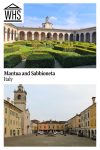
Mantua and Sabbioneta are small cities in northern Italy, east of Milan in the region of Lombardy. Mantua is older, with some parts dating as far back as the Ancient Roman period. Sabbioneta, on the other hand, was built within a very short period in the second half of the 1500s, when Vespasiano Gonzago Colonna ruled the area.
Disclosure: This article contains affiliate links. Making a purchase through an affiliate link will mean a small commission for this website. This will not affect your price. Privacy policy.
Why are Sabbioneta and Mantua a UNESCO World Heritage site?
According to UNESCO, these two cities “are exceptional witnesses to the interchange of human values of the Renaissance culture,” in terms of architecture, arts, and technology.
They have been linked into one UNESCO site because they represent two aspects of Renaissance-era urban planning. Renaissance thinkers tried to implement new ideas about the “ideal city” in both places, but the practicalities necessitated different approaches in each.
In Mantua, these ideas had to be applied to an already-existing city. This meant carrying out urban renewal on the existing sections and extending the city as well.
Sabbioneta, by contrast, was created entirely from scratch, allowing Renaissance urban planners to fully express their vision, ensuring aesthetic consistency and streets that follow a regular grid pattern.
What can you expect on a visit to Sabbioneta or Mantua?
Mantua
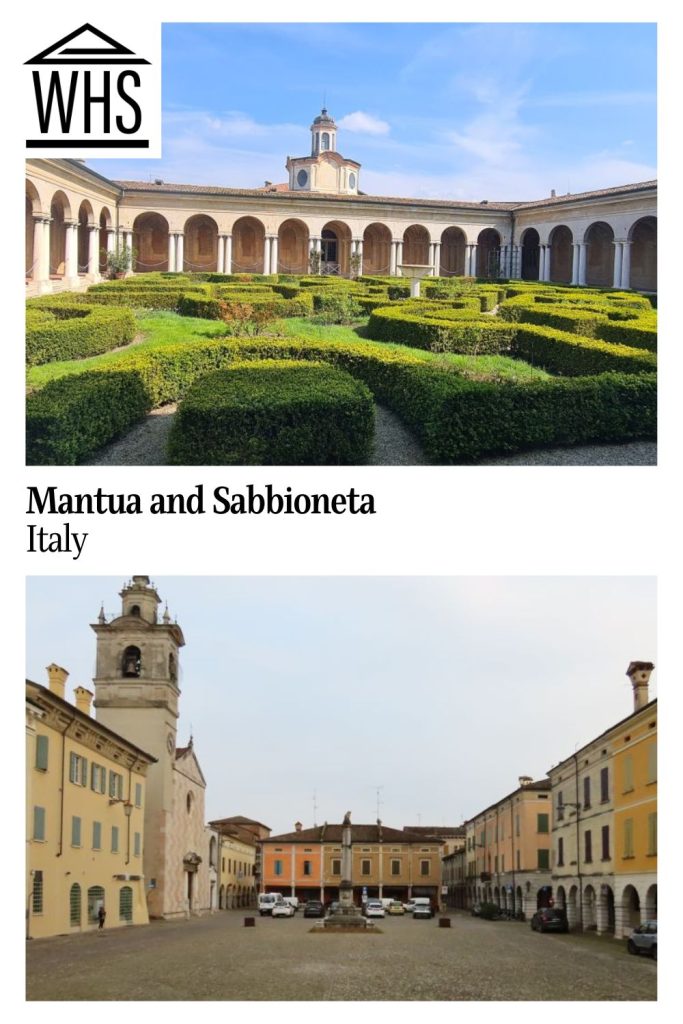
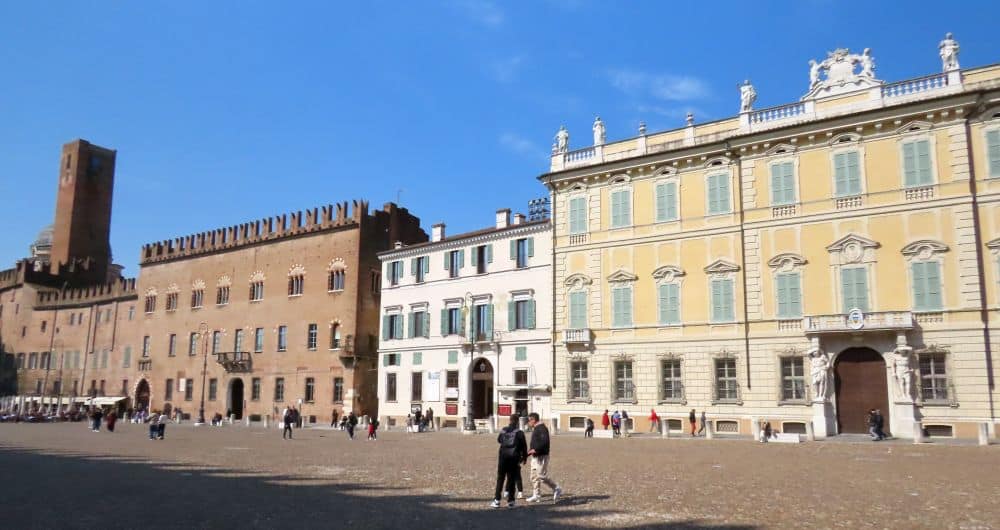
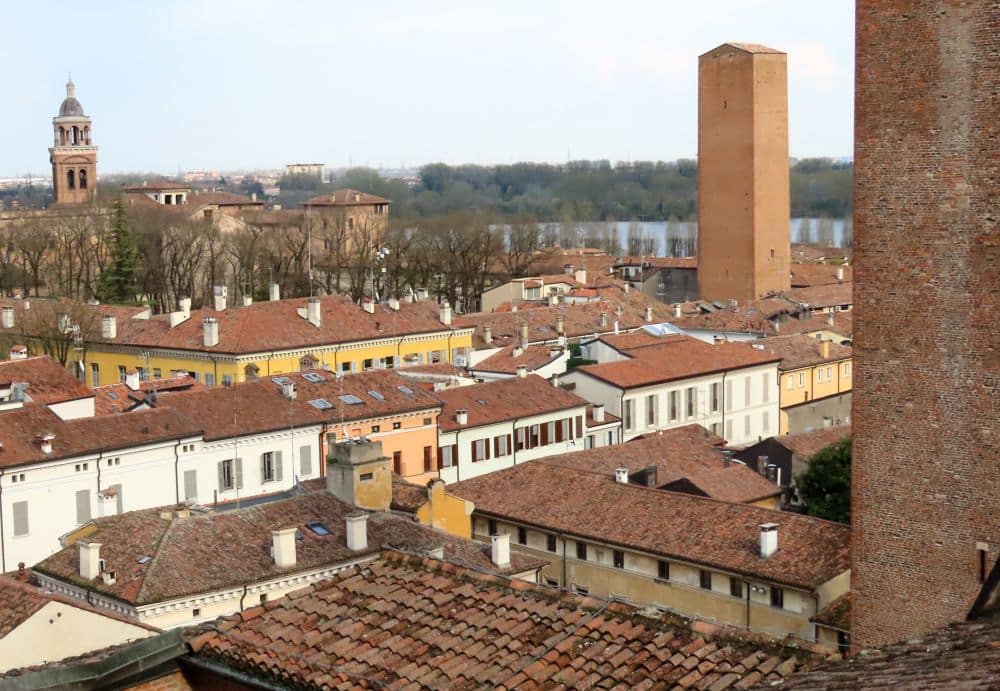
Mantua (Italian: Mantova) has a varied appearance, with structures from a range of periods. I would go so far as to say that it’s hard to see the Renaissance urban planning unless you look for it. It’s most visible in the streets outside the very center of the city, where you’ll find straight roads that cross each other at right angles and more consistency in the facades of the buildings along them. The center of the city, though, is very pleasant for a stroll, with a number of pretty plazas.
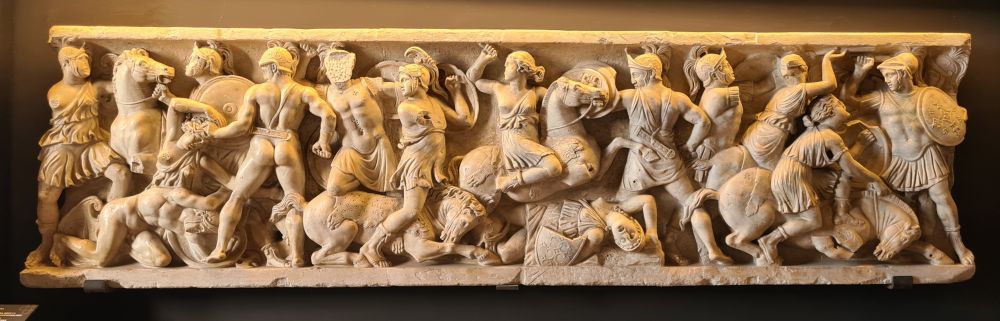
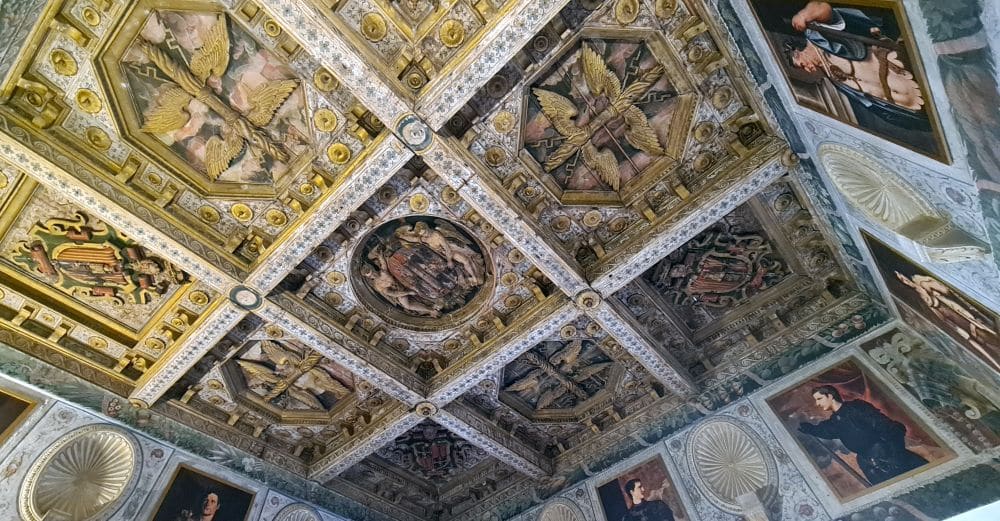
The 16th-century Ducal Palace is a comprehensive expression of Renaissance taste in art and architecture. It’s definitely worth touring, not just for the ornately-decorated walls and ceilings of the public and private spaces inside. It also houses many treasures of the ancient Greeks and Romans, collected by the ducal family during the Renaissance period. For example, you can see some outstandingly well-preserved reliefs taken from Roman sarcophagi and friezes of ancient temples. The Gallery of the Exhibition holds dozens of Roman-era busts mixed in with 16th-century versions in the ancient Roman style – apparently Ancient Rome was in vogue in the Renaissance and influenced both art and architecture.
Mantua also contains sights from other eras. In the Piazza Sordello you’ll see the excavated remnants of mosaics from a Roman villa. Saint Lawrence’s Rotunda dates to the 11th-12th centuries. It’s a small, round church and includes some pillars that are far older. The Baroque Palazzo Sordi dates to the 17th century, though because it’s in private hands you can only admire the outside.
Take the tour of the dome of the Basilica di Sant’Andrea. Dating to the 15th century, the church wasn’t finished until the very end of the 18th century. The interior has some wonderful trompe-l’oeil decoration (late18th-early 19th century). The tour of the 18th-century dome takes you upstairs, where you’ll walk around inside and outside the dome and enjoy wonderful views of the city from high above. (Not recommended if you suffer from a fear of heights or from vertigo!)
Sabbioneta
Sabbioneta allows a much clearer idea of what Renaissance thinkers had in mind about an “ideal city.” Prince Gonzago was an admirer of the Roman architect, Vitruvius (1st century BC), and that inspiration shows in Sabbioneta. The streets are straight and cross each other at right angles. The houses and other buildings are not uniform; while they go together in a way that is pleasing to the eye, each is different. The urban planners, informed by Humanist thinking, allowed for public squares and monuments, and included a six-pointed defensive wall encircling it all.
Here, too, there’s plenty to see, all from the same period in the 16th century. The Ducal Palace (Palazzo Ducale) still contains incredibly ornate ceilings inside, in contrast to its rather simple exterior.
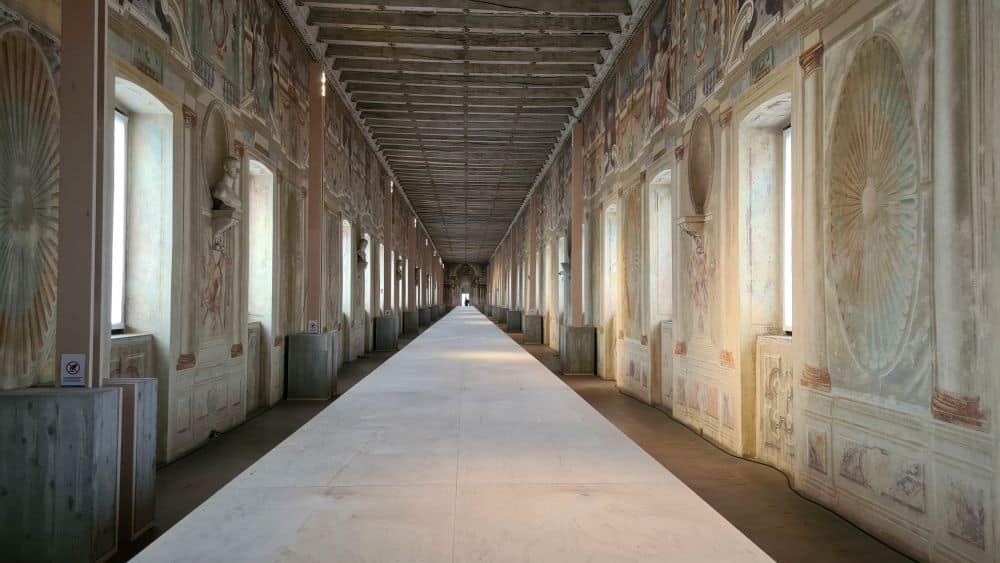
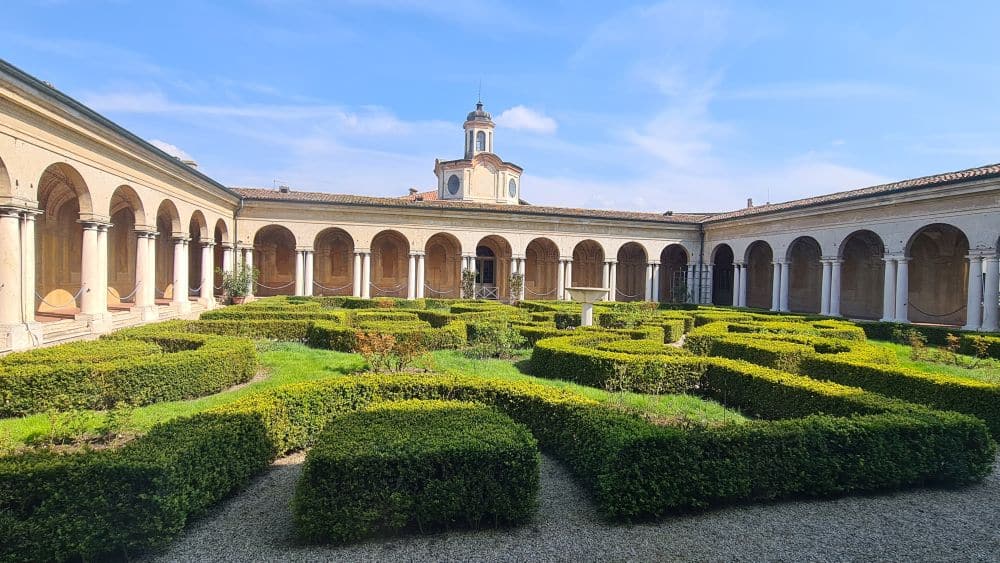
The Garden Palace (Palazzo Giardino) is even more ornate, and one highlight is the longest hallway I’ve ever seen. Like the Ducal Palace, this palace’s exterior is far simpler than the interior.
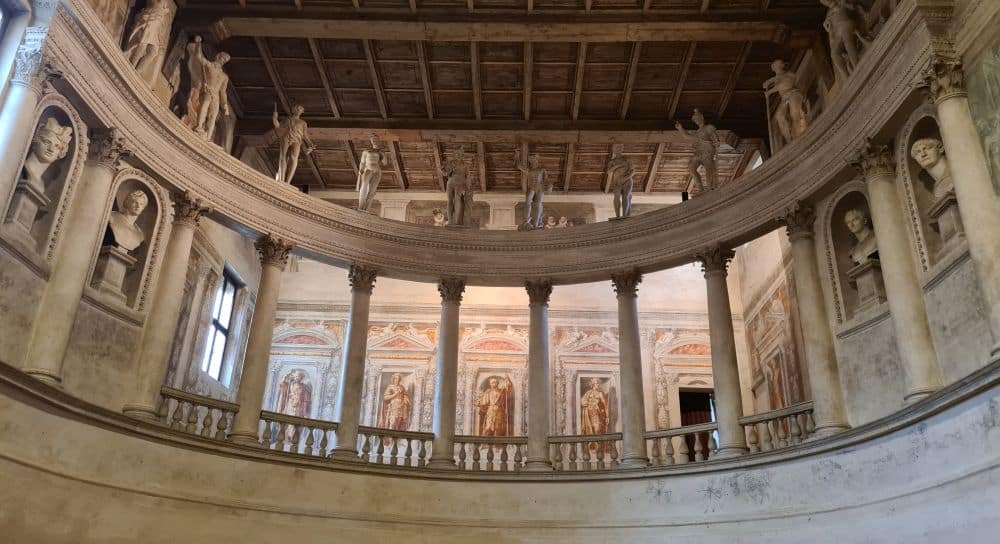
The Theatro all’Antica is considered a precursor to modern theaters, and has a classically-inspired interior with classical-style statues and trompe-l’oeil frescoes.
There are more 16th-century buildings that you can tour. Buy a ticket to see them all and pick up a map at the visitor’s information next to the Garden Palace. You can also walk along what used to be the moat outside the wall encircling the city.
Are Mantua and Sabbioneta worth visiting?
Both cities are pleasant places to be for a day or two, but whether they’re worth a special trip depends on your interests. If urban planning interests you, these cities are definitely worth visiting, especially Sabbioneta because of its Renaissance purity. The palaces in both cities are wonderful in terms of their Renaissance-era interiors, if that’s something that you like to see.
If neither urban planning nor the Renaissance period are important to you, don’t bother visiting these two cities.
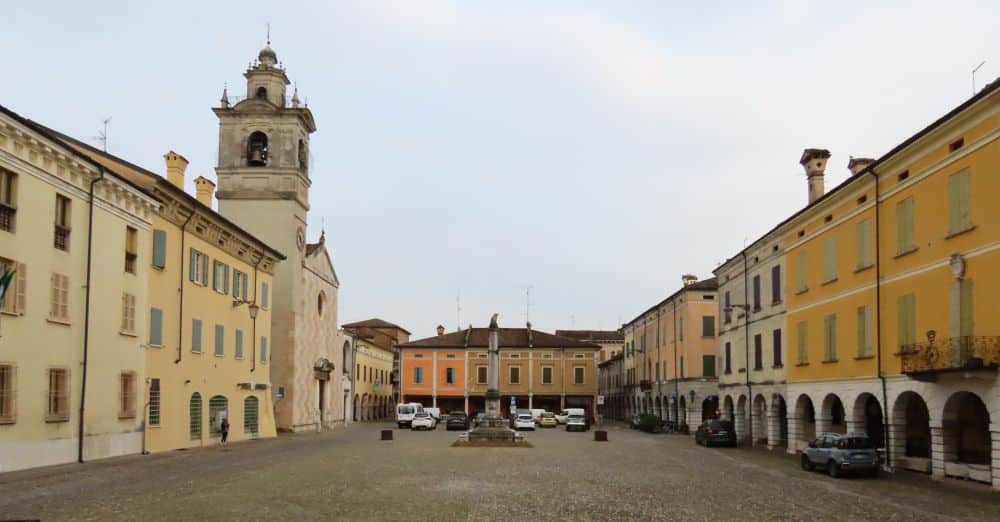
I preferred Sabbioneta over Mantua because I liked how it looked: a small city, with straight and well-kept streets and pleasant plazas. The buildings complement each other without all looking the same, forming a harmonious, unified appearance. I appreciated the shady porticos fronting the most important buildings. In Sabbioneta I felt like the Renaissance-era urban planners achieved what they set out to do.
If urban planning is your thing and you’re going to travel in Italy, make sure to also visit Ferrara, another Renaissance planned city, and Urbino, which is a medieval city changed in the Renaissance according to these same Renaissance aesthetic ideals. Pienza was another medieval city that was redeveloped in the Renaissance; in fact, it was the first to get this treatment. And, of course, the heart of the Renaissance was Florence, so definitely see that, whether urban planning interests you or not.
Tips for visiting Mantua and/or Sabbioneta
Take your time. Both towns are very pleasant and untouristed, so spend some time strolling the streets and seeing the sights.
If you visit Sabbioneta, definitely buy the ticket so that you can visit all of the buildings that are open to the public. Both of the palaces and the theater are worth some time.
If you want to visit many of the sights in both cities, consider buying the Mantova card. It covers admissions to the main sights (though a few Mantua sights charge a small additional fee). Urban transport is covered by the card as well, including the bus between the two cities.
I’d suggest at least spending a night in one or the other of these towns so you can enjoy them at your leisure. While I preferred Sabbioneta, Mantua is bigger and will offer more choices in terms of shopping and restaurants.
Find accommodations in Sabbioneta.
Find accommodations in Mantua.
Other UNESCO sites aren’t far away, if you’re traveling by car: Verona, Modena, Bologna, and some of the Palladian Villas of the Veneto.
Where are Mantua and Sabbioneta?
Both cities are abouth halfway between Milan and Venice, and about 40 minutes apart by car, or you can take a bus between them in about an hour and a quarter.
By car
Mantua is about 2.5 hours from Milan by car, about two hours from Venice, and about 45 minutes from Verona.
Sabbioneta is about a 2.5-hour drive from Milan or Venice, and 1.5 hours from Verona.
Compare rental car prices here.
If you’re planning a road trip in Italy, there are a few things you need to be aware of. First of all, most cities now have a defined ZTL (limited traffic zone), which you cannot enter. Watch for the signs at the entrances to the zone and park outside it. If you enter, you’ll get fined, perhaps many months later. If you’re renting a car, make sure to ask how they deal with this. Some rental car companies are likely to add extra charges on top of the fine.
Also ask the rental car company if your car has a Telepass. These electronic gadgets make it far easier and quicker to pass through the tolls on Italian highways. If you don’t have one, you’ll have to resign yourself to sometimes long waits and toll machines that don’t always work.
By train or bus
Use the Omio app or website to plan your journey by public transportation to Mantua or Sabbioneta.
From Milan, Mantua is about 2.5-3 hours by train, 2-2.5 hours from Venice, and 45 minutes from Verona.
Sabbioneta is a bit harder to get to because it doesn’t have a train station. To get there using public transport (just buses or combining train and bus) will take anywhere from 2.5 to 4 hours from Milan because you’ll need to change at least twice.
From Venice, it’ll take a least 3.5 hours via bus/train with at least three changes to get to Sabbioneta. From Verona, you only need to change once in Mantua, so it’ll take 2-3 hours,
For more information about Mantua, visit Lombardy’s tourism website. To learn more about Sabbioneta, go to its official tourism website.
Have you been to Mantua or Sabbioneta? If so, do you have any additional information or advice about this UNESCO World Heritage site? Please add your comments below!
- About the author
- Posts by this author

Rachel Heller blogs at Rachel’s Ruminations, a website focusing on historical and cultural sights/sites for independent travelers. She is also the owner of this World Heritage Travel website.