
Historic Centre of the City of Pienza

By Abigail Dalton
What is the Historic Centre of the City of Pienza?
Pienza is a charming hilltop town in the heart of Tuscany, Italy. The historic centre refers to the old town, which was completely redesigned in the 15th century by Pope Pius II.
Before that, it was a quiet medieval village called Corsignano. But Pope Pius II – a Renaissance humanist – wanted to turn his hometown into the “ideal city.” With help from architect Bernardo Rossellino, the town was transformed into a model of Renaissance planning.
Built around balance, beauty, and order, Pienza captures the essence of Renaissance urban design. Today, it’s still full of elegant buildings, peaceful streets, and sweeping views over the Val d’Orcia countryside.

Disclosure: This article contains affiliate links. Making a purchase through an affiliate link will mean a small commission for this website. This will not affect your price. Privacy policy.
Why is the Historic Centre of the City of Pienza a UNESCO World Heritage Site?
Pienza was added to the UNESCO list in 1996 as it was the first town to be completely redesigned as an “ideal Renaissance city,” making it one of the earliest and most important examples of Renaissance urban planning. According to UNESCO, Pienza is a “masterpiece of human creative genius” and a standout example of Humanist Renaissance design.

The vision was centred around a new way of thinking about city life – one that balanced beauty, function, and order. This came to life in the heart of Pienza, in Piazza Pio II, where key buildings were carefully designed to complement each other: the Piccolomini Palace (Pope Pius II’s residence), the Borgia Palace and the cathedral, “with its pure Renaissance exterior and an interior in the late Gothic style of south German churches,” as UNESCO describes it.
This new layout reflected Renaissance ideals of harmony, proportion, and blending everyday life with art and architecture.
As a UNESCO World Heritage Site, Pienza is recognised not just for its beautiful buildings, but for its role in changing how towns were designed. The idea was to create a city that worked well for people – open spaces, clean lines, and a connection with the natural surroundings – and it influenced urban planning across Italy and Europe.
Remarkably, Pienza still looks much like it did over 500 years ago.

What can you expect on a visit to Pienza?
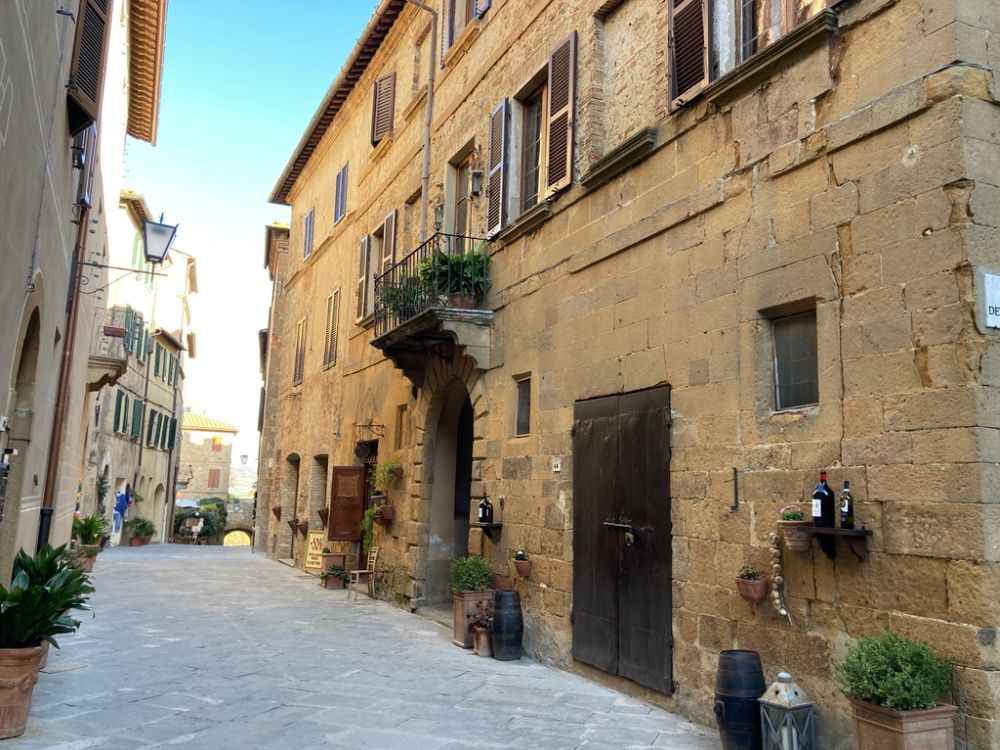
Pienza feels like a fairytale. Like many historic towns in Tuscany, it’s full of grand stone buildings, cobbled lanes, little piazzas with charming restaurants, and tucked-away boutiques and delicatessens.
There’s a certain magic in the air. During the summer months, especially, there’s a wonderful buzz about the place as visitors soak up the beauty. The historic centre is very small but packed with charm.
The architecture and design are what really catch people’s attention. Piazza Pio II is at the heart of it all, surrounded by elegant Renaissance buildings. Even if you’re not big on architecture, it’s hard not to be impressed.
Step away from the central square and walk towards the city’s edge for one of the best views in Tuscany. Rolling green hills stretch into the distance, framed by lines of cypress trees, olive groves, and vineyards. It’s the kind of view you expect on a postcard!
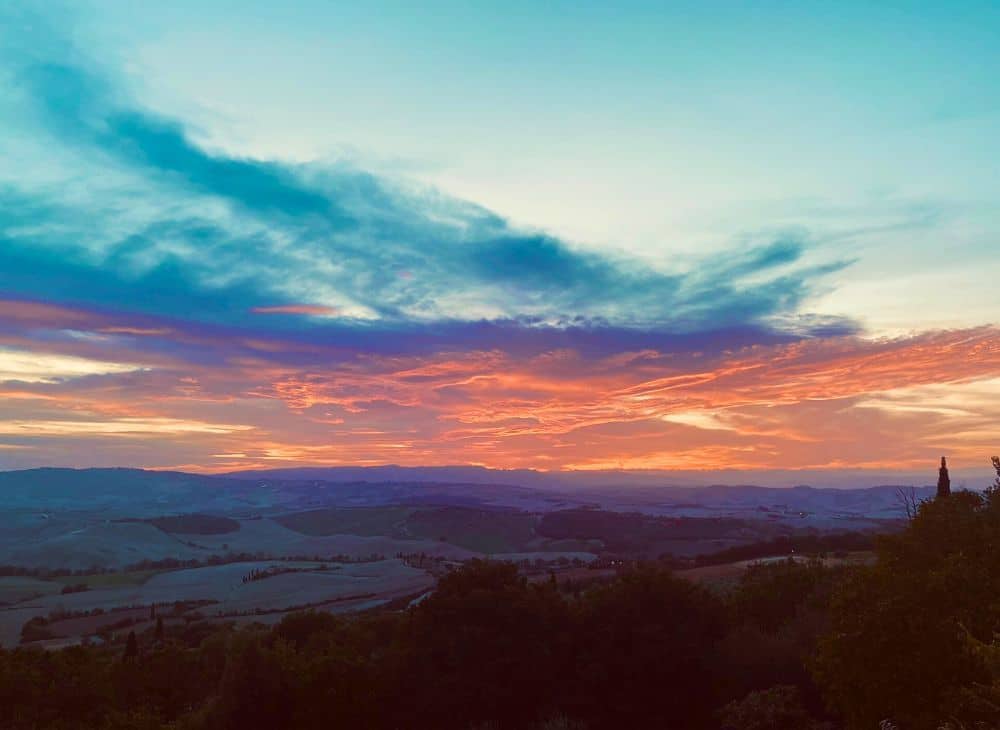
The weather is typical for inland Tuscany. Expect warm, dry summers with lots of sunshine (often in the high 20s or low 30s °C (80s °F), and cooler, misty winters. Spring and autumn are especially lovely, with mild temperatures, fewer crowds, and golden light that makes the countryside glow.
Accommodation in Pienza ranges from boutique hotels and rustic farm stays (agriturismos) to family-run B&Bs and luxury countryside villas. Most places offer traditional decor, local hospitality, and beautiful views over the valley.
Is Pienza worth visiting?
Pienza is absolutely worth a visit for its Renaissance history, architecture and picturesque Tuscan views. While the town is small and easy to explore in just a few hours, it also makes an excellent base for discovering the surrounding area. Pienza is located in the heart of the Val d’Orcia, another UNESCO-listed site.
Nearby highlights include Montepulciano, a beautiful hill town known for its Renaissance buildings and famous Vino Nobile di Montepulciano wines; Montalcino, home of the world-renowned Brunello di Montalcino; Bagno Vignoni, a tiny spa village with a hot spring in the main square; and San Quirico d’Orcia, another peaceful Tuscan gem.
With this in mind, the Historic Centre of Pienza offers more than just a quick stop. It’s a destination full of charm, culture and stunning scenery, and a great starting point for exploring one of the most iconic regions in Italy.

What sorts of travellers would like Pienza?
Pienza is an ideal destination for those seeking history, beauty and a slower pace in the heart of Tuscany. It’s especially suited to travellers with an interest in Renaissance architecture, thoughtful design and the concept of the ideal city.
With its rich history, peaceful atmosphere and beautifully preserved streets, it’s a great choice for those who appreciate charming architecture and places with a strong sense of story and character.
The town also appeals to photographers, thanks to its golden light, sweeping countryside views and postcard-perfect alleys. Food lovers, couples and slow travellers looking for a quiet escape in the hills will enjoy Pienza.
Tips for visiting the Historic Centre of the City of Pienza
Pienza is quite a popular place to visit in Italy. Therefore, plan to visit early in the morning or later in the afternoon to enjoy the town when it’s quieter and the light is best for photos.
Spring and autumn are ideal times to visit, with mild weather, fewer crowds, and beautiful light.
Find accommodations in Pienza.
The historic centre is small and walkable, so wear comfortable shoes, especially for the cobbled streets and gentle hills.
Just outside the historic centre, Via Santa Caterina is one of the most famous spots in Italy for sunset. The golden light over the Val d’Orcia is pure magic.
Walk along Strada di Terrapille, a scenic country path featured in the movie Gladiator. It’s a peaceful route through classic Tuscan scenery and easy to reach from the edge of town.
Shops and restaurants often close for a few hours in the early afternoon, and open again during the evening, so it’s worth checking opening times if planning to eat or shop.
Don’t leave without trying the pecorino – it’s what Pienza is known for.
If Renaissance city planning is something that particularly interests you, there are a few more UNESCO sites in Italy that focus on this topic: Ferarra and the combined heritage towns of Mantua and Sabbioneta.
Where is the Historic Centre of the City of Pienza?
Pienza is a small hilltop town located in the southern part of Tuscany, Italy, within the province of Siena. It sits in the heart of the beautiful Val d’Orcia region.
The nearest airport is Florence Airport (Peretola), about 120 km (75 miles) away. Other nearby airports include Pisa International Airport (150 km or 93 miles) and Rome Fiumicino Airport, which is roughly 150 km (93 miles) to the south.
The best way to get to Pienza from Florence is by car or bus. By car, the drive takes around 1 hour 30 minutes via the scenic SR2 road through the Tuscan countryside. Public buses connect Florence to nearby towns like Montepulciano, but direct public transport to Pienza is limited, so driving or joining a tour is usually easier.
Compare rental car prices here.
Parking is available just outside the city walls, as the historic centre is traffic-free. There’s also overnight parking for campers, although it fills up quickly in peak season.
For more information about the Pienza’s Historic Centre, see the Visit Tuscany website.
Have you been to Pienza? If so, do you have any additional information or advice about this UNESCO World Heritage site? Please add your comments below!