
Longobards in Italy. Places of the Power (568-774 A.D.)
By Rachel Heller
What is the UNESCO site “Longobards in Italy. Places of the Power (568-774)”?
This rather long title covers seven groups of buildings all over Italy built by the Longobards, also often called the Lombards. This was a Germanic group, possibly from Scandinavia, who migrated south, first to Bohemia and Hungary, and then into Italy in 568 AD.
The Longobards ruled a large part of Italy as separate duchies until they eventually united under a king. The kingdom lasted until it was defeated by Charlemagne in 774. Only the Duchy of Benevento survived under the Franks until the Norman Conquest in the 11th century.
The seven building groups within this UNESCO site include churches and monasteries as well as fortresses. These represent an important moment in architecture: the shift from the ancient Romans to the Middle Ages. Yet the primary hallmarks of Longobard architecture were a return to the classical styles of the ancient Romans and the reuse of Roman building materials and decorative elements.
Disclosure: This article contains affiliate links. Making a purchase through an affiliate link will mean a small commission for this website. This will not affect your price. Privacy policy.
The seven locations
In the very north of Italy:
- The Gastaldaga area and the Episcopal complex
- The monumental area with the monastic complex of San Salvatore-Santa Giulia
- The castrum with the Torba Tower and the church outside the walls, Santa Maria foris portas
About halfway down the Italian peninsula:
- The basilica of San Salvatore
- The Clitunno Tempietto
At the top of the “boot”:
- The Santa Sofia complex
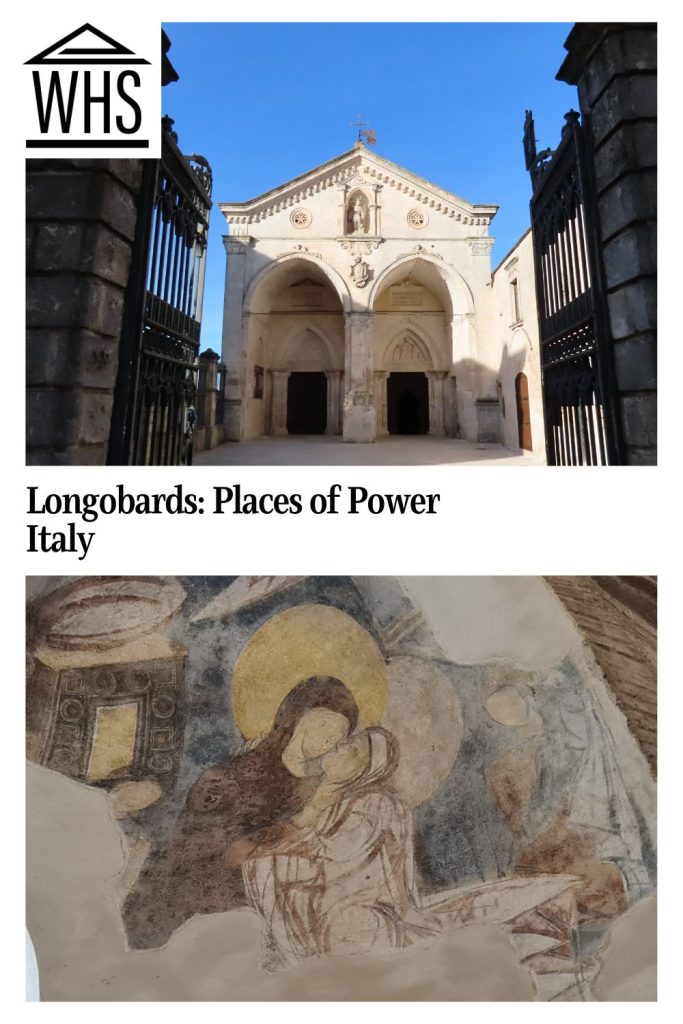
- The Sanctuary of San Michele
Why are the Longobards sites a UNESCO World Heritage Site?
According to UNESCO, “the Lombards achieved a cultural, architectural and artistic synthesis, unique in terms of its monumental and stylistic diversity and the various secular and religious uses.” They synthesized influences from Ancient Rome, Christianity, Byzantium, and Germany in their architecture and art.
The structures that remain express Christian spirituality, but also form an expression of their own power. At the same time, the Lombards influenced the growth of monasticism, particularly by establishing a pilgrimage destination at Monte Sant’Angelo.
What can you expect on a visit to the Longobard-built locations?
I have not been to all of the sites, and many were closed when my husband and I visited; it was wintertime and lesser-known historical sites like these tend to have shorter hours off-season. We still saw as many as we could but for all but two, we only got to see the outsides of the buildings. (If you have been to any elements that we did not see well and you’re willing to fill in this information, please contact me.)
1. The Gastaldaga area and the Episcopal complex
We did not get to this one at all, but it sounds like most of the remnants are now in a museum called MuCris or Museo Cristiano in Cividale del Friuli.
Book accommodations in Cividale del Friuli or Trieste.
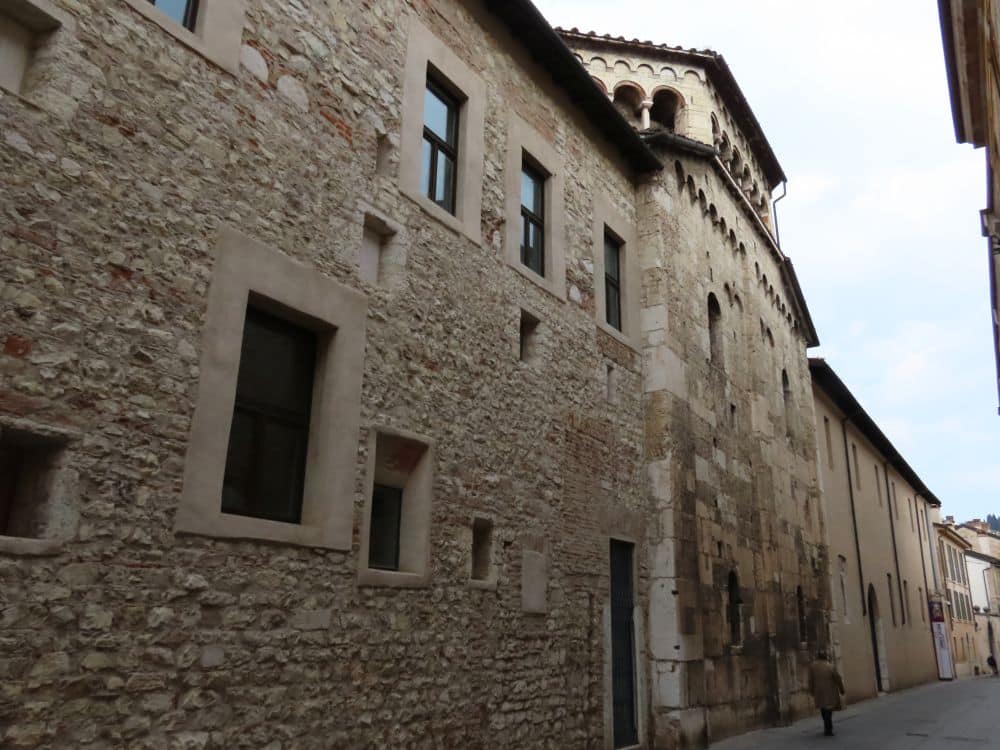
2. The monumental area with the monastic complex of San Salvatore-Santa Giulia
The Church of San Salvatore is the earliest Lombard church and has some of the best frescoes. The Santa Giulia Museum in the complex is in the original monastery and includes an archeological area with what remains of the Roman houses that inhabited the site originally. It has Lombard-period artworks and some Romanesque works from later in the Middle Ages.
Book your accommodations in Brescia.
3. Archaeological Park Castelseprio
Because the archaeological park was closed when we stopped there, I did not get to see inside the Castrum to see what remains of a small fortress, Torba Tower and the Monastery of Torba. Apparently much of what remains is not from the Lombard period but from the late Roman period before their arrival. Under the Lombards, the buildings housed a convent of Benedictine nuns, who built a monastery around the existing structures.
The most important building of this Longobard site, though, is the Santa Maria foris portas, which is Latin for “outside the gates.” And again, we couldn’t go in, unfortunately.
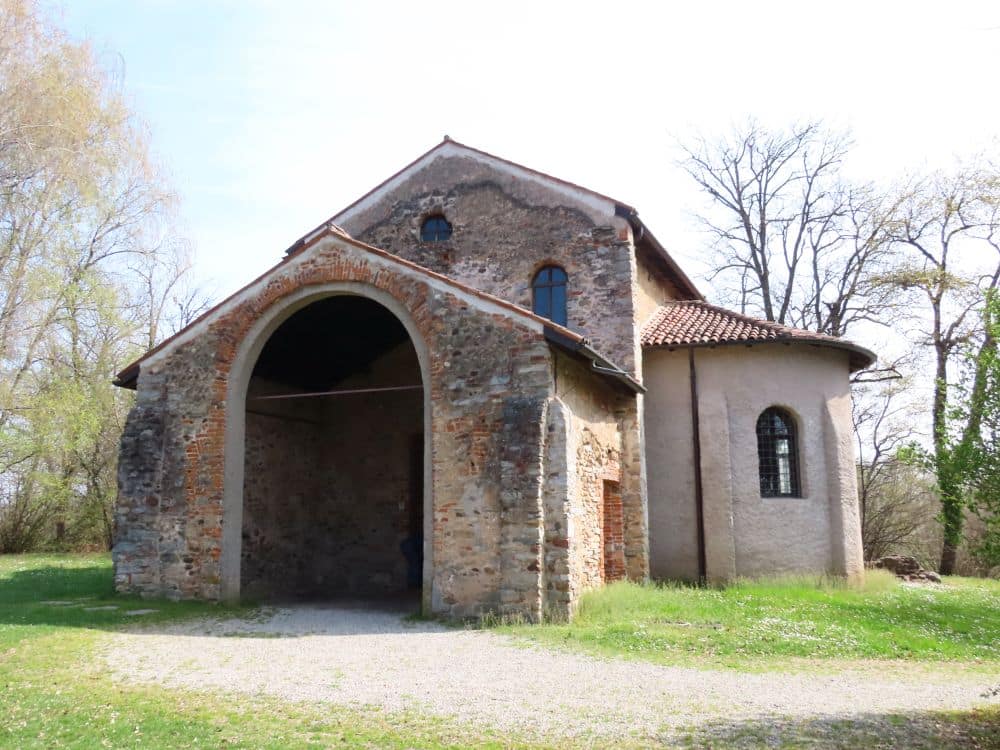
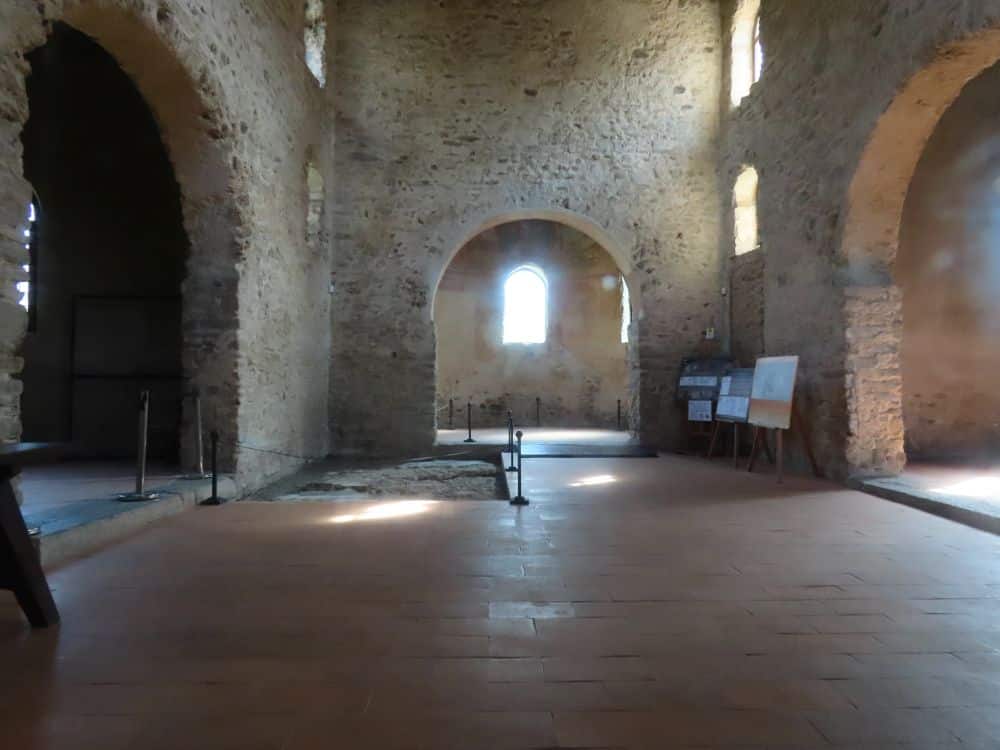
This small church looks like a pretty standard Romanesque church on the outside: a simple rectangle with three rounded apses that were added in the 12th-13th century. Inside, though, are Lombard-period frescoes dating to the 9th century, as well as some added later, at the same time as the apses. While they are only fragmentary, the artistry is clear, and while they seem to be Byzantine-influenced, the artist(s) show a better understanding of perspective.
I could not see the frescoes from my efforts to peer in windows, but apparently they include many common Christian themes: scenes from the life of Jesus as well as images of several saints.
However, a different theory holds that the frescoes are actually about the Life of Mary, since Christian dogma wasn’t yet set in stone at this early date. The image in the frescoes of the “Ordeal of the bitter water” is particularly rare, and supports the idea that the frescoes are more about Mary than Jesus. It’s a story from the Old Testament, but here it depicts a legend that Mary and Joseph had to go through this trial to prove their innocence of adultery.
Book your accommodations in Lombardy, near Castelseprio, or in Milan.
4. The Basilica of San Salvatore
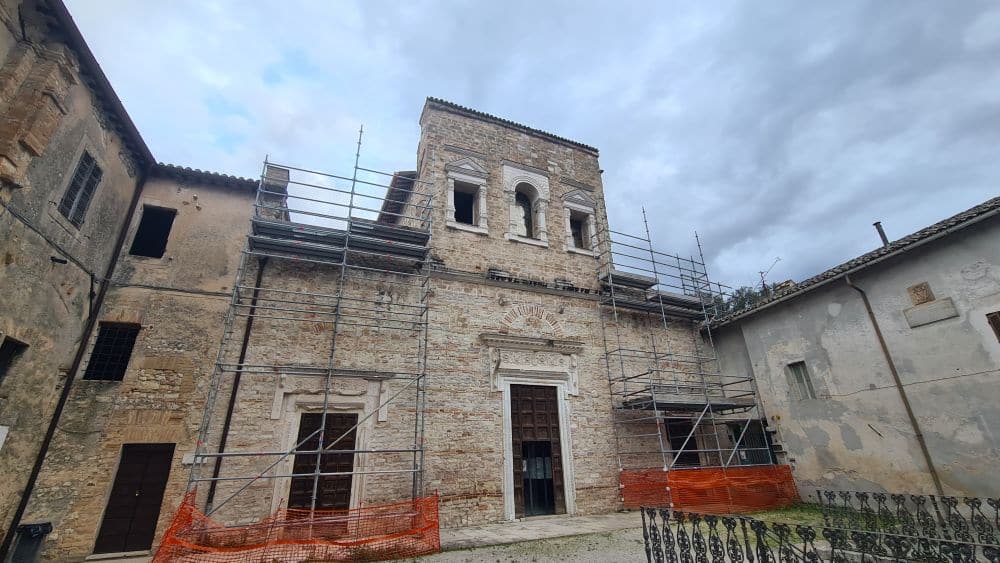
We were not able to enter this church in Spoleto, which, when we visited in early 2026, was under renovation to repair structural damage from an earthquake. It’s rectangular, with two side aisles and a semicircular apse, and two smaller apses on either side. The façade is missing some elements, but the detailed Classical decorative stone carvings around the doors and the three upper windows are still there.
The style of the church uses classical references both in terms of its use of arches and columns in Roman style, and in its more practical use of materials reused from ancient buildings: things like columns and capitals and other decorative elements. If you visit and get to go inside, notice the mix of Classical styles with, for example, repurposed Corinthian and Doric pillars.
Find accommodations in Spoleto if you’re planning to visit both San Salvatore and the next one, the Temple of Clitunno. We stayed in a rather quirky but lovely old villa out in the countryside near Spoleto.
5. The Clitunno Tempietto or Temple of Clitunno
Again, we were not able to see the inside of this one because of its limited hours in the off-season. Seeing just the outside, it’s hard to imagine that this dates from the Middle Ages. It looks like a Roman temple with its Corinthian pillars.
There’s some debate over the building’s age, ranging from the 4th century to the 13th. Most likely, though, it dates to when the Lombard Duchy of Spoleto was still independent, which means before 729 AD, when the Lombard king took control here. Certainly its classical style lent the Lombard Duchy status by visually linking it to the Roman period.
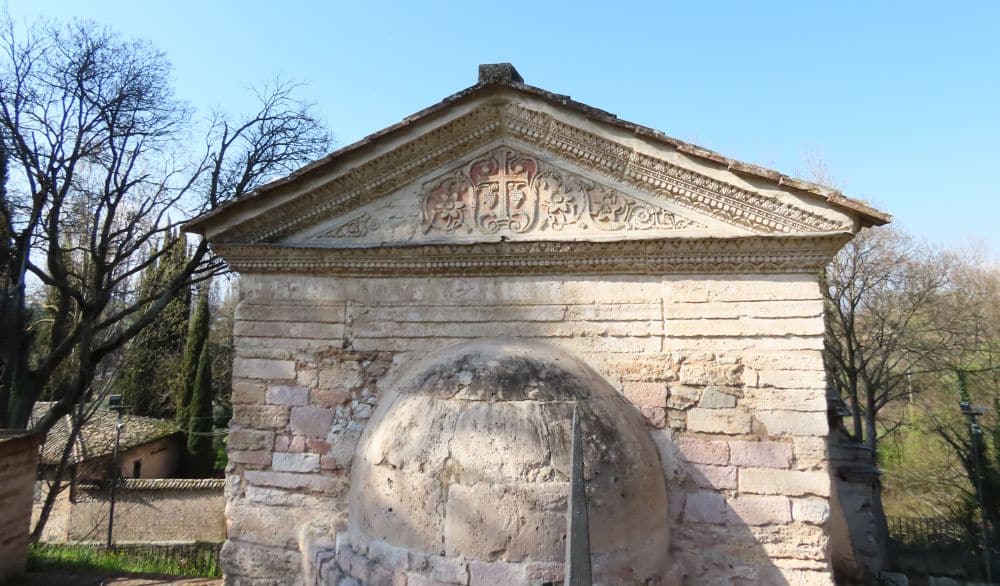
Much of the temple was built of pieces from Roman ruins nearby, while some – the statues, in particular – were carved expressly for this temple: excellent imitations of Roman-style artworks.
Inside are remains of frescoes from the Lombard period showing Jesus, Peter and Paul, angels, and other imagery. Some of these imitate famous Byzantine icons.
6. The Saint Sophia Complex
Completed in 760 by the Duke of Benevento, this was his personal church. He also annexed a Benedictine convent next door, now housing the Samnium Museum where the original 12th-century cloister still stands.
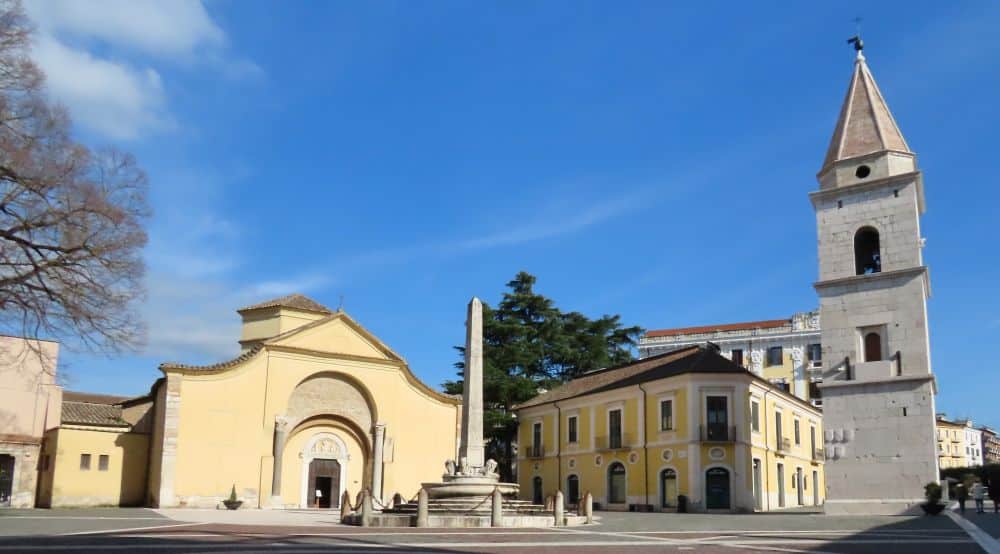
The exterior is not original because of an earthquake in 1688, after which it was repaired in more of a Baroque style. Inside, it is basically star-shaped, with three apses at the far end as you enter and two triangular niches at either side. Columns stand in two concentric circles, with the six inner ones supporting the dome. The outer circle has ten columns.
The Longobards’ classical preferences are visible here: the inner columns have reused capitals at their tops. Eight of the outer columns are square, made at the time of building, but the other two are reused.
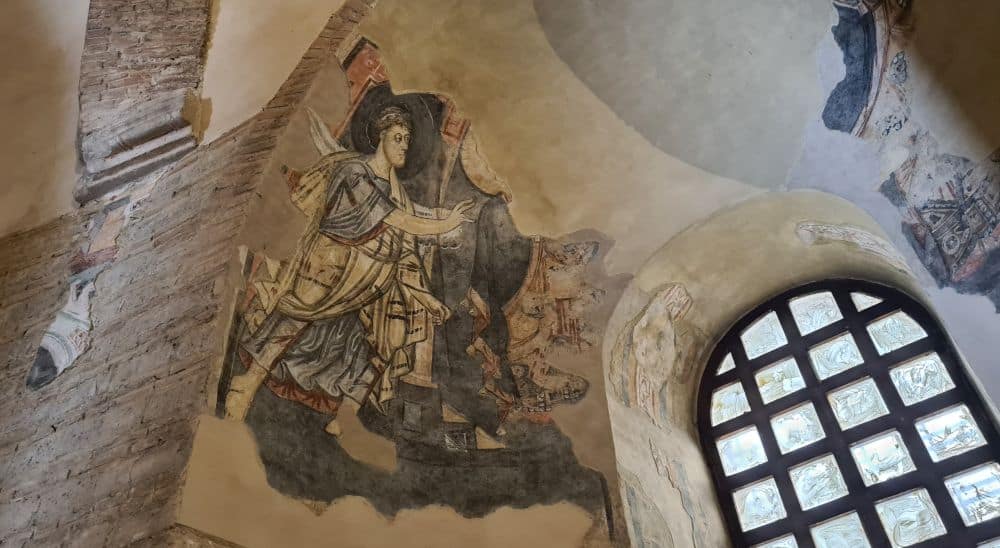
Some fresco fragments remain in the apses and date to the 8th century. They depict the Annunciation to Zechariah, the Annunciation and the Visitation. There’s also one of what looks like a knight on a horse – St. George slaying the dragon, perhaps?
Find accommodations in Benevento.
7. The Sanctuary of San Michele Archangelo
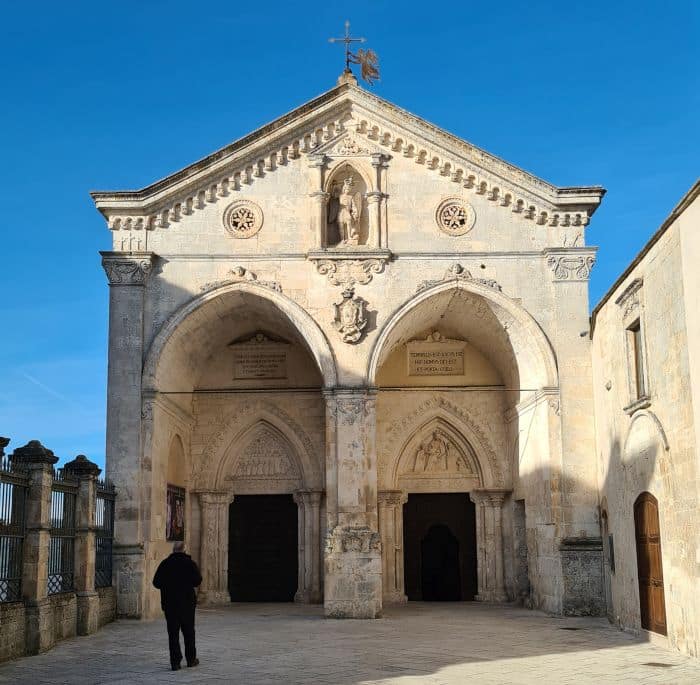
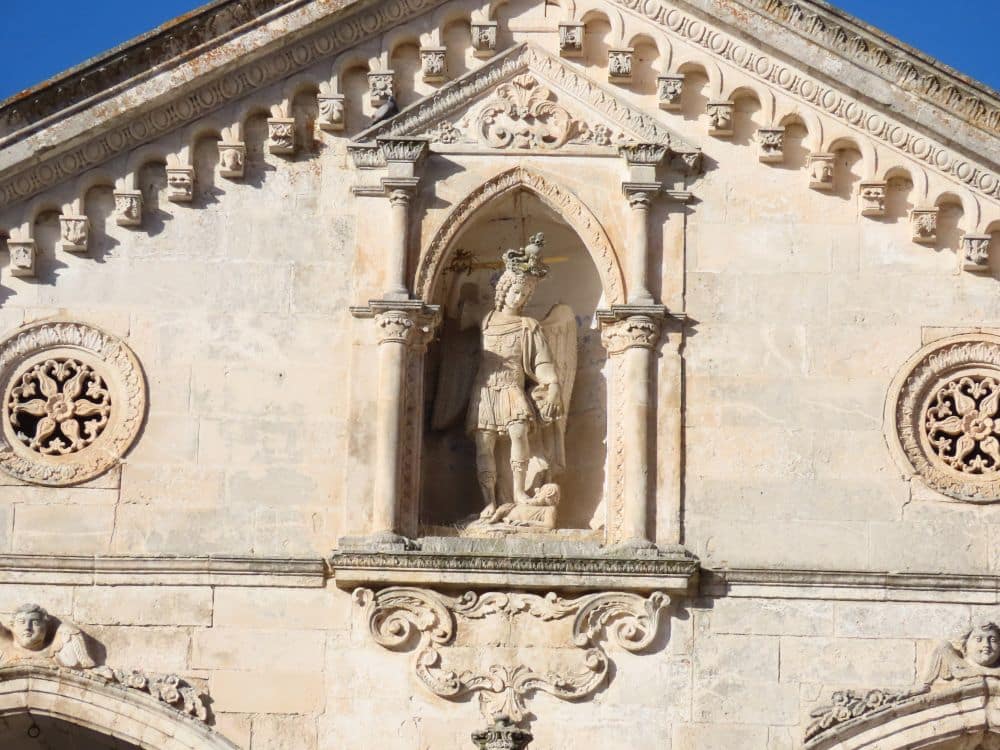
This very unusual church was built over a cave that had probably been used for hundreds of years for pagan worship. In the 5th century, worshippers of Archangel Michael started to use the cave. In the 7th century the Duchy of Benevento took control of the cave and it became the national sanctuary for the Lombards.
Over the course of the next century, the Lombards built a crypt below the cave with a long barrel-vaulted gallery. It was only rediscovered in the mid-20th century. They also added buildings on and around the cave so that worshippers could access it more easily, while later, in the 13th century, others made changes that moved the entrance uphill, nearer their town. This hid parts of the Longobard-built entrance. It has remained almost completely unchanged ever since.
The Lombards added a long tunnel as well to accommodate pilgrims. This was a stop on the pilgrim route to Jerusalem called the Via Francigena.
Today, the cave, called the Basilica Grande, is closed to the elements, with light entering from the outside through windows in the Longobard-era walls. Staircases lead down into the basilica from a grand, classically-inspired entrance.
When we arrived, a service was going on in the cave/basilica and it was filled with worshippers, so we got ushered in and stood at the back, i.e. facing the cave. Unfortunately, this meant that we could not take any photos.
However, it allowed us to take a good look at the space. The original cave is very much still visible, with its uneven shape and natural rock. Inside it is the altar and some of the pews, while the rest are further out of the cave on a built floor. Some chapels are carved into one side, while the built walls opposite the altar have small chapels too.
The sanctuary also houses a museum that contains lots of sculpture from the site, and includes two of the crypts.
Find accommodations in or near the lovely little town of Monte Sant’Angelo.
Are the “Places of the Power” worth visiting?
Anyone with a particular interest in the Longobards will want to visit these sites, mostly because there’s not much of their legacy left to see outside of museums. However, anyone else probably won’t find them all that interesting. Take a look, though, if you happen to be near one on your travels. Notice, particularly, the classically-inspired structures and the common reuse of ancient materials, meant to lend status to their efforts.
Of the two we saw inside and out, plus the others we saw on the outside, the Sanctuary of San Michele Archangelo was the one that seemed the most worth visiting, just because of how unusual it is as an extension of a cave. From the sounds of it, the Santa Giulia Museum is probably very much worth visiting if you are in Brescia.
Tips for visiting the Longobards in Italy sites
If you read my account above, you’ll see why it’s important to check opening days and hours ahead of time. Clearly winter is not the time! While the Sanctuary of San Michele Archangelo seems very much still active, the lesser-known ones have more limited opening hours, especially off-season. Check first!
Be aware that some of these are still places of worship, so dress modestly and stay quiet and respectful if there are any worshippers present or services taking place.
Italy has more UNESCO World Heritage sites than any other country. Look at the UNESCO site map of Italy to see what’s near where you’ll be traveling.
You’ll see from the information that follows that your best bet is to rent a car to get around. If you do so, though, avoid any city centers! They have limited traffic zones – you’ll see signs at the entrances – that you may not enter with your rental car. If you do, you’ll get a fine, and your rental car company is likely to add a fee as well. Instead, park outside the zone and walk or take a bus in.
Where are the Longobards in Italy sites?
Northern Italy
- Gastaldaga area and the Episcopal complex: Via Giovanni Battista Candotti 1, 33043 in Cividale del Friuli. This is north of Trieste, right near the border with Slovenia. The drive from Trieste is an hour and 15 minutes, but the bus will take 2-2.5 hours and includes one transfer.
- San Salvatore-Santa Giulia: via Musei, 81/b in Brescia, which is halfway between Milan and Verona and about 35 minutes by train from either one. If you drive, it’s about an hour and a half from Milan and about an hour from Verona. From the Brescia train station, you can walk there in 20 minutes or take the metro to the Vittoria stop and walk 10 minutes.
- The castrum with the Torba Tower, Torba Monastery and Santa Maria foris portas: Via Castelvecchio, 1513, north of the town of Castelseprio, which, in turn, is south of the larger town of Varese and north of the city of Milan. From Milan it’ll take an hour to drive, but at least 2 hours via public transportation by bus (with a transfer or a combination of bus and train). From Varese it’s a 30-minute drive or an hour by bus, with one transfer.
Central Italy
- Basilica of San Salvatore: via della Basilica di San Salvatore in Spoleto, north of Rome. By car it’ll take about two hours to drive there from Rome, and about the same by public transportation from Rome Tiburtina or Termini to the Spoleto station, after which you’ll need to walk about 20-25 minutes.
- Clitunno Temple: Via del Tempio, 1 Loc. Pissignano in Campello sul Clitunno. This temple is not far north of Spoleto, about 15 minutes by car, so it makes a good combination with the Basilica of San Salvatore. The E423 bus can take you here from the Basilica in about a half hour. From Rome it’s a 2-hour drive, or it’ll take 2.5-3.5 hours if you take a train to Trevi and transfer to the E423 bus.
Southern Italy
- Santa Sofia complex: Piazza Santa Sofia in Benevento, not far outside of Naples. It’ll take 1.25 hours to drive there from Naples, or 2-2.5 by train or train + bus, after which you’ll need to walk for 25-30 minutes to reach the church.
- Sanctuary of San Michele Arcangelo: Via Reale Basilica, 127 in Monte Sant’Angelo. This is on the east coast, across the Italian peninsula from Naples and up the coast from Bari. By car from Naples it’s a 3-hour drive, but it’ll take 6-6.5 hours by a combination of train and bus. From Bari it’s a 2-hour drive and about 3 hours via train and bus.
For more information about the Longobards in Italy sites, their opening hours and admission fees, see their official websites:
- Gastaldago area (MUCRIS museum)
- San Salvatore-Santa Giulia
- The castrum, Torba Tower, Torba Monastery and Santa Maria foris portas
- Basilica of San Salvatore
- Clitunno Temple
- Santa Sofia complex
- Sanctuary of San Michele
This more general website covers the history of the Longobards as well as each of the locations in the UNESCO designation.
Have you been to any of the Longobards in Italy locations? If so, do you have any additional information or advice about this UNESCO World Heritage site? Please add your comments below!
- About the author
- Posts by this author

Rachel Heller blogs at Rachel’s Ruminations, a website focusing on historical and cultural sights/sites for independent travelers. She is also the owner of this World Heritage Travel website.