
Ferrara, City of the Renaissance, and its Po Delta
By Rachel Heller
What is Ferrara and its Po Delta?
Ferrara, a city in northern Italy, is important in terms of Renaissance history and urban planning. During the Renaissance, under the rule of the House of Este, architects and urban planners put their ideas about ideal cities and humanism into action here.
The old walled medieval city was the starting point of the changes made during the Renaissance period in the 14th-16th centuries. The walls were made longer to add more land inside them (called addizione). The new sections were planned and laid out with the idea of creating an “ideal city.” These newly-designed sections would have harmonious and beautiful sight lines rather than focusing on individual buildings.
Disclosure: This article contains affiliate links. Making a purchase through an affiliate link will mean a small commission for this website. This will not affect your price. Privacy policy.
The first Este-led addizione happened in the 14th century. The second and third extensions of the city were added in the mid and late 15th century, along with the city walls around them. The new streets in the addiziones were straight or curved only gradually, and the main thoroughfares were wider than most medieval streets.
The result of this conscious urban planning is that this city looks and feels different from most other Italian cities. Most old cities in Italy grew organically over centuries from ancient Roman towns, with a circular or oval center and many narrow, jumbled roads close together. This city is newer, originating in the early Middle Ages and growing according to the Renaissance-era plan rather than organically.
The second part of the UNESCO designation is the Po River Delta, where the Este family carried out projects as well. They changed the landscape by building canals and other water control measures to drain the marshland, creating large agricultural estates. At the same time they built a large number of residences in the countryside for themselves to stake their claim and show their importance. These estates, the new roads they built, and the new canals connected the countryside to the newly-planned city.
Both the city and countryside versions of this planning fervor express a Renaissance desire to mold both agricultural landscape and urban areas to fit a human-centered ideal.
Why is Ferrara a UNESCO World Heritage site?
The main reason for its UNESCO designation has to do with urban planning. The ideas developed in this city during the Renaissance influenced urban planning in Italy and across Europe as a whole. According to UNESCO, Ferrara constitutes “an exceptional example of Renaissance period urban planning in which the layout and built forms from this period are still visible and where the urban fabric is virtually intact.” The same goes for the Po Delta: the Renaissance-era influences are still visible today.
Additionally, UNESCO’s listing points out that the Este family brought many artists, poets and philosophers to Ferrara. This made it “a major centre for the development and practical application of ‘new humanism’ in Italy.”
What can you expect on a visit to Ferrara?
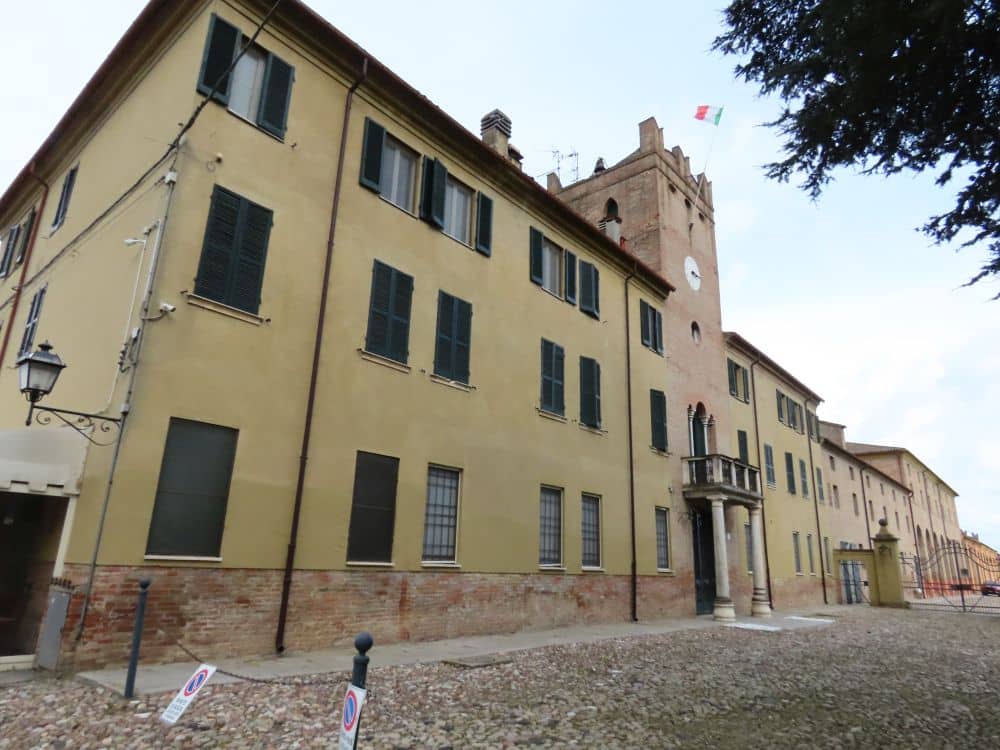
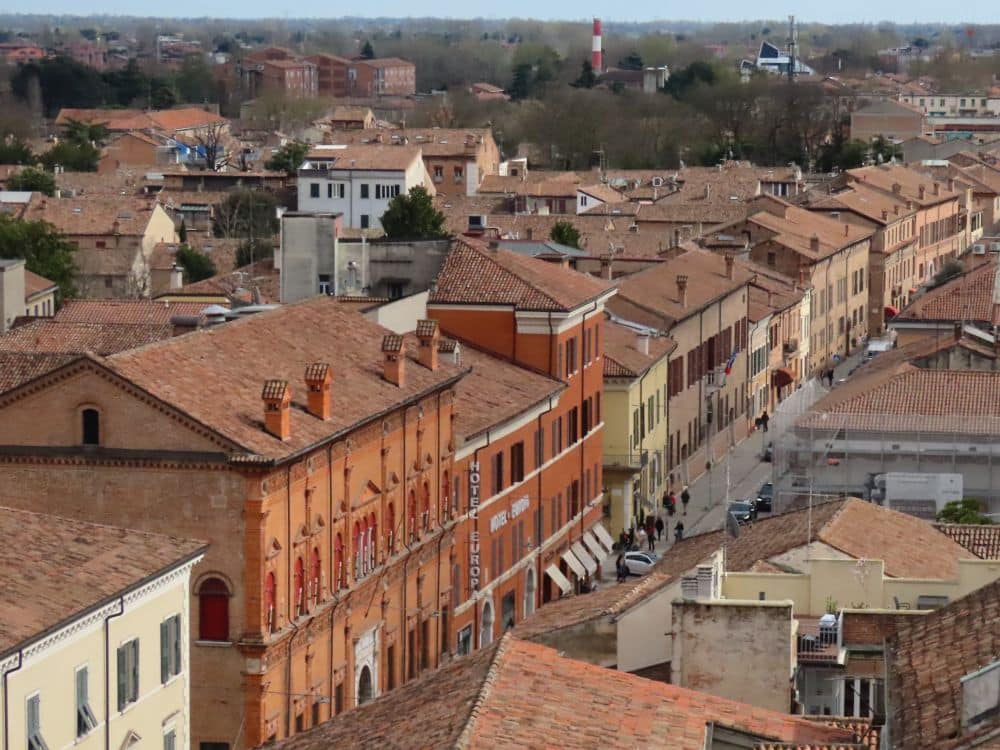
To us, Ferrara looked and felt entirely different to other cities we’ve visited in Italy. There is a certain homogeneity in the buildings, as you look along the long, almost straight streets. Of course, in the oldest section, there’s more variety, but the effects of planning are clearly visible. The streets and plazas are wide and pleasant to stroll. Like any Italian city, there are plenty of cafes and shops to enjoy.
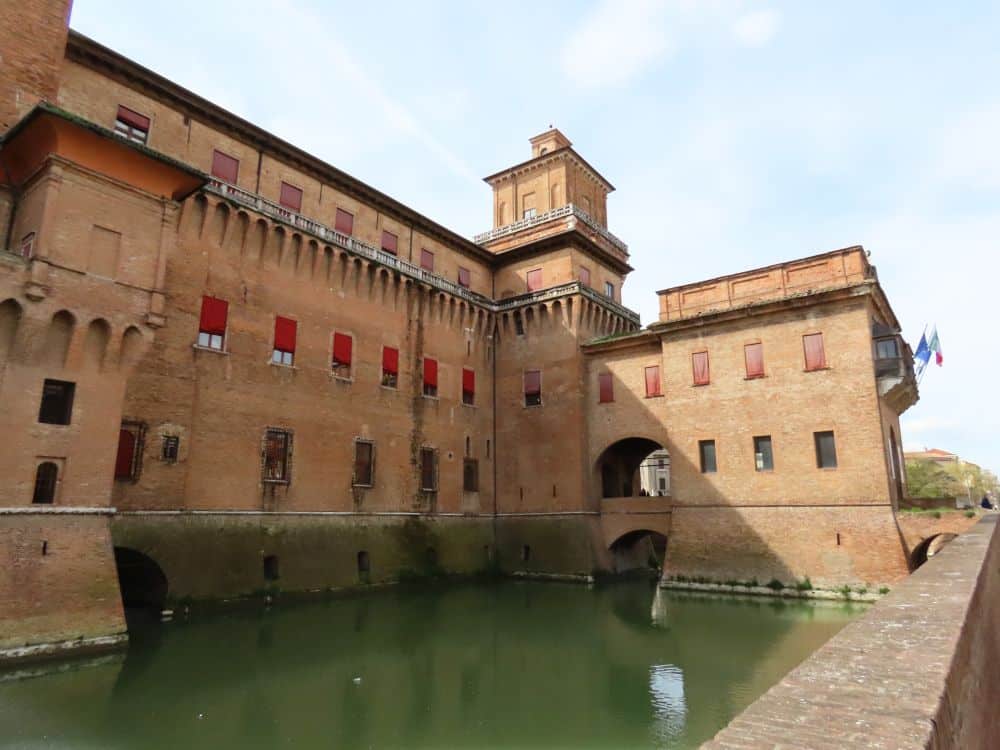
Castello Estense (also called Castello di San Michele or just Ferrara Castle) was, apparently, the blueprint for many of the country manors built by the ruling Este family. It started as a medieval castle, but once the Estes gained power, they added to it. Eventually, over several generations, its function shifted from defensive to residential. Today you can tour it. The exhibits inside make the history of the city’s urban planning and the ideas behind it much clearer.
Is the “City of the Renaissance” worth visiting?
If you have an interest in urban planning, you should certainly visit Ferrara and particularly the museum in the castle. If urban planning doesn’t interest you, you shouldn’t go out of your way to see it. It’s a pleasant city, though, with lots of high-end shopping and outdoor cafes, but I’d recommend other cities in Italy if history is your interest: Rome, for example, or Florence or Venice.
Tips for visiting Ferrara
Try to avoid visiting on a Saturday or Sunday, when locals throng the center of the city. Also don’t visit on a Monday, when most sights and museums are closed.
Definitely tour the castle. You’ll get a better understanding of the urban planning of the city. You’ll also see the very creepy dungeons below ground level and climb one of the four towers to a great view over the city.
Find accommodations in the historic center of Ferrara.
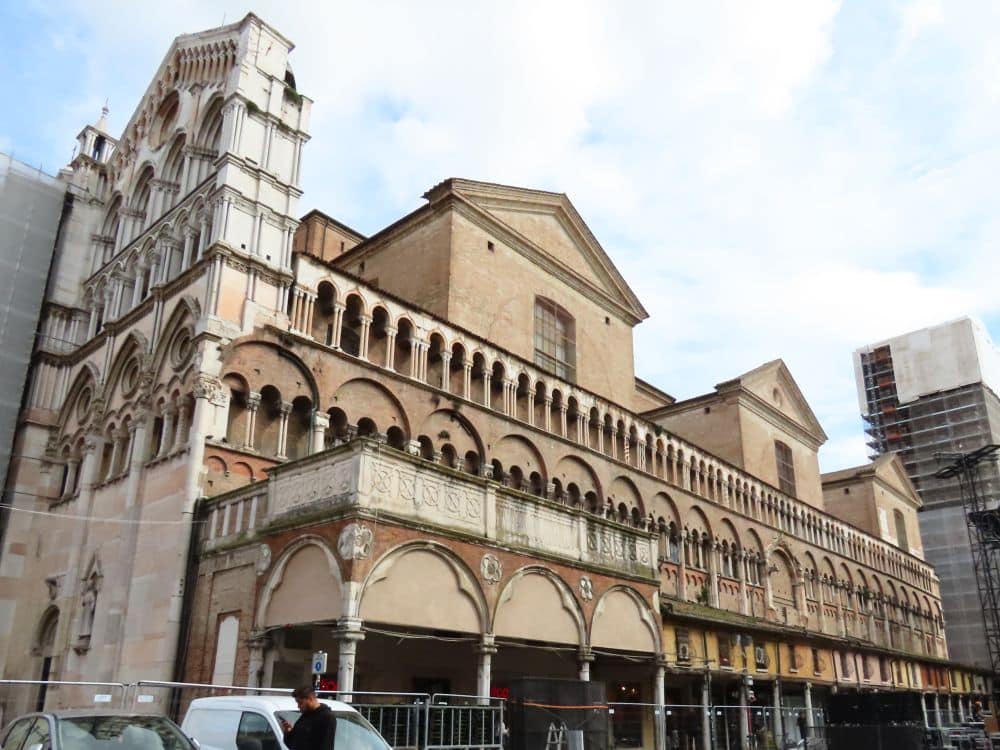
The Cathedral of Saint George is in the very center of town and combines lots of styles: its original Romanesque architecture and later additions like Gothic elements and a Renaissance belltower. The inside is baroque after a 1712 renovation.
The original brick wall around the city (1492-1520) is mostly intact and in good shape. Today it’s a park surrounding the town.
To learn more, think about booking a private walking tour of the city.
The landscape of the Po Delta outside Ferrara is flat and agricultural, largely due to the efforts of the Este family to drain the marshlands. Having said that, there’s really not much to see except for some very straight and narrow canals.
If you’re getting to Ferrara by car, be careful to avoid the sections of town marked as ZTL, which are limited traffic zones. You’ll get a big fine if you enter without a permit. Instead, park in a lot or on the street and walk in. White lines are free spaces. For blue spaces you need to pay a parking fee. Don’t park in the yellow lines; they’re for the disabled or other permit parking only.
Compare rental car prices here.
If Renaissance urban planning and ideas around ideal cities are of interest to you, you might want to visit the other Italian cities that are on the UNESCO list because of their expression of these ideals: Pienza and the combined site of Sabbioneta and Mantua.
Where is Ferrara?
Ferrara is between Venice and Bologna in northeastern Italy. By car, it’s about an hour from Bologna and an hour and 20 minutes from Venice. By train, you can get to Ferrara from Bologna in 30-50 minutes. From Venice, it’ll be fifty minutes to an hour and a half, depending on which train you take.
From Florence, you can get to Ferrara by car in 2 hours and 10 minutes. By train it’s quicker: about an hour and a half.
For more information about Ferrara and its various sights, see its tourism board’s website.
Have you been to Ferrara? If so, do you have any additional information or advice about this UNESCO World Heritage site? Please add your comments below!
- About the author
- Posts by this author

Rachel Heller blogs at Rachel’s Ruminations, a website focusing on historical and cultural sights/sites for independent travelers. She is also the owner of this World Heritage Travel website.