
Etruscan Necropolises of Cerveteri and Tarquinia
By Rachel Heller
What are these Etruscan Necropolises?
This is a two-part UNESCO designation encompassing two different Etruscan burial grounds. Both of them were used by the Etruscans in the region over hundreds of years, from approximately the 9th century BC until the 2nd century BC, when the Etruscans were conquered by the Romans.
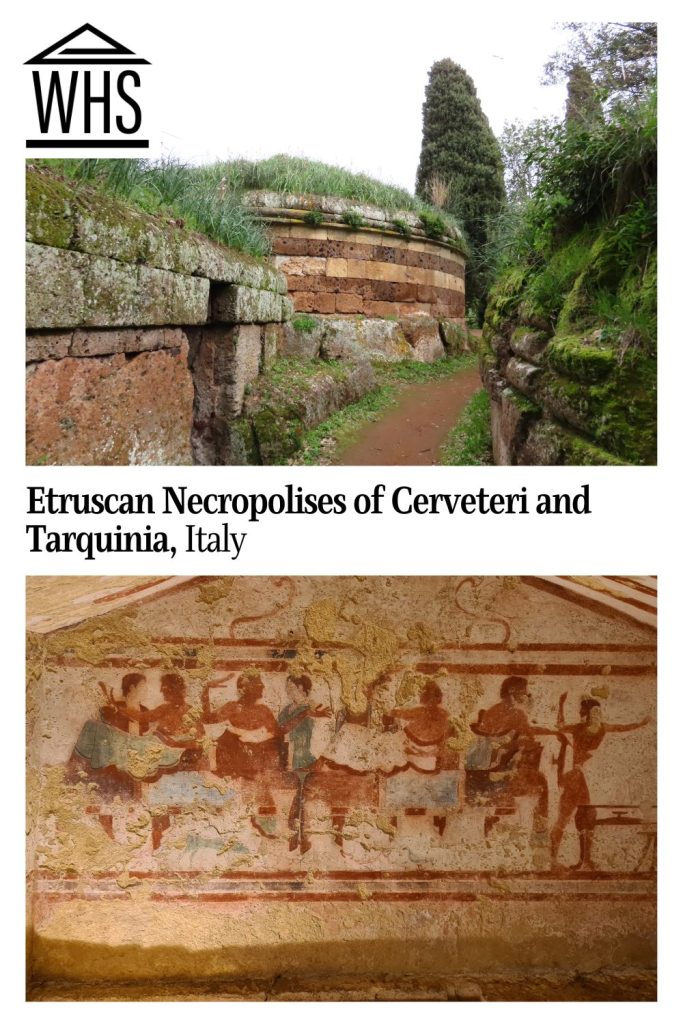
The tombs at both locations were carved out of the bedrock. The earliest ones were simple trenches holding large pots in which the ashes and personal belongings of the deceased were interred. These simple trenches evolved over time into much larger and more complicated tombs. At first, they were carved into a rock wall. Later, the Etruscans carved the tombs downwards, enclosed them with stone walls and ceilings, and topped them with piles of soil. This created small hillocks called tumuli (singular: tumulus).
Disclosure: This article contains affiliate links. Making a purchase through an affiliate link will mean a small commission for this website. This will not affect your price. Privacy policy.
Each tomb contained at least one room. Many, though – those of the wealthier families – were multi-room underground complexes. Each included a carved stairway down from the entrance on the surface.
The two necropolises, however, are quite different – or at least they are today – despite being only about 40 km (25 mi) apart, as the crow flies.
The Etruscan Necropolis of Banditaccia at Cerveteri
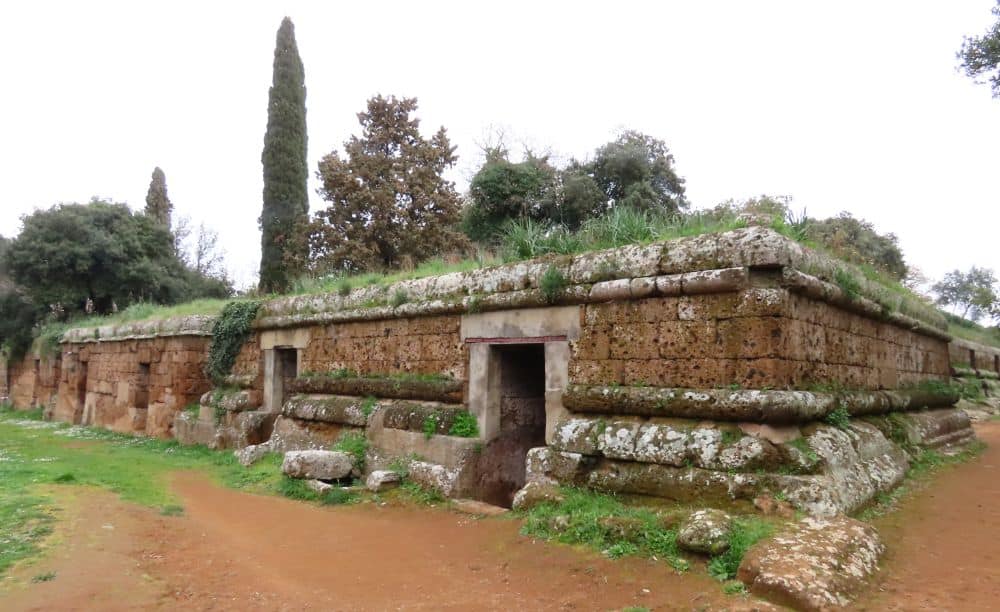
This site contains thousands of tombs over about 400 hectares, but only about 10 hectares with about 400 tombs are open for visitors. The earliest tombs pre-date the Etruscans. They’re simple holes cut in the rock to hold pots containing the ashes of the deceased. From about the 7th century BC, the Etruscans built much more ornate round tombs covered with earth.
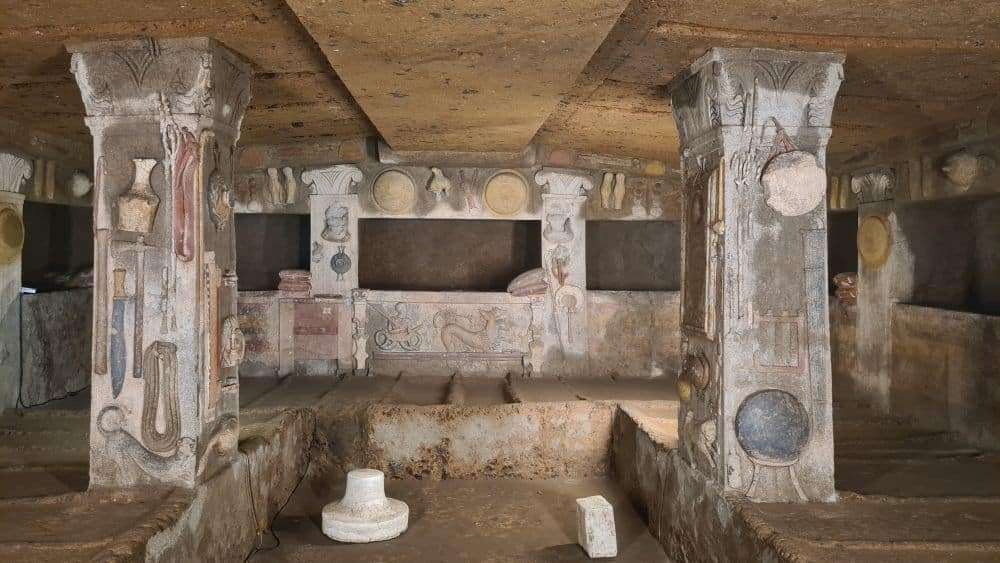
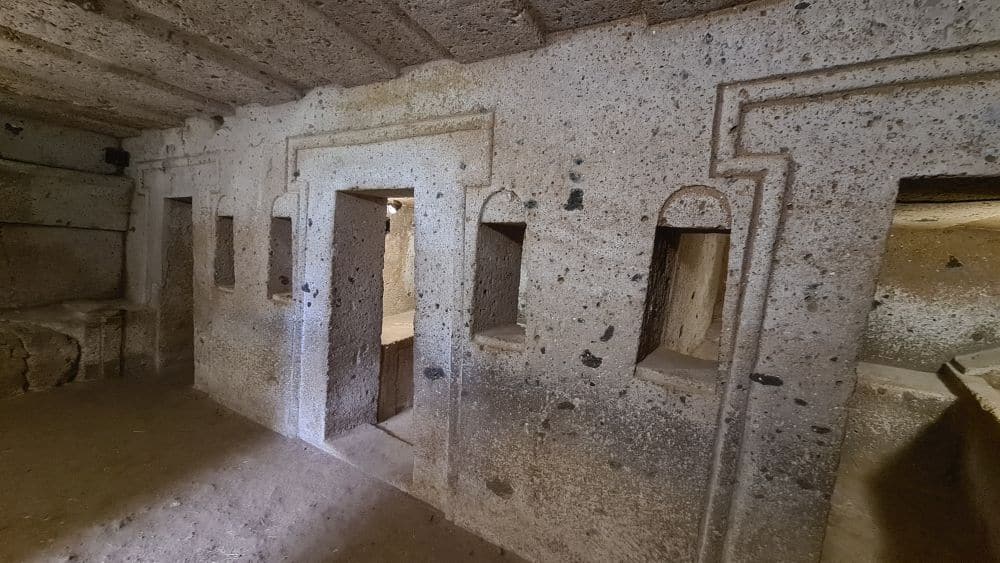
The rooms inside the tombs, accessed via a stairway down from the entrance, included furnishings carved from the rock. Many include “beds” for the deceased, pillars with decorative elements, windows between rooms, and/or chairs for visiting family. They were likely meant to look like Etruscan homes, and were furnished with items that Etruscans kept in their homes. Some included painted walls or ceilings, though only one (that is open to visitors), called the Tomb of the Reliefs (4th century BC), still contains decoration in good condition.
It seems that the intention was for the burial ground to simulate a city for the dead to spend the afterlife in. It had streets and houses that imitated real-life Etruscan towns, and surviving relatives would go there to visit. From the 6th century BC, the tombs took on a more consistent square form in neat rows, expressing a taste for urban planning.
Many items found in the tombs at Cerveteri – including lots of Greek ceramics – are on display at the Cerite National Archaeological Museum of Cerveteri.
Etruscan Necropolis of Monterozzi in Tarquinia
This necropolis tops a hill just next to the modern-day town of Tarquinia. Like at Cerveteri, it contains thousands of tombs dating to between the 7th and the 3rd century BC. Only a few are open to visitors today. At this site the tumuli themselves are almost gone. Over the centuries they were plowed over for farmland, and today each one has a small building over its entrance to protect it.
At Tarquinia the tomb rooms today are mostly empty, or have simple stone benches, but many originally held painted and carved sarcophagi, with life-sized and detailed images of the deceased on their lids. Many of these are on display at the Tarquinia Museum of Archaeology.
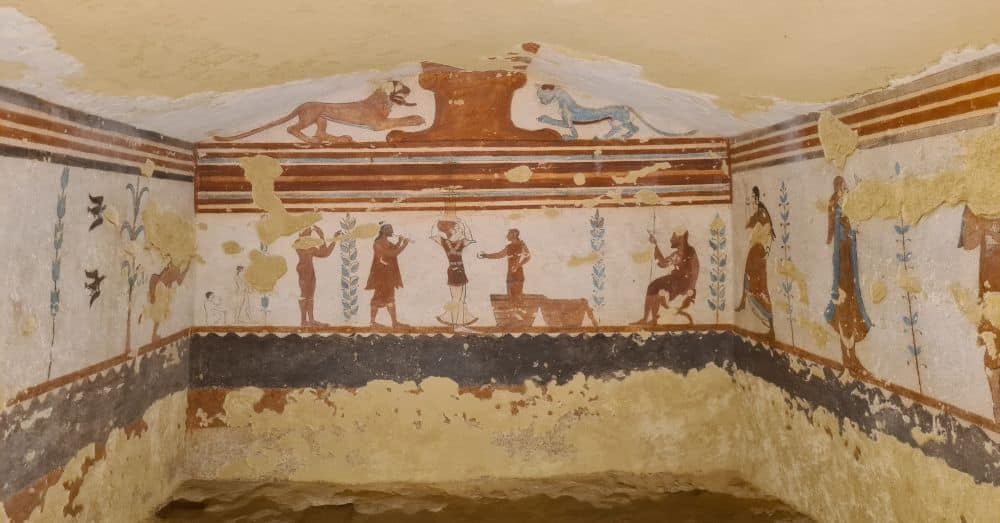
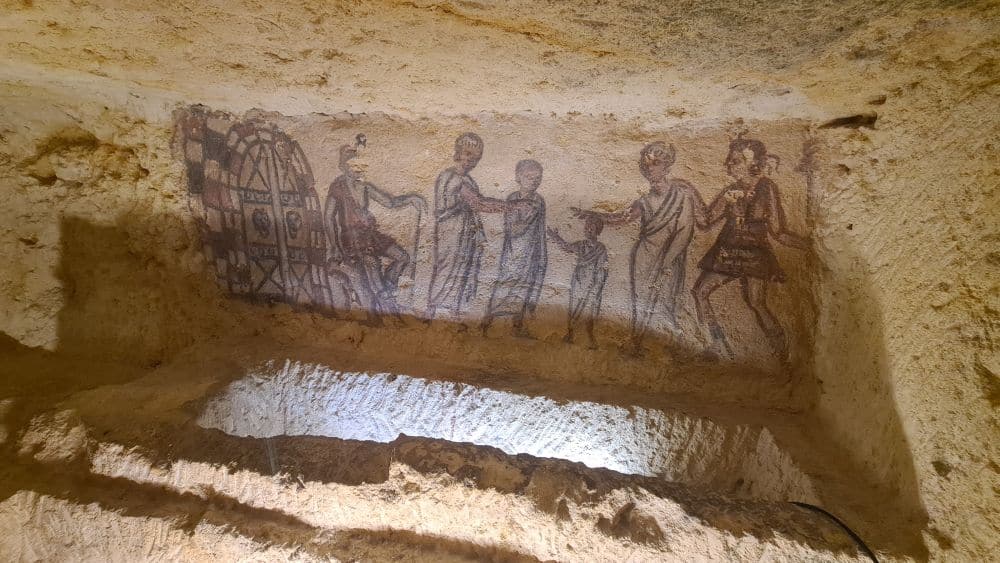
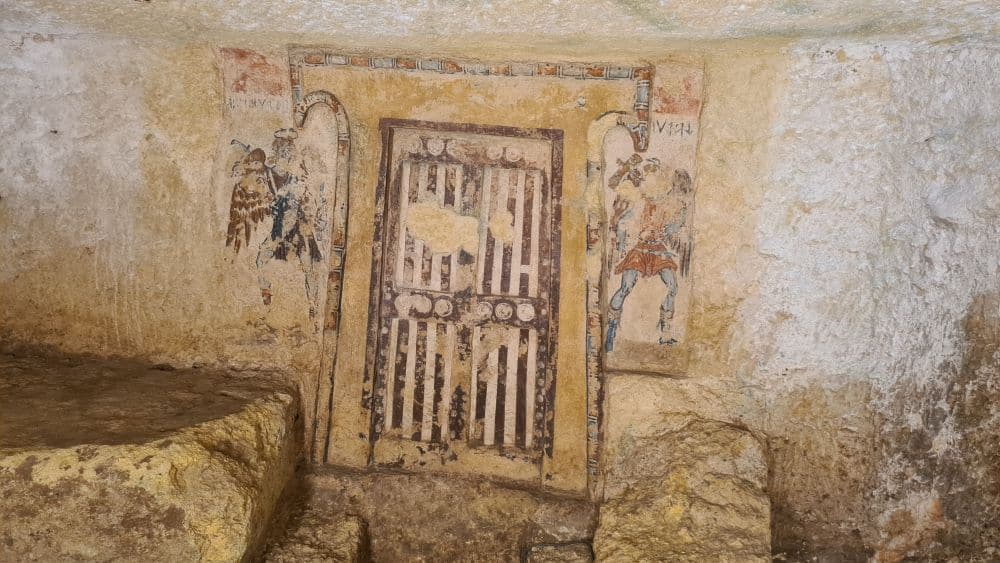
About 200 of the Tarquinia tombs have frescoes covering the walls, mostly showing scenes of daily life and celebrations. The later ones – about the 5th century BC and on – show Greek influence, depicting the deceased person’s passage to the Underworld.
Why are the Etruscan Necropolises a UNESCO World Heritage site?
According to UNESCO, the sites are “masterpieces of creative genius.” In Tarquinia this refers to the wall paintings and what we learn from them about the Etruscans. In Cerveteri, on the other hand, this references town planning and architecture.
The sites offer insight into Etruscan life and beliefs, especially since the Cerveteri tombs mimicked the Etruscans’ homes.
What can you expect on a visit to Cerveteri and Tarquinia?
Each site offers quite a different experience.
Cerveteri
The Cerveteri site is striking in that the tombs are very close together. Some are very large above the ground, still covered with earth, forming large hillocks. Visitors follow the dirt paths of the original streets between the tombs and can freely enter many of them. The paths are marked as “easy,” “medium” and “hard,” which seems to be mostly about how many steps or uneven places each one has. I managed all three levels, even though I was using a cane because of knee problems.
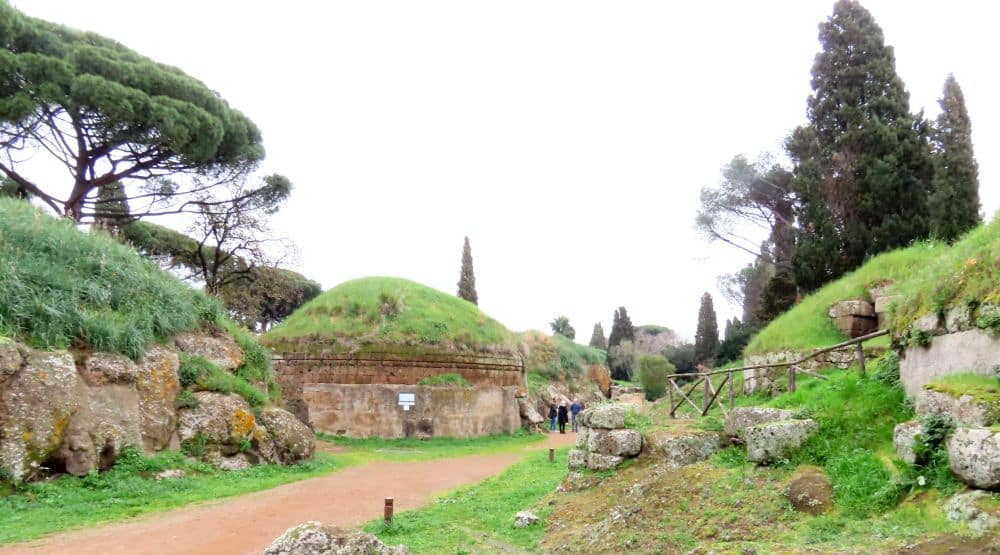
Descending the steps inside the tombs, you’ll see that each is different in terms of layout and embellishments in stone. Some have decorative elements at the tops and bottoms of pillars or small windows cut in walls between rooms. In some cases, the tombs contain multiple rooms in the rock-cut chambers. The “beds” for the deceased may have triangular heads for women and carved pillows for men. Some tombs have many beds; some just one or two.
Tarquinia
The Tarquinia site makes less of an immediate impression because each tumulus is very small. A modern entrance with a door has been added over each existing entrance.
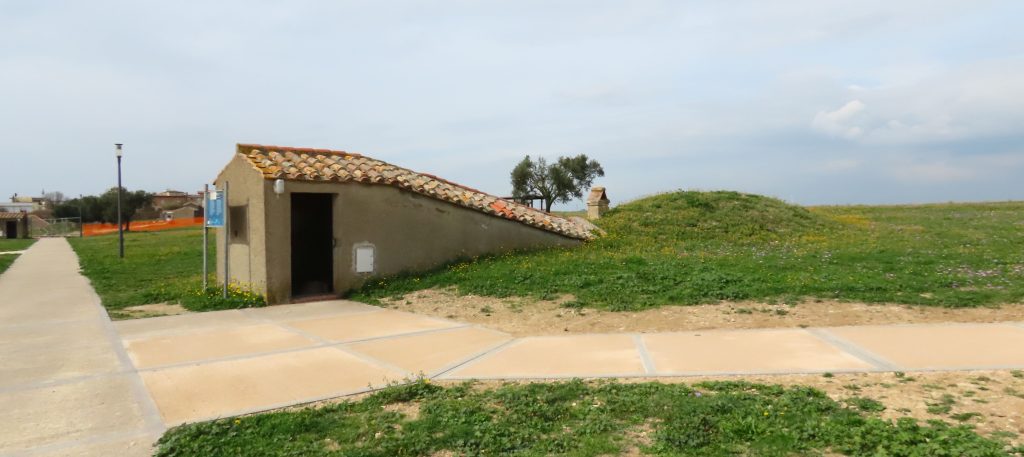
However, when you descend the steps – generally a modern stairway added over the original – you see, at the bottom, the entrance to the tomb itself. Because these tombs have frescoes, you can’t enter them. (This is also the case with the Tomb of the Reliefs at Cerveteri.) The humidity that visitors breathe out would soon destroy them.
Instead, a double glass window blocks the entrance, so you can only peer into the room(s) of the tomb. By pushing a nearby button at the tomb entrance you can turn on the inner lights and get a good look at the room inside, despite the glass. The tombs that are open to visitors all have frescoes: some still vivid and intact, some less so.
Are the Etruscan necropolises worth visiting?
If you have any interest in Etruscan history, art or architecture, these are a must. After all, while you might see many Etruscan artifacts in museums, these sites, especially Cerveteri, show a bit more about Etruscans as a living civilization. Even a generalist would likely enjoy these sites. Cerveteri is about an hour from Rome, so it would make a very pleasant half-day or full-day trip out of the city.
If you are traveling with children, the Cerveteri site would go over well. There are few limits on where visitors can go in or around the tombs. Children would enjoy climbing to and into the tombs, perhaps helping their adults to find the ones most worth seeing.
If you are wheelchair-bound, you have fewer options. You could probably manage the “easy” path at the Cerveteri site; it’s dirt, but flat and wide enough. Seeing the tumuli from the outside certainly makes an impression. However, you won’t be able to enter any of the tombs. At the Tarquinia site, you’ll find a wide and perfectly-paved path past each tomb, yet you won’t be able to enter any of them if you can’t manage quite long flights of steps. And from the outside, they’re not interesting to look at like at the Cerveteri site.
Anyone who is claustrophobic is unlikely to enjoy either of the necropolises.
Tips for visiting the Etruscan necropolises
Be prepared for lots of walking, stair-climbing and, at Cerveteri, some walking on uneven steps and slopes. Good supportive shoes are a good idea, especially at Cerveteri.
There’s no food service at either site, so bring food and especially water. Dress for heat if you’re visiting in the summer: sun lotion and a hat would be wise.
If you have to choose one, make your choice based on your interests. For Etruscan art, you’ll see more at Tarquinia. If you want to get a glimpse of daily life, you’ll enjoy Cerveteri more.
Cerveteri is a bigger site in that more of the tombs are open to visitors. We spent about two hours there and about one and a half hours at Tarquinia. If you want to listen to the whole audio tour at either one (available via a QR code at each site), they’ll both take longer.
We visited in early March and both sites were almost empty. It’ll take longer during the busier seasons and on weekends because the stairs into each tomb are narrow. Especially at Tarquinia, you’re likely to have to wait your turn to peer through the glass in each one. In some tombs, my husband and I barely fit at the bottom of the stairs, and we had to take turns taking pictures through the glass. I’d plan, in the summer, three hours at Cerveteri and at least two at Tarquinia.
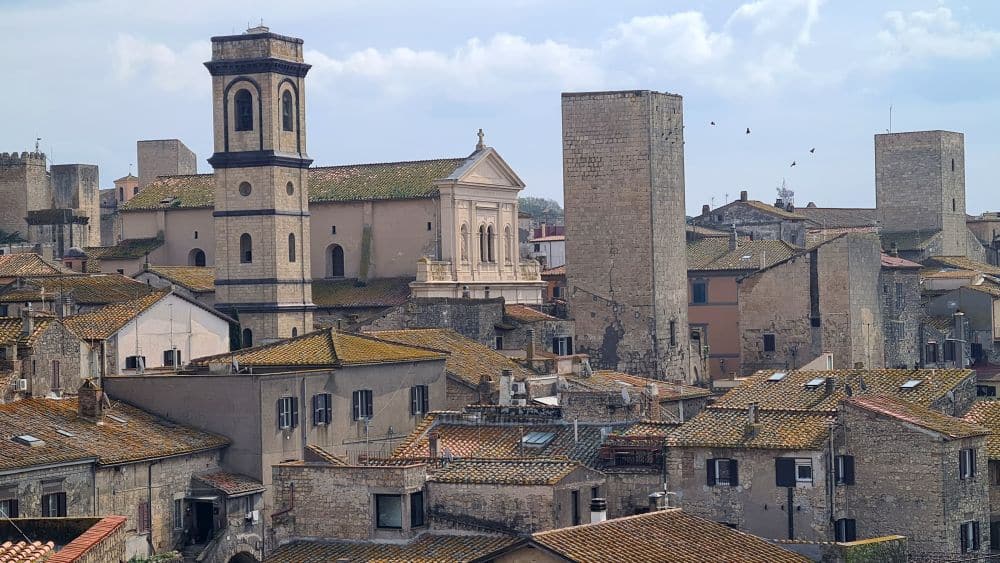
Plan to stay at least a night, preferably two, in Tarquinia. It’s a charming medieval walled city on a hill where you could wander for hours through the streets admiring the stone houses. We stayed two nights in this cozy B&B inside the walls, or there are quite a few other B&Bs in Tarquinia. Just make sure to find one inside the walled town if possible.
Go to the Archaeological Museum in Tarquinia to see the sarcophagi. The admission ticket to the necropolis there includes admission to the museum. Likewise, the admission ticket to Cerveteri includes admission to the Cerite Archaeological Museum in Cerveteri, which has some beautiful ceramics left in the tombs as grave goods.
Not far from Tarquinia on a plateau are the ruins of an Etruscan town now called the Civita. This is presumably where the people who built the Tarquinia Necropolis lived. We didn’t go because what’s visible seems pretty minimal, at least from the photos we could find on the internet. If it interests you, go take a look. You’ll find the remains of walls and a grand temple: mostly just the temple’s large platform. The most famous artifact found here is a clay depiction of winged horses, now in the National Archaeological Museum of Tarquinia.
Other UNESCO sites aren’t far away. If you’ll be in Rome, you’ll be seeing parts of the Historic Centre of Rome UNESCO site and probably the Vatican, which, not surprisingly, is also a UNESCO site. If you’re into hiking, two parts of the transnational UNESCO site Ancient and Primeval Beech Forests are nearby these necropolis sites. One is Monte Raschio and the other is Faggeta Vetusta del Monte Cimino.
Where are Cerveteri and Tarquinia?
The Etruscan Necropolis of Banditaccia is at Via della Necropoli, 43/45, near Cerveteri, about halfway between Rome and the port city of Civitavecchia. The easiest way to get there is by car, and there’s free parking at the entrance. The drive will take about an hour, perhaps less, depending on where in Rome you start and how the traffic is.
Compare rental car prices here.
To get there from Rome by public transport is much more complicated and time-consuming. Take a train from S. Pietro or Termina to Ladispoli-Cerveteri: about 20 minutes. From there, take Bus AA901A to Piazza Moro (about 15 minutes), then walk for about a half hour to reach the necropolis.
The Etruscan Necropolis of Monterozzi is at Via Ripagretta in Tarquinia. From Rome it’ll take you about an hour and 15 minutes by car or perhaps more depending on where you start and what the traffic is like.
Tarquinia is, like Cerveteri, a bit complicated to reach by public transportation. Take a train from Aurelia station to Civitavecchia (about an hour) and then walk to Piazza V. Emanuelle II (about 10 minutes) and take bus BL6D from there (about a half hour). Get off at Tarquinia Barriera S. Giusto and walk about 20 minutes to the entrance.
If you’re staying in Tarquinia, like we did, the necropolis is walking distance to the entrance, not far outside of the old walled city.
If you arrive in Civitavecchia on a cruise ship, you could take a guided tour to the Tarquinia Necropolis that includes the old city and the National Museum in Tarquinia.
Guided tours with transportation are also available from Rome, taking in both of the Etruscan necropolis sites.
If hiking is more your thing and you want to delve deeper into Etruscan history, this guided hike takes you to what remains of an Etruscan town and a temple.
For more information about these Etruscan necropolises as well as the corresponding archaeological museums, their opening hours and admission fees, see their official website.
Have you been to either of these Etruscan necropolises? If so, do you have any additional information or advice about this UNESCO World Heritage site? Please add your comments below!
- About the author
- Posts by this author

Rachel Heller blogs at Rachel’s Ruminations, a website focusing on historical and cultural sights/sites for independent travelers. She is also the owner of this World Heritage Travel website.