
Historic City of Vigan
By Teja
What is the Historic City of Vigan?
The Historic City of Vigan is the old city centre of a Spanish-era town in northern Luzon, the Philippines. Its architecture reflects the combined influence of southern Europe, native Filipino, and China, resulting in a unique hybrid culture and townscape within its region.
The Historic City of Vigan abuts the Govantes River. The old town centre lies around the main cathedral, and Plazas Salcedo and Burgos, forming an L-shape. Several streets extend the heritage area south, the most iconic being Calle Crisologo.
Disclosure: This article contains affiliate links. Making a purchase through an affiliate link will mean a small commission for this website. This will not affect your price. Privacy policy.
Why is Vigan a UNESCO World Heritage site?
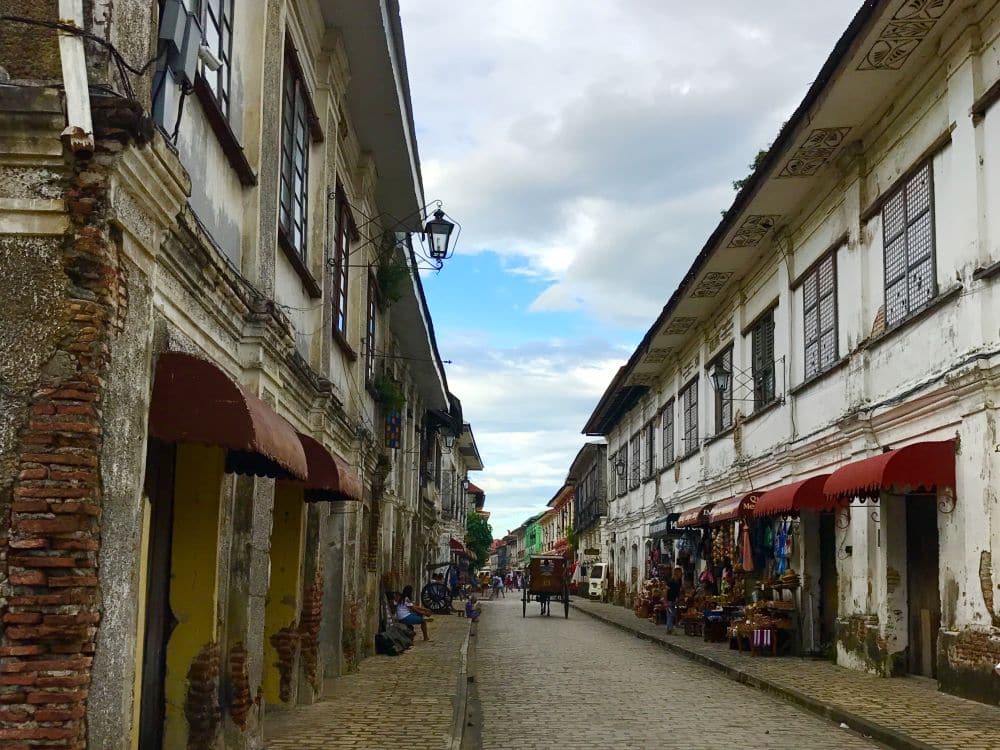
According to UNESCO, Vigan is “the most intact example in Asia of a planned Spanish colonial town.” It was planned in the 16th century following rules set for all Spanish colonies as the time, as detailed in the Ley de la Indias. However, the Historic Core of Vigan is distinct from its contemporaries in Latin America (such as Santa Cruz de Mompox in Colombia, Potosi in Bolivia, Puebla in Mexico, or Santa Ana de los Rios de Cuenca in Ecuador) due to co-influences from Chinese, Ilocano, and Filipino elements. Examples of these influences are visible in the steep pitched roofs (Chinese influence) and kapiz-shell window panels framed in wood (a Filipino feature).
Although Spanish colonials planned the city, its inhabitants were mainly affluent families of mixed Chinese and Ilocano origin. The UNESCO description states that the historic core area comprises 233 historic buildings on a grid of 25 streets, representing “a unique fusion of Asian building design and construction with European colonial architecture and planning” that is “exceptionally intact.”
What can you expect on a visit to Vigan City?
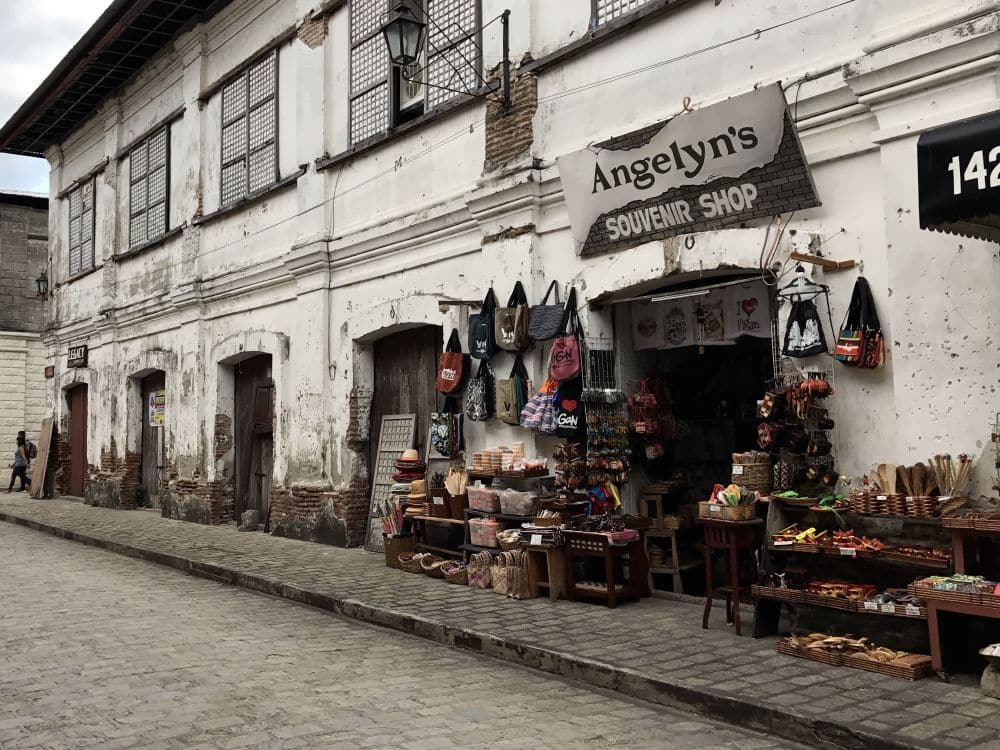
Today, Vigan is the capital of the Ilocos Sur region. The heritage zone is surprisingly under-promoted and seems under-maintained, given its UNESCO status. While not extensive, the charm of its historic city centre is obvious, with its cobbled streets and horse-drawn kalesa carriages. The entire heritage area is walkable.
Though wearing a facade of genteel decline, Vigan’s interesting architecture is still intact and can be appreciated. To me, it also felt different from other places in the Philippines. For one thing, it has more Spanish terms in its place and street names. For another, the mainstream culture has a touch of formality compared to more typical tourist spots in the Philippines, giving it an air of conservative respectability.
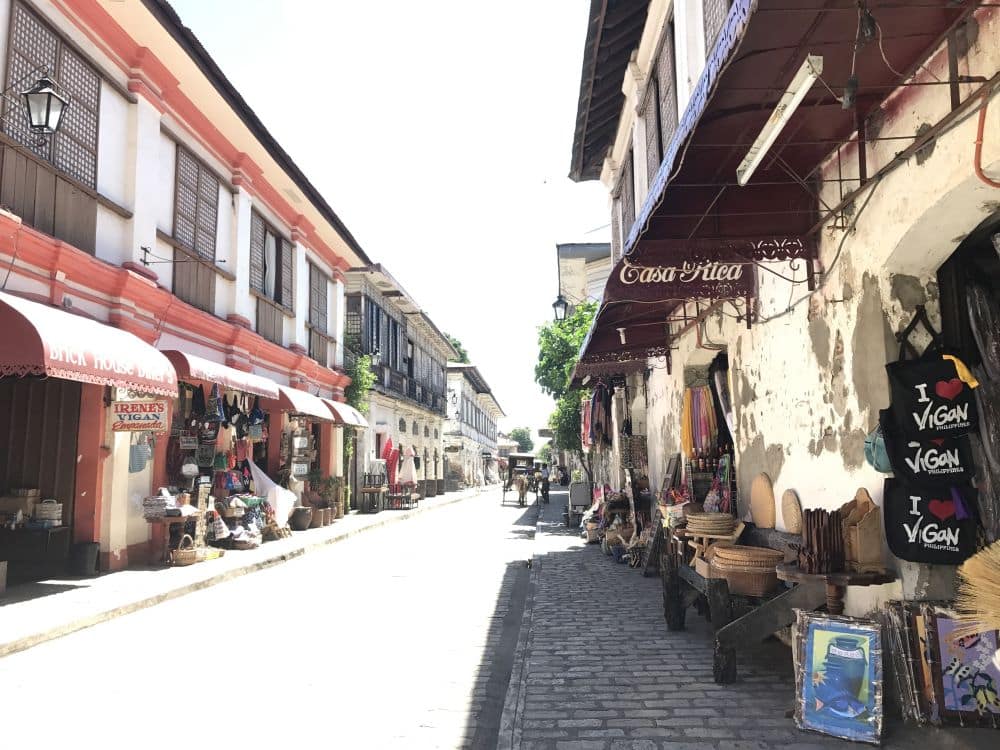
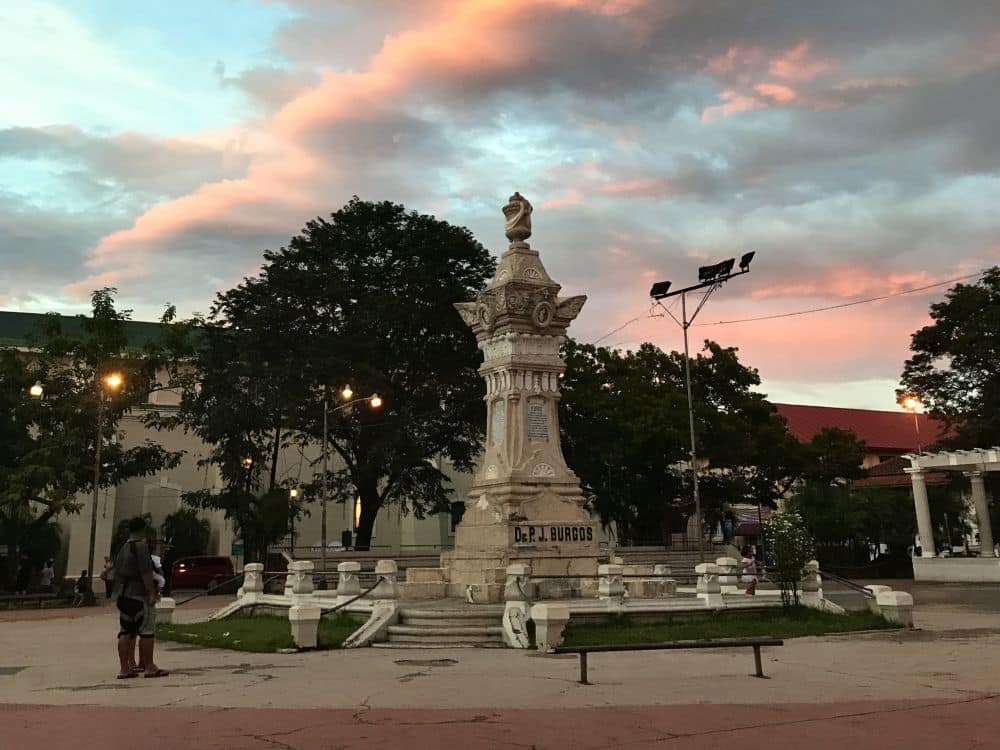
Burgos Street runs along the old town centre, passing by both plazas and the cathedral, the Ilocos National Museum of the Philippines, and onward out of the city. This area has the most historical landmarks and museums. Calle Crisologo and its adjacent streets run perpendicular to Burgos Street. Calle Crisologo is the main shopping street, as well as where you will find most restaurants.
Is Vigan worth visiting?
Apart from its architecture, shopping streets, and significant Philippine history, there aren’t many things to do in Vigan. The city retains its heritage elements, but it doesn’t seem like there’s a connected contemporary culture that maintains it as a living heritage (not uncommon in post-colonial, developing countries).
Considering its remote location relative to modern Philippine city centres (a whole day’s journey from Manila), it may be difficult to justify the journey to Vigan as the sole destination. This may change in future if there is a culture revival and better investment into the region.
Nonetheless, if you’re already resident in the Philippines, Vigan is a nice weekend trip to a charming old city where you can sample Ilocano cuisine and shop for crafts and antiques. Additionally, if you’re doing a road trip through Luzon, then Vigan makes sense as one of the stops on your itinerary.
Alternatively, take a multi-day tour. This two-day tour focuses on just Vigan City, while this three-day tour includes other parts of Ilocos as well. Both start and end in Manila.
What sorts of travelers would like Historic Vigan?
As an international destination, Vigan may best appeal to travelers interested in Spanish colonial settlements and Hispanic hybrid culture. The Philippines itself is the only such example in East and Southeast Asia, and Vigan is still the best living example of a Spanish colonial town and creolised culture.
Vigan may also appeal to those interested in Philippine independence history. Vigan has modern historical significance as the site of anti-colonial resistance during the Spanish as well as the modern independence era. Padre Burgos, a Philippine resistance figure, was a Vigan native, which is why the city has many references to him today. The National Museum is housed in his former home.
Tips for visiting the Historic City of Vigan
Weather in the northern Philippines is dominated by the monsoon and hurricane season. The monsoon season is between May and October, and is both the hot and wet season. If visiting in this season, pay attention to hurricane forecasts. While it may not affect Vigan itself, it may affect your connecting or travel route. The weather is both drier and cooler between December and February.
To get the most out of Vigan, stay inside the heritage area, in a hotel in one of the old shophouses or mansions. It is best to have cash in small bills. While the heritage area is walkable, trikes (motorcycles with a side car) are also a common way to get around, and to go to further locations around Vigan. Make sure to agree your fares in advance.
Use the map below, centered on the cathedral, to choose a hotel:
A visit to Vigan can be combined with a visit to the broader Ilocos region. Ilocano cuisine is well-regarded in the Philippines, albeit more suitable for non-vegetarians. Iconic examples include longganisa, pinakbet and empanada. Laoag, and Ilocos Norte in general, also has Spanish-era historical landmarks and local museums. Additionally, the Ilocos coastline has natural attractions such as sand dunes and geologic formations suitable for outdoor activities like ATV rides, sandboarding, and coastal hikes.
Other UNESCO sites nearby include the Church of San Agustin in Paoay, about an hour’s drive north of Vigan, and the Church of La Nuestra Senora de la Asuncion in Santa Maria, about 45 minutes south of Vigan. Both are parts of the UNESCO site Baroque Churches of the Philippines. Further away, but arguably a good stop between Manila and Vigan, are the UNESCO-listed Rice Terraces of the Philippine Cordilleras.
Where is the Historic City of Vigan?
Vigan is located in the province of Ilocos Sur, in the north of Luzon, the main island of the Philippines. It is about 400km (249mi) from Manila, and 85km (53mi) from the nearest airport in Laoag.
Getting there by air typically requires transit in Manila, even from elsewhere in the Philippines. Depending on your flight, you may need to have an overnight layover in Manila. From Laoag airport, you can take a taxi or trike to Vigan City. The journey is about 2 hours.
If you’re exploring Ilocos in general, and history is not an important feature of the trip, it’s also feasible to base yourself in Laoag and visit Vigan as an overnight or day trip, rather than the other way around. Book your accommodation in Laoag. Doing so places you closer to other attractions in the Ilocos region, saving a substantial amount of travel time.
If coming to Vigan as part of a road trip, you can still stay inside the heritage area. Just stay in a hotel that has parking amenities, as street parking is limited. Walk or hire trikes or kalesa within the city rather than drive.
You can also take a bus from Manila to Vigan City. This is a much longer journey, taking between 7 and 12 hours depending on various considerations such as whether you depart from the bus terminal in Pasay (near Manila airport) or in Cubao, and how many stops the bus makes along the route.
Have you been to Vigan? If so, do you have any additional information or advice about this UNESCO World Heritage site? Please add your comments below!
- About the author
- Posts by this author

Text and photos provided by Teja of Teja on the Horizon. Teja is an environmental scientist and a sustainable travel storyteller on a voyage for homes in a thousand strange places. Teja writes to inspire insightful travel.