
Archaeological Site of Philippi
By Teja
What is the Archaeological Site of Philippi?
The Archaeological Site of Philippi is the ruins of a city founded in 356 BC by Philip II, who was king of Macedonia as well as the father of Alexander the Great.
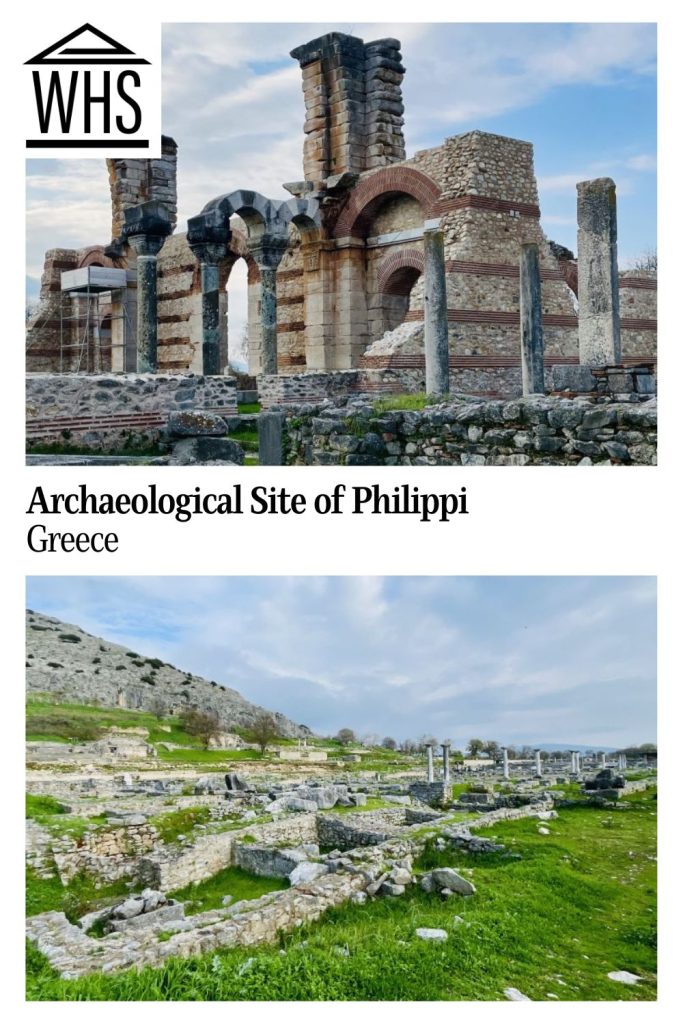
The city fell into neglect following the Roman conquest of Macedonia, but in the aftermath of the assassination of Julius Caesar, it was the site of the final battle between the forces of Mark Anthony and Octavian against Brutus and Cassius in 42 BC. The city regained its importance when it was absorbed into Rome, when the Via Egnatia – the Roman road crossing the length of northern Greece to Byzantium – was constructed to pass through Philippi.
Philippi is also significant to the history of the Christian church. This was where Saint Paul founded the first Christian church in Europe ca. 50 AD.
Disclosure: This article contains affiliate links. Making a purchase through an affiliate link will mean a small commission for this website. This will not affect your price. Privacy policy.
Why is Philippi a UNESCO World Heritage site?
Philippi is, according to UNESCO, “an exceptional testimony to the incorporation of regions into the Roman Empire, as demonstrated by the city’s layout and architecture as a colony resembling a ‘small Rome.'” At the same time, the remnants of early churches “are exceptional testimony to the early establishment and growth of Christianity.”
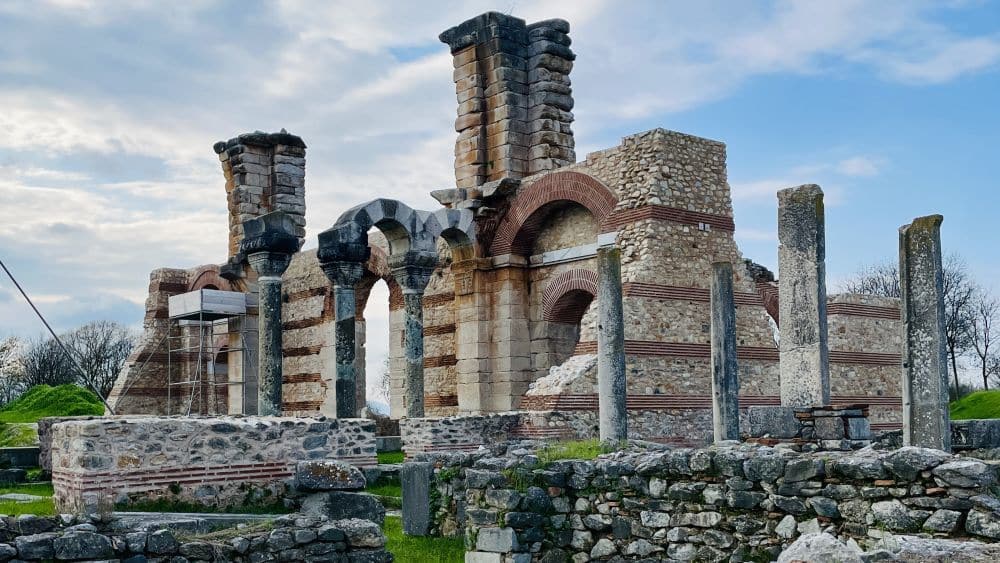
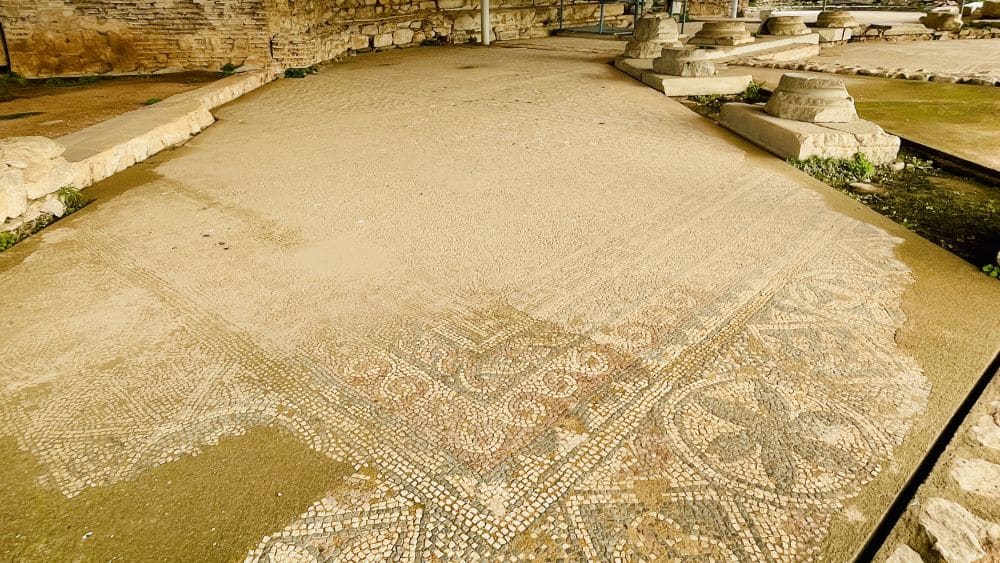
The city was destroyed by an earthquake in 620 AD and then abandoned. However, the layout and many of the building elements, including mosaics and inscriptions, remained intact, which contributed to its listing as a UNESCO World Heritage Site. The architecture includes elements that reflect both the Roman and the early Christian periods.
What can you expect on a visit to the Archaeological Site of Philippi?
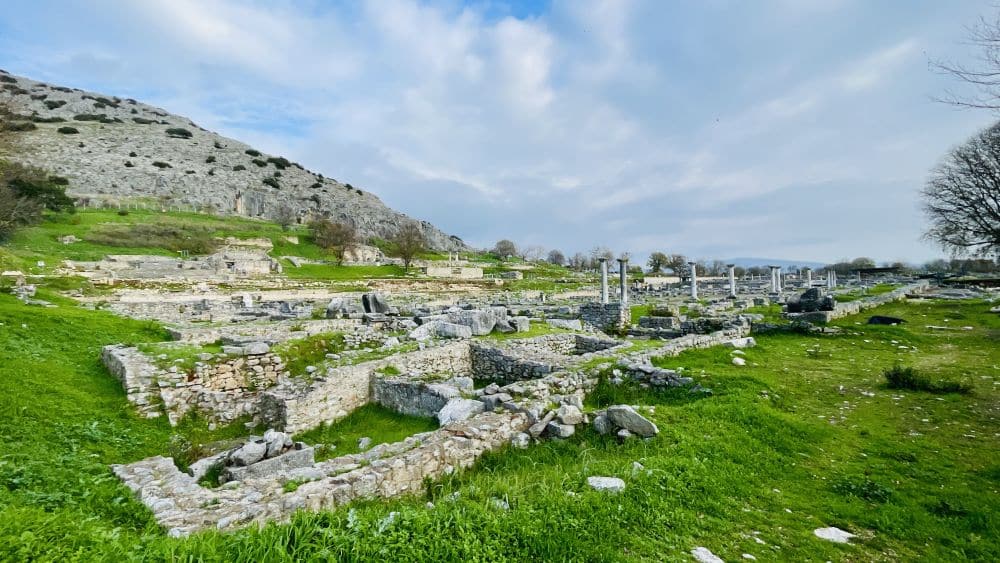
When you make a visit to the Archaeological Site of Philippi, you first enter a small garden area where the visitor amenities are. A path out from the garden leads to the actual archaeological site.
The first ruin you encounter is the Roman amphitheatre. The remains of the ancient agora and the later Christian buildings lie beyond.
The ruins have been left as they are, with minimal constructions for the visitor. The paths through the site are natural and probably original, but there is enough signage to help keep you on the correct route. Some information placards give a degree of information about each significant point of interest; a few are specifically about Biblical events related to Saint Paul.
Like most Greek cities, Philippi had an acropolis on the adjacent hill, which you can climb to get a view over the site. Finally, the Archaeological Museum of Philippi is located at the far end of the ruins. A small museum, it contains objects from the archaeological excavations at Philippi.
Is the Archaeological Site of Philippi worth visiting?
Unless you have a specific interest in early Christian history or Alexander the Great, it may not be worth detouring to northern Greece just to visit the ruins of Philippi (vs so many other UNESCO-listed ruins you could visit instead in Greece, such as the Acropolis in Athens or the ruins at Delphi, Olympia or Mycenae). However, if you are already going to the region, then it is one of several key sites in northern Greece, albeit not the most important one for either interest.
If you’re already in Thessaloniki or Kavala, then it may also be worth adding the Philippi archaeological site to even a general tourist itinerary. Philippi is also on the map for a couple of themed Greek tourism routes, such as the Culture Valley and the Route of St. Paul.
If Macedonian history and Alexander the Great interest you, consider adding the Archaeological Site of Aigai to your itinerary. This UNESCO site was the Macedonian capital for a time.
You should be able to go through the Archaeological Site of Philippi comfortably in less than half a day (suitable as a day trip from Kavala, or a longer one from Thessaloniki). Find accommodations in Kavala or Thessaloniki.
Tips for visiting the Archaeological Site of Philippi
The Baptistery of Saint Lydia is close to the ruins of Philippi. This is a holy Christian shrine, named after the first baptised Greek and European woman, who Saint Paul himself baptised. If you’re making a trip to the archaeological site, you could easily visit this shrine at the same time. While this tip is most applicable to Christians, it is an easy visit for anyone with a general interest in religious history.
The Philippi archaeological site is a little out of the way. This means that meal options are limited to light snacks at the onsite visitor centre. If you’re planning to have lunch on your day trip, the nearest options are in Krinides. Otherwise, you might want to bring a packed lunch to save time.
Unlike many tourist attractions in Greece, Philippi is less visited. So it is actually better to visit in the peak season than the winter season, because it wouldn’t be crowded either way. In the winter season, the museum opening days may be more limited (even if the site itself is open), which makes it harder to fit this site into your itinerary if you want to visit the museum as well.
The easiest way to see this part of Greece is by renting a car: compare prices here. If that’s not for you, consider a full-day group tour or private tour from Thessaloniki.
Where is the Archaeological Site of Philippi?
The Archaeological Site of Philippi is located northwest of the city of Kavala, about half an hour’s drive away. It is about 2.5 hours’ drive from Thessaloniki. Free parking is available onsite. The Philippi ruins are located next to the town of Krinides, and is not the same place as the modern town of Philippi, which is some distance away.
You can also take a bus from Kavala to the site. However, it is a little tricky because there isn’t a dedicated tourist bus. You have to take the KTEL bus (Greece’s bus company) to Drama with a route that passes through Krinides. KTEL is run regionally rather than centrally, and they each have separate websites. Unfortunately, the KTEL Kavala website is not very user-friendly, and you can’t make online bookings. Moreover, the bus schedule is only provided in Greek. Fortunately, the bus terminal itself is quite good, and it’s best to just ask for information there.
For more information about the Archaeological Site of Philippi, its opening hours and admission fees, see the official website of the Hellenic Ministry of Culture.
Have you been to Philippi? If so, do you have any additional information or advice about this UNESCO World Heritage site? Please add your comments below!
- About the author
- Posts by this author
Text and photos provided by Teja of Teja on the Horizon. Teja is an environmental scientist and a sustainable travel storyteller on a voyage for homes in a thousand strange places. Teja writes to inspire insightful travel.