
Historic City of Sucre

By Maggie McKneely
What is the Historic City of Sucre?
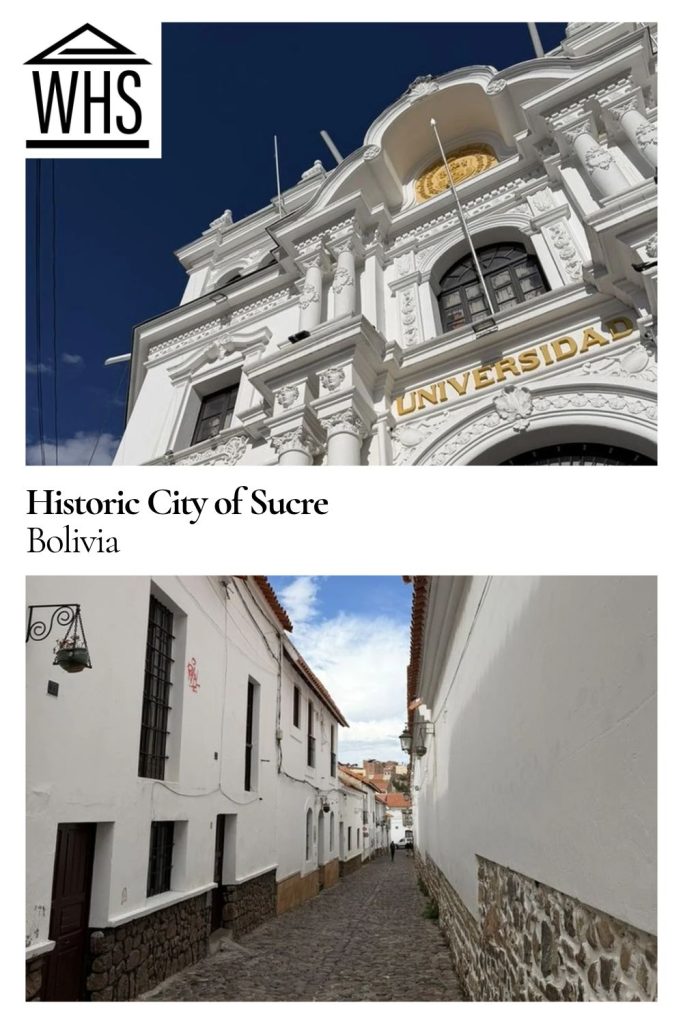
Sucre was the first capital of Bolivia, founded by the Spanish in the 16th century. Today, the city center is home to many well-preserved buildings dating to the city’s founding era, and they illustrate the blending of local architectural styles with those imported from Europe. It is still the official capital of Bolivia, and the Supreme Court is still based there, but the rest of the government is in La Paz.
Disclosure: This article contains affiliate links. Making a purchase through an affiliate link will mean a small commission for this website. This will not affect your price. Privacy policy.
Why is Sucre a UNESCO World Heritage site?
The Historic City of Sucre “is an excellent, intact and well-preserved illustration of the architectural blending achieved in Latin America through the assimilation of local traditions and styles imported from Europe,” according to UNESCO. The Spanish founded the city in 1538 as Ciudad de la Plata de la Nueva Toledo (Silver Town of New Toledo) on the lands of the Yampara. For centuries, it was the cultural, judicial, and religious center of the region. In 1839, the city was renamed in honor of Antonio Jose de Sucre, a leader who died in Bolivia’s fight for independence. At the same time, it became Bolivia’s capital.
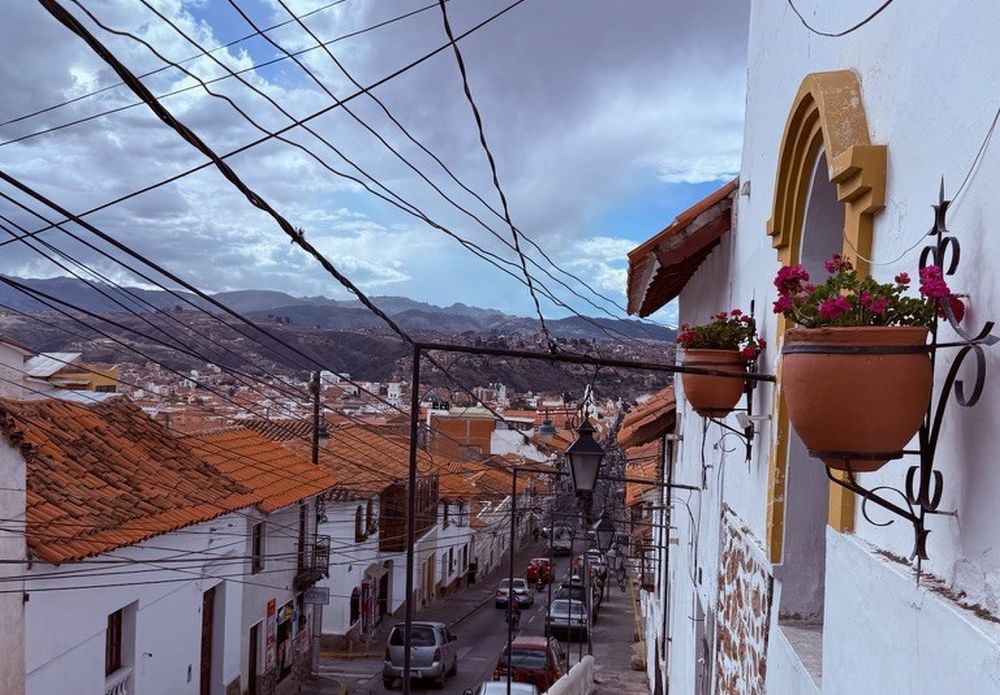
Many of Bolivia’s most important buildings are located in the heart of Sucre. The House of Freedom (1621) for example, is where the events leading to the revolution took place. Many of the country’s oldest and most important churches are here, as well as the nation’s oldest university. These structures have all been remarkably well-preserved and are a testament to Bolivia’s colonial history.
What can you expect on a visit to Sucre?
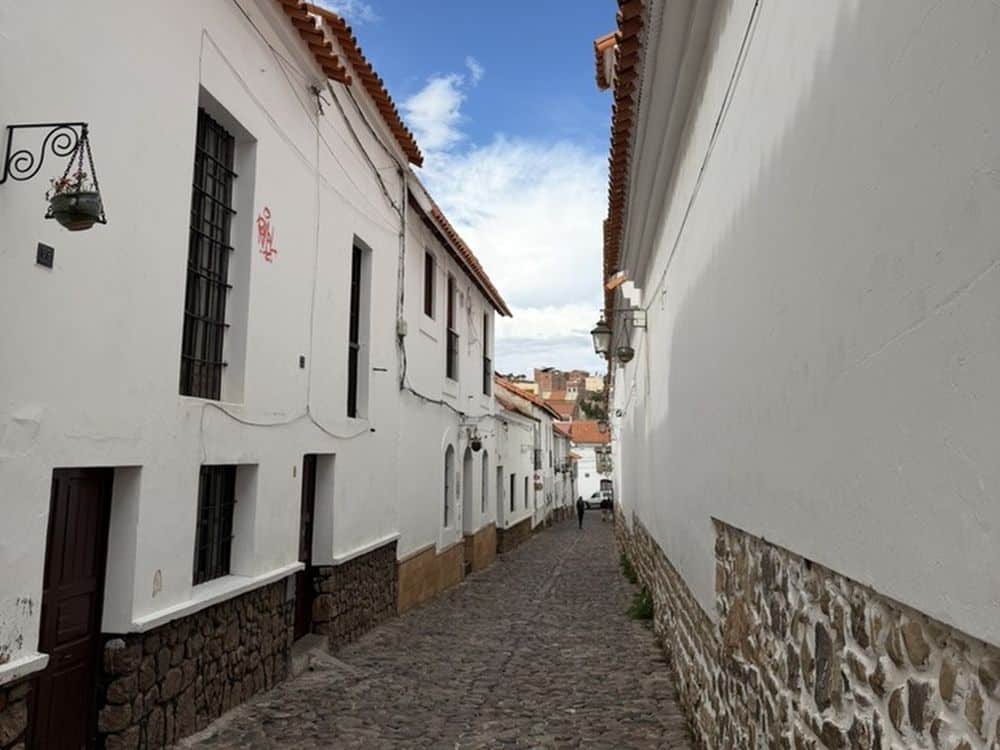
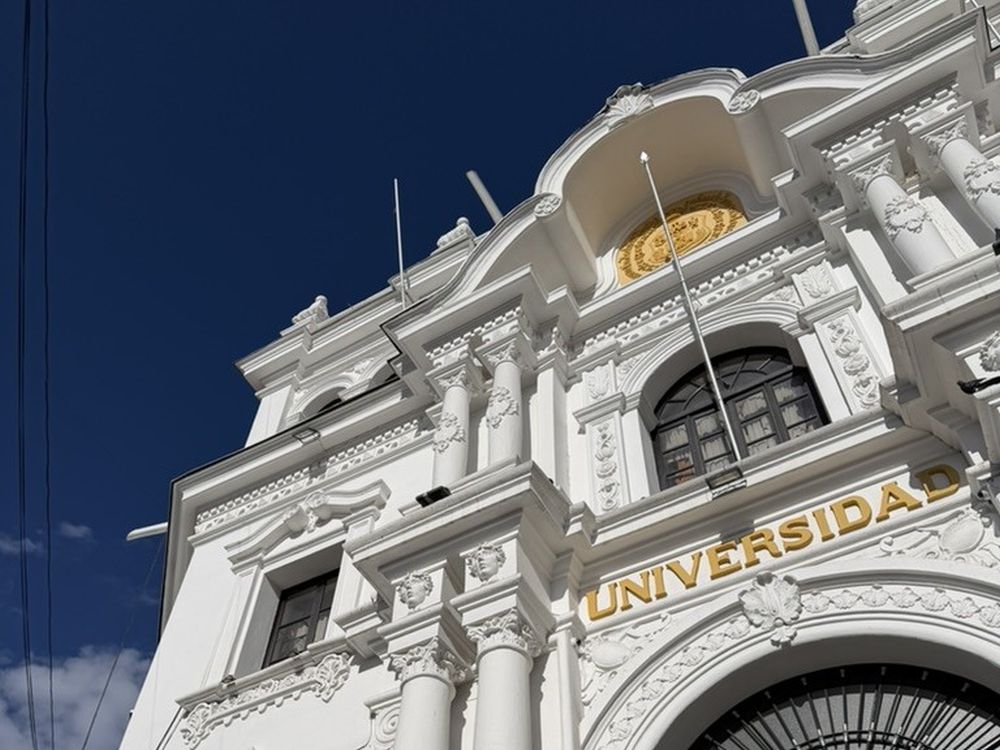
Today, Sucre is vibrant. Known as the “White City of Bolivia” for the white-painted historic structures, Sucre remains a beautiful testament to its colonial past and thriving commercial present. You can sip wine in one of the city’s cosmopolitan wine bars while listening to the bells of one of its 16th-century churches. You can stroll down an old cobblestone street and step into a high-end clothing store. A visit to Sucre makes you feel like you’ve been suddenly transported out of South America and directly onto the streets of a Spanish city.
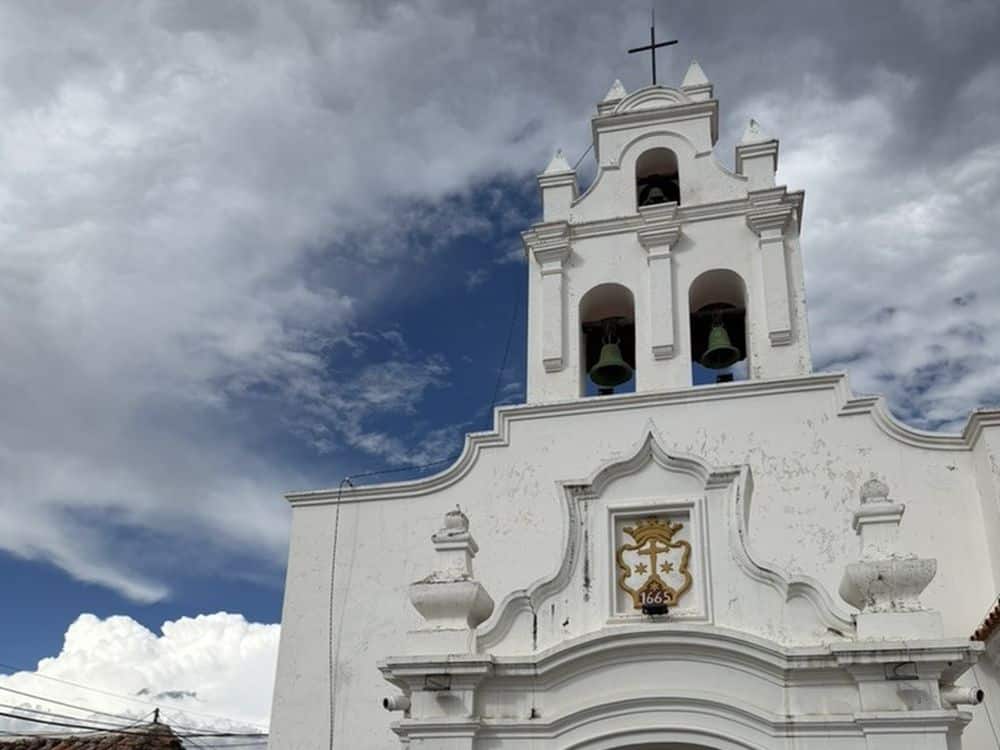
The historic city center includes many structures dating to the 16th century, including four churches – San Lázaro, San Francisco, Santo Domingo and the Metropolitan Cathedral – as well as the House of Freedom. Later buildings from the 17th to the early 19th century continued the pattern of blending local traditions with European architectural styles, so you’ll see elements of, for example, Renaissance, Gothic and Baroque architecture. The city’s street layout in the form of a simple grid was typical of cities founded by the Spanish in the colonial period.
Is Sucre worth visiting?
Absolutely! Sucre was one of my favorite places that I visited in Bolivia. The architecture is beautiful and the city itself feels far less chaotic than the rest of the country, especially compared to Bolivia’s other major city, La Paz. I recommend staying at least two days to really explore all that Sucre has to offer.
What sorts of travelers would like the Historic City of Sucre?
Sucre is a nice break from the general chaos that defines the rest of Bolivia. Anyone already visiting Bolivia will appreciate it, but it will appeal most to those who enjoy visiting historic buildings and eating good food. If you like wandering around the streets of Madrid, you will enjoy Sucre.
If you’re planning a road trip in Bolivia, first compare rental car prices.
Tips for visiting Sucre
Sucre does receive more tourists than other places in Bolivia, partly because it is a bit more tourist-friendly. That means it also attracts more street hawkers and petty theft. So just keep your wits about you and an eye on your personal belongings. It is otherwise completely safe!
Also be sure to have cash, as most market vendors and public transport only accept Bolivano coins.
Book your accommodations in Sucre, Bolivia. Use the map function to find places that are in or near to the oldest part of the city.
Consider taking a walking tour of Sucre or plan a day trip to other sights nearby.
The UNESCO-listed City of Potosí is about a 3 or 4-hour drive away from Sucre. Like Sucre, it’s a colonial-era city. Set high in the Andes, it was an important silver-mining town.
Where is the Historic City of Sucre?
Sucre is about 550 km (350 mi) southeast of La Paz.
Sucre has a small airport, so you can fly from La Paz or Santa Cruz de la Sierra. The flight is roughly 2 hours long. This is the easiest way to get from one Bolivian city to another, as roads can often be blocked due to weather or political protests.
If you don’t want to fly, you can take a public bus, which is the best public transportation in Bolivia, aside from flying. There are no trains. The bus from La Paz takes 10-12 hours.
For more information about Sucre, see the tourism office website.
Have you been to Sucre? If so, do you have any additional information or advice about this UNESCO World Heritage site? Please add your comments below!
- About the author
- Posts by this author

Text and photos provided by Maggie McKneely of Pink Caddy Travelogue. Maggie is a 30-something politico from Washington, DC, who always has one foot off the ground, looking for adventure. She works full-time in the Swamp but uses travel as a way to stay sane.