
Antigua Naval Dockyard and Related Archaeological Sites
By Temi Ifafore-Calfee
What is Antigua Naval Dockyard and Related Archaeological Sites?
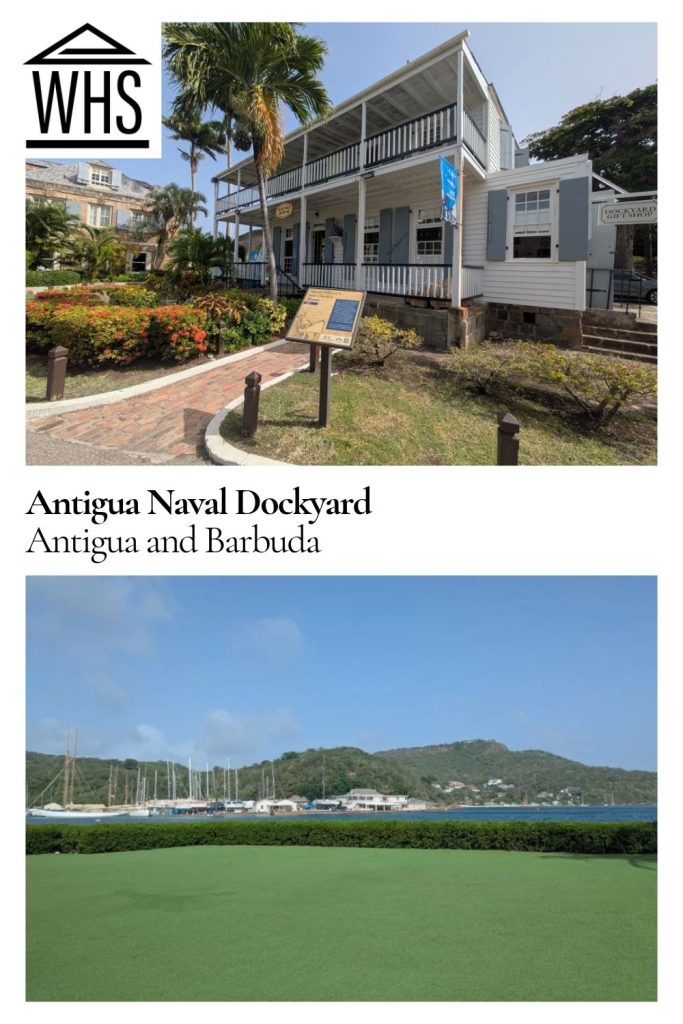
Known locally as Nelson’s Dockyard, the Antigua Naval Dockyard and Related Archaeological Sites is a beautifully preserved historic naval complex in English Harbour on the southern coast of Antigua. The site is part of Nelson’s Dockyard National Park and includes the restored Georgian-era naval buildings at the heart of the dockyard. Other related archaeological and military sites in the surrounding hills are part of the UNESCO site as well.
Disclosure: This article contains affiliate links. Making a purchase through an affiliate link will mean a small commission for this website. This will not affect your price. Privacy policy.
The location was strategically important to the British Royal Navy because English Harbour provided a naturally protected place to anchor ships. The deep, narrow harbor and surrounding hills offered protection from hurricanes and high seas. It also made the area an ideal place to repair and maintain ships. Today, the historic buildings sit alongside an active marina, restaurants, shops, hotels and other modern uses, creating an unusual combination of living history and contemporary Antigua.
I visited Nelson’s Dockyard with my aunt, who is from Antigua. I was on the island with my family exploring our own family heritage. My mother grew up in the Falmouth area, just a few miles from English Harbour. That made the visit feel particularly meaningful to me. I had visited Antigua as a child, but this was my first time returning to Nelson’s Dockyard as an adult and really taking the time to look at the place through a historical lens.
Why is Nelson’s Dockyard a UNESCO World Heritage site?
The Antigua Naval Dockyard became a UNESCO World Heritage Site in 2016. UNESCO recognizes the site for its importance as an “outstanding example of a Georgian naval facility in the Caribbean context,” as well as for what it demonstrates about the spread of British naval architecture, technology and military power throughout the Caribbean and the wider Commonwealth.
But the history of the dockyard is not simply a story about British naval power. UNESCO also explicitly recognizes the labor and skills of enslaved Africans, whose work was essential to constructing and operating the facility and, more broadly, to the development of the British Empire, trade and industrialization.
What can you expect on a visit to Antigua Naval Dockyard?
My first impression when I walked into Nelson’s Dockyard was simply: this place is beautiful.
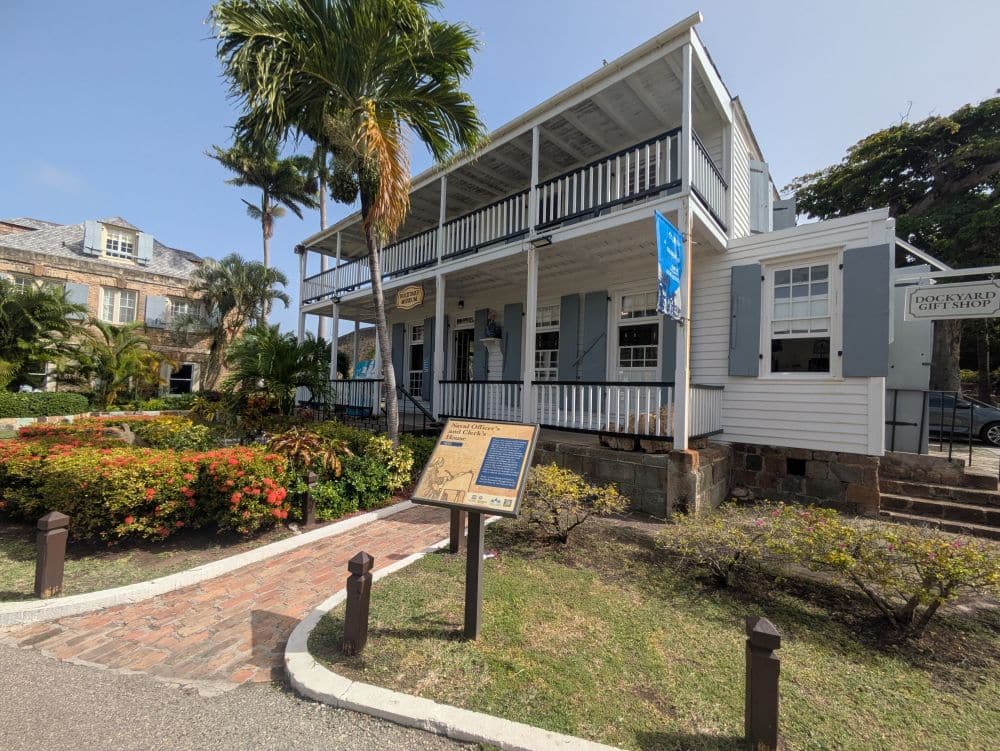
There is a stone-lined corridor as you enter, and walking through it really did feel like walking back in time. The historic buildings are remarkably well maintained, and the setting, with the stone architecture, green landscape and harbor beyond, makes it easy to understand why this was such an important location.
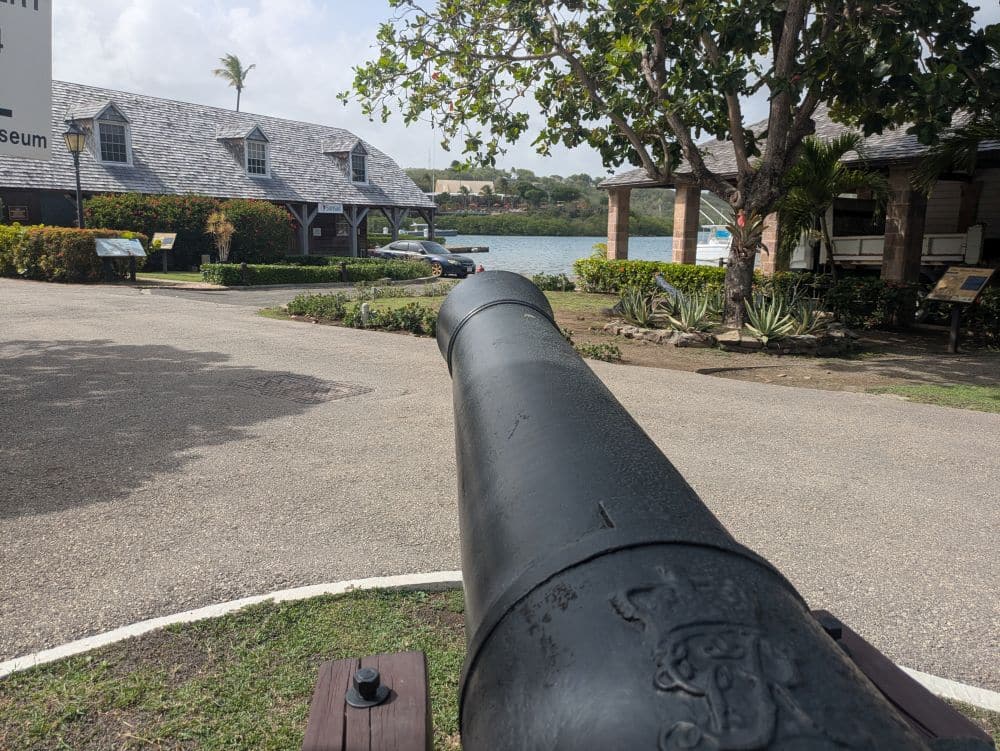
At first, I expected something more like Colonial Williamsburg: a historic site where everything had been preserved to recreate the past. What I found was quite different. Nelson’s Dockyard has been restored and repurposed, and many of the historic buildings now have modern uses. There are restaurants, gift shops, hotels and other businesses operating within the historic structures. The marina is still active, so you can look at centuries-old buildings while watching boats come and go from English Harbour.
For me, the most interesting part was the Dockyard Museum and the historical interpretation throughout the site. The exhibits explain the naval importance of the Dockyard, but they also try to give visitors a sense of what everyday life here would have been like. There is discussion of the heat and difficult working conditions, the hierarchy within the British naval system, and the different people who lived and worked in this community. You begin to understand that this wasn’t simply a grand military installation. It was a working place, and a significant portion of the people who made it function were laborers.
The increasing attention to the history of enslaved Africans particularly interested me. I visited Antigua as a child, and I don’t remember seeing nearly as much emphasis on that history then. Returning as an adult, I could see that the interpretation has evolved to acknowledge more explicitly the people whose labor created and sustained the Dockyard. After all, the whole point of the Dockyard “was to protect the interests of sugar cane planters at a time when European powers were competing for control of the Eastern Caribbean,” according to UNESCO. Enslaved people were what made those sugar plantations profitable.
One detail that stayed with me was the interpretation around the grinding holes. These were places where enslaved people of African descent would grind spices and food. It was a small but meaningful reminder that the people who worked here brought their own cultures, knowledge and traditions with them. I appreciated seeing that history incorporated into the story of the Dockyard rather than treating the people who built it as simply an anonymous labor force.
The site also made me think about the sheer reach of the British Empire. Standing there, I kept thinking about how extensive that empire was and the enormous effort required to maintain its position. That effort depended on tremendous amounts of both material and human resources. Nelson’s Dockyard makes that history tangible in a way that reading about it in a textbook simply cannot.
The “Related Archaeological Sites” are military structures in the hills around the Dockyard. They have not been restored or preserved, so for now they are just ruins and archaeological sites.
Is Nelson’s Dockyard worth visiting?
Yes, especially if you enjoy history, naval history, architecture or UNESCO World Heritage Sites.
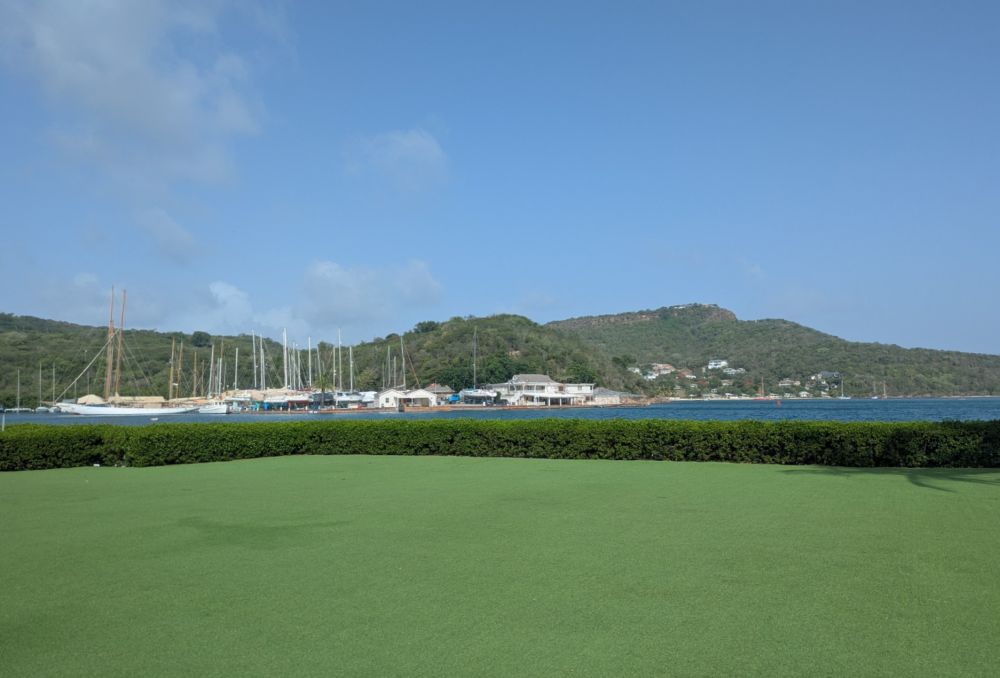
I would not necessarily plan an entire day around Nelson’s Dockyard, however. I spent about an hour there and felt that I got a good introduction to the site. If you want to read the exhibits carefully and explore more of the surrounding area, I would allow about 1 to 1½ hours for the Dockyard itself. Don’t miss the back veranda of the historic complex. The view over the harbor is beautiful, calm, and expansive. When I visited, the space appeared to be used for events, but visitors can walk out toward the marina and take in the water and surrounding hills. It was one of my favorite moments of the visit.
What sorts of travelers would like Nelson’s Dockyard?
Nelson’s Dockyard is particularly well suited to history buffs, travelers interested in British and Caribbean history, people fascinated by naval history, architecture lovers, and travelers who enjoy visiting UNESCO World Heritage Sites.
I also saw several families with children during my visit. While families can certainly visit, I would describe this as more of an adult-oriented historical attraction. Many of the exhibits require a fair amount of reading, and there isn’t a lot of interactive programming aimed at young children. Older children and teenagers who are interested in history would probably get much more out of it than very young kids.
Take a half-day historical tour of Antigua.
Tips for visiting Nelson’s Dockyard
Give yourself at least an hour. If you’re a serious history enthusiast who likes to read every exhibit, allow closer to 1½ hours.
Don’t skip the museum. The exhibits add context that you won’t necessarily get simply by walking among the buildings.
Walk toward the water. The views from the back veranda and marina are beautiful and offer a completely different perspective on the site.
Consider combining the visit with other sites in Nelson’s Dockyard National Park. The same National Park encompasses other historical and natural attractions, including Shirley Heights – a former military lookout point – and the Dow’s Hill Interpretation Centre, which is a history museum that offers tours of some of the ruins.
Book accommodations either in Antigua Naval Dockyard or nearby.
Where is Nelson’s Dockyard?
Nelson’s Dockyard is located in English Harbour, Antigua, on the southern coast of the island. The official address provided by the National Parks Authority is English Harbour, Antigua.
Parking was very easy and available near the entrance.
For visitors coming from St. John’s, Bus 17 provides public transportation to English Harbour and Nelson’s Dockyard. Current travel information lists the journey at roughly 45 minutes to an hour, depending on traffic and conditions. The bus departs from St. John’s West Bus Station Terminal and stops at Nelson’s Dockyard before continuing into English Harbour.
For more information about Nelson’s Dockyard, its opening hours and admission fees, see its official website.
Have you been to Nelson’s Dockyard? If so, do you have any additional information or advice about this UNESCO World Heritage site? Please add your comments below!