
Historical Monuments of Mtskheta
By Baia
What are the Historical Monuments of Mtskheta?
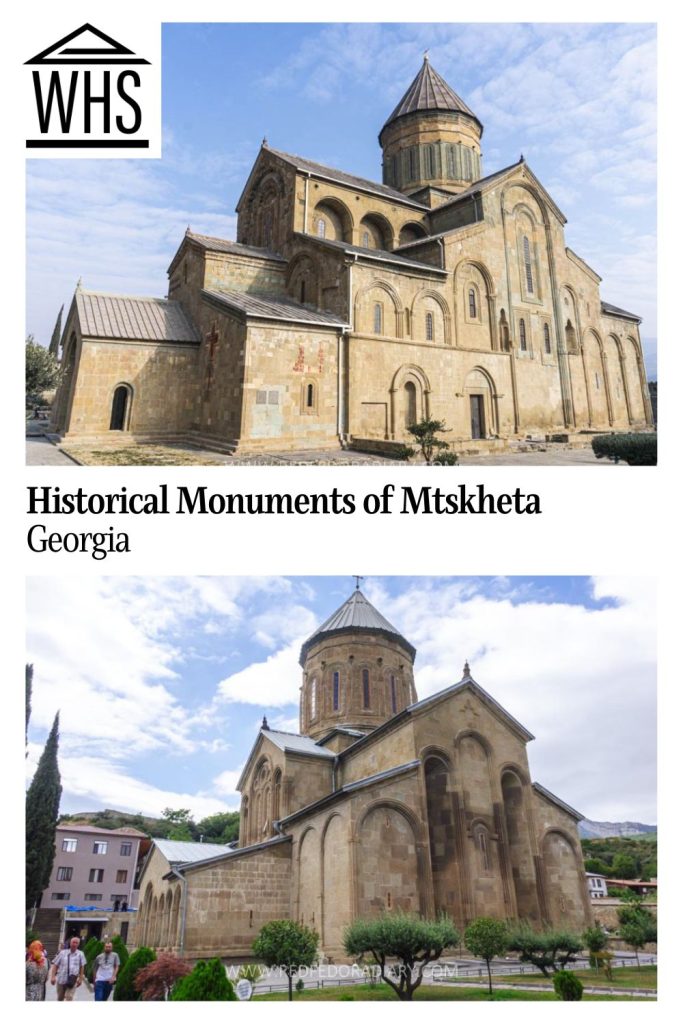
The Historical Monuments of Mtskheta are a group of Georgia’s three most important medieval religious sites, located in and around the former capital of Mtskheta, about 20 km northwest of Tbilisi. Inscribed on the UNESCO World Heritage List in 1994, these monuments reflect the early development of Christianity in Georgia and the architectural achievements of the ancient Kingdom of Kartli.
Disclosure: This article contains affiliate links. Making a purchase through an affiliate link will mean a small commission for this website. This will not affect your price. Privacy policy.
Jvari Monastery
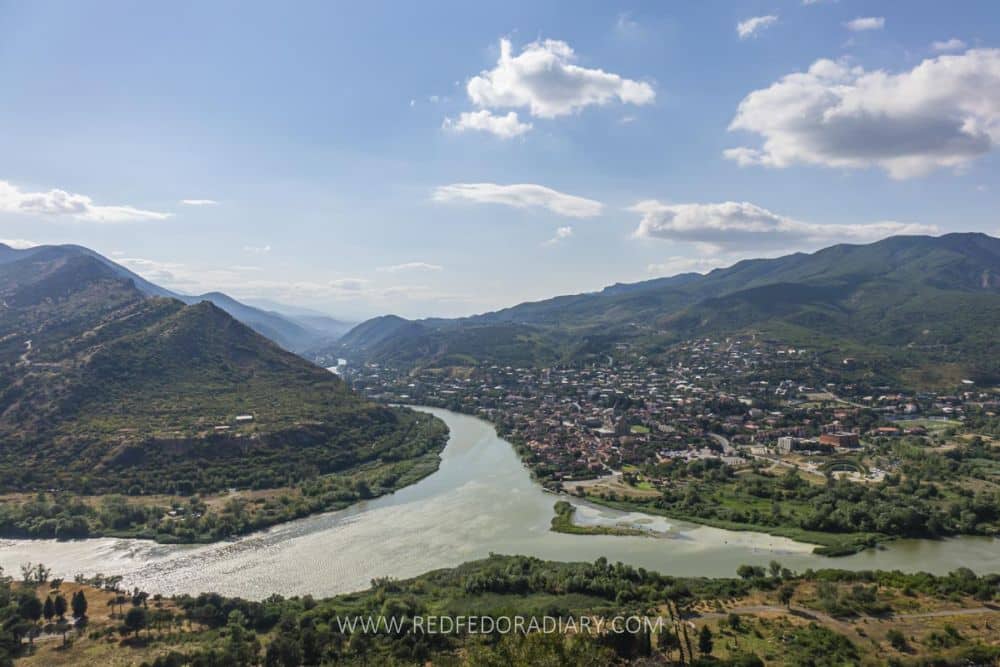
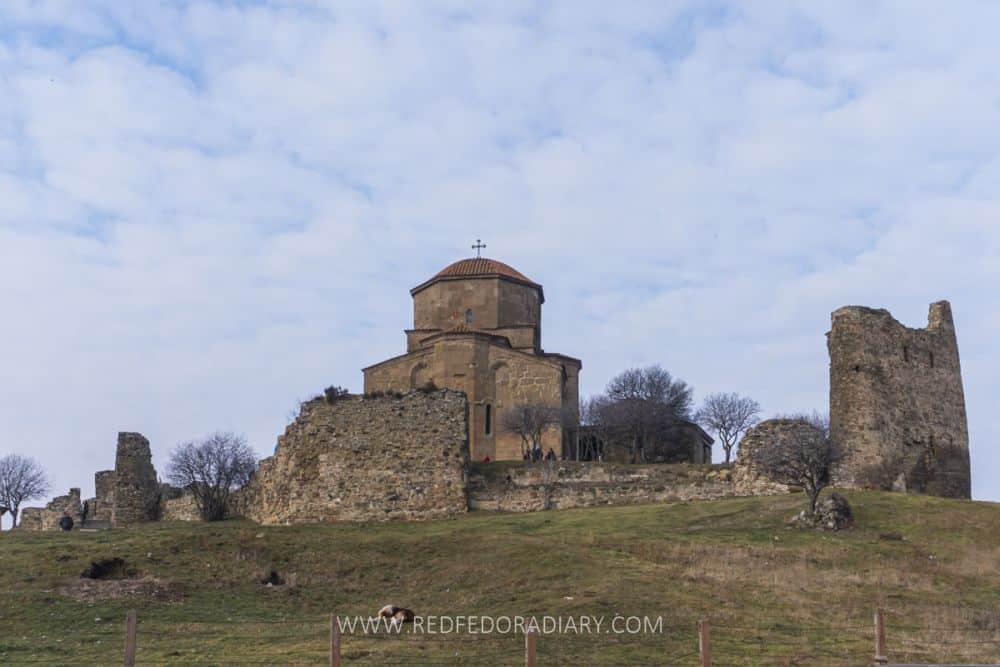
Perched on a hill overlooking the confluence of the Aragvi and Mtkvari rivers, Jvari Monastery is one of Georgia’s most iconic landmarks. Built in the 6th century, it marks the place where Saint Nino erected a wooden cross after the adoption of Christianity. The monastery’s simple cruciform design became a model for later Georgian church architecture.
Svetitskhoveli Cathedral
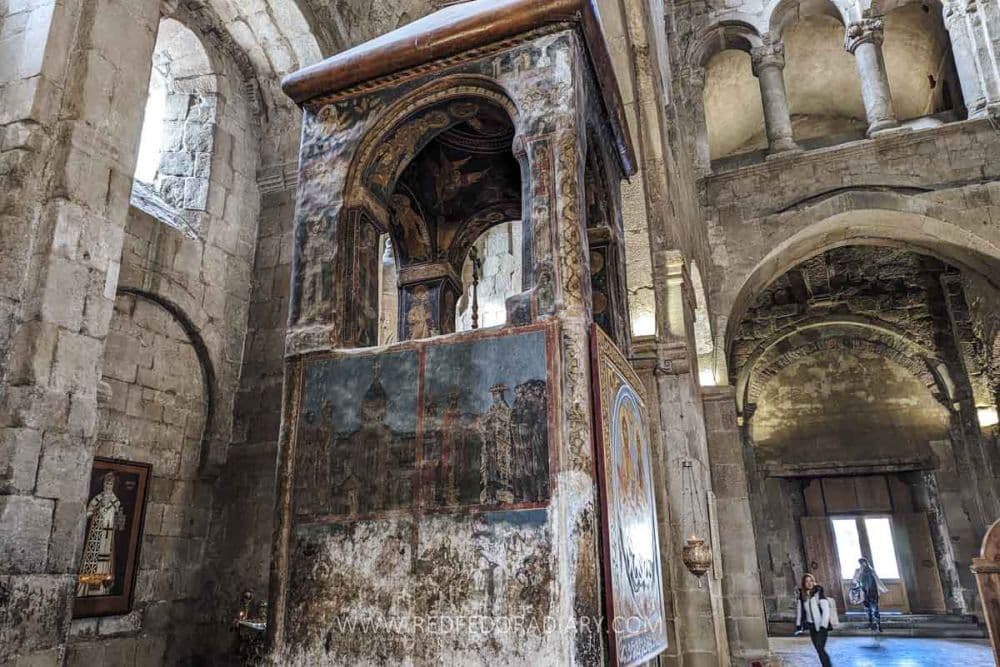
Located in the heart of Mtskheta, Svetitskhoveli Cathedral is considered the most sacred church in Georgia. The current structure dates back to the 11th century and stands on the site of earlier churches from the 4th and 5th centuries. The cathedral complex includes defensive walls and gates. Its interior preserves fragments of medieval wall paintings and rich stone carvings from different periods.
Samtavro Monastery
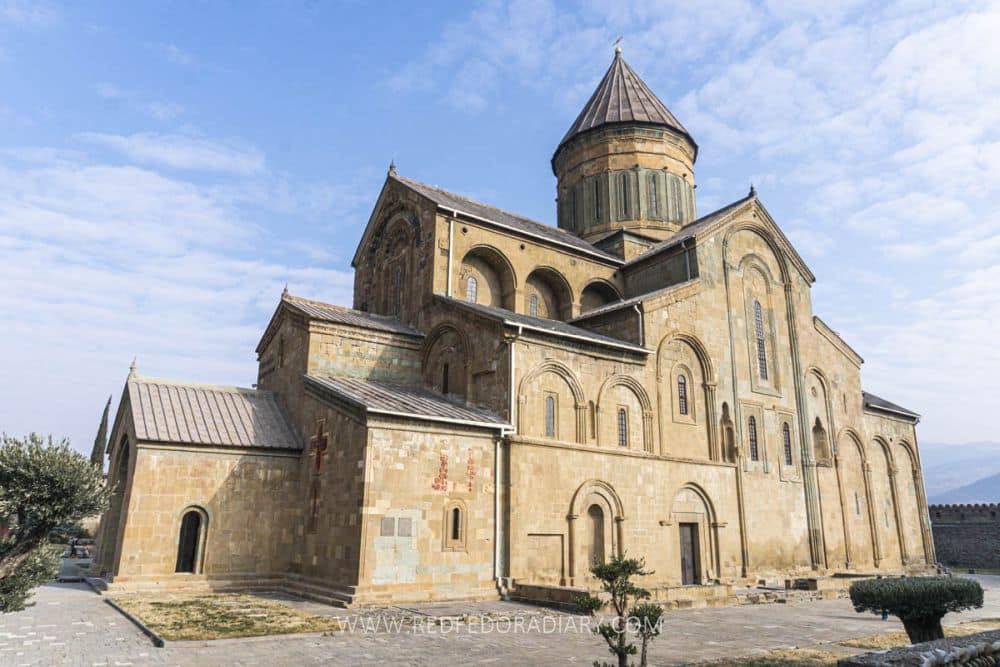
The Samtavro Monastery complex, located a few minutes from Svetitskhoveli Cathedral, includes a small domed church, initially built in the 4th century, and a larger cathedral from the early 11th century. It is especially significant as the burial place of King Mirian III, who proclaimed Christianity as Georgia’s official religion.
Why are these monuments a UNESCO World Heritage Site?
The Historical Monuments of Mtskheta have an outstanding role in the cultural, architectural, and religious history of the Caucasus. Together, all these sights illustrate the early spread of Christianity in Georgia. In addition, they showcase the evolution of medieval ecclesiastical architecture from the 4th to the 11th centuries.
UNESCO describes the site as bearing “testimony to the high level of art and culture of the vanished Kingdom of Georgia” and as an exceptional example of how religious architecture developed in harmony with its natural and urban setting.
What can you expect on a visit to these monuments of Mtskheta?
Visiting Mtskheta feels like stepping into the core of Georgia’s history and faith. It’s a former capital of the ancient Kingdom of Kartli in Eastern Georgia and it’s the place where Christianity was adopted as the state religion in the year 337. In 2014, it was declared a Holy City and remains the headquarters of the Georgian Orthodox Church.
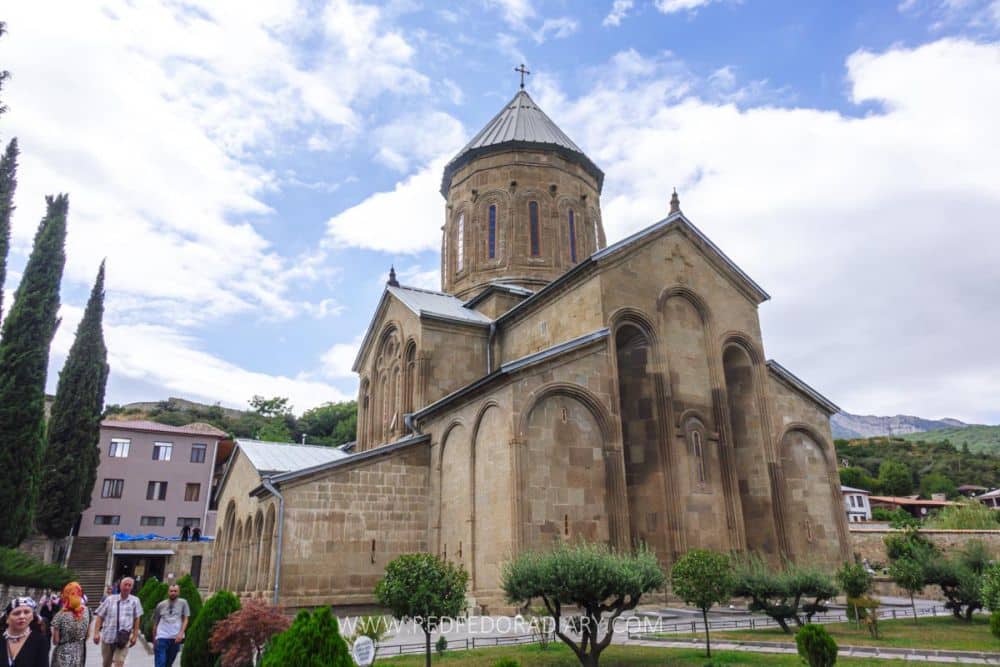
The town is compact and easy to explore on foot, with Svetiskhoveli Cathedral and Samtavro Monastery being the prime highlights and landmarks. You’ll need a car or a taxi ride to visit Jvari Monastery.
Are the Historical Monuments of Mtskheta worth visiting?
Mtskheta is worth making time for, as it is one of the most meaningful cultural stops. It offers insight into Georgia’s identity that goes beyond architecture alone and is an easy trip from Tbilisi. Here’s a bit of a summary of each sight and why it is worth visiting:
Svetitskhoveli Cathedral
This is the main reason most travelers come to Mtskheta. It is Georgia’s most important church because the Holy Tunic of Christ is believed to be buried beneath the cathedral, making it a primary pilgrimage site.
For centuries, it served as the coronation and burial place of Georgian kings. Several royal tombs can still be seen inside.
The cathedral is also one of the finest examples of medieval Georgian architecture. Although many of its original wall paintings were lost in the 19th century, the surviving 13th-century frescoes include rare apocalyptic scenes and zodiac imagery.
Samtavro Monastery
Samtavro Monastery is worth visiting for its direct connection to the very beginnings of Christianity in Georgia. This is where King Mirian III and Queen Nana, the first Christian rulers of the country, are buried. Compared to Svetitskhoveli, Samtavro feels quieter and slightly more intimate.
The monastery is also an important pilgrimage site due to its association with Saint Gabriel, one of Georgia’s most beloved modern monks. Saint Gabriel’s grave lies in the courtyard and continues to attract worshippers from across the country.
Jvari Monastery
Built in the 6th century on the hill above Mtskheta, it marks the place where Saint Nino erected a wooden cross after converting Georgia to Christianity. This makes Jvari one of the earliest Christian sites in the country and the second-most-visited church after Svetitskhoveli.
The monastery is also a landmark of Georgian architecture, giving rise to the so-called “Jvari type” church design, which influenced religious buildings across the region.
Inside, the structure remains simple and austere, directing attention outward to the view over the confluence of the Aragvi and Mtkvari rivers, one of the most iconic landscapes in Georgia.
What sorts of travelers would like the Historical Monuments of Mtskheta?
Mtskheta appeals most to travelers interested in history, religion, and cultural heritage, especially those curious about Georgia’s Christian roots and early religious architecture. It’s an ideal stop for visitors who enjoy former capitals and UNESCO World Heritage Sites.
Thanks to its location just outside Tbilisi and its compact layout, Mtskheta is also perfect for those looking for an easy half-day trip with minimal travel time or physical effort.
Book your hotel in Tbilisi or stay in Mtskheta.
Tips for visiting Mtskheta
You’re likely to spend most of your time in Mtskheta inside churches and monastery grounds, so dressing respectfully is essential. Long pants or skirts below the knee and covered shoulders are expected, and women should carry a scarf to cover their heads when entering religious spaces. Some churches provide spare scarves at the entrance, but it’s better to bring your own.
In warmer months, pack a reusable water bottle; the heat can be intense, especially around midday. While there are kiosks and small shops selling snacks and drinks, having water on hand makes walking between sites more comfortable.
Keeping small cash on hand is also useful, as candles and donation boxes in churches usually require coins. Market stalls around town often don’t accept cards.
Mtskheta pairs well with other nearby sights such as the Shio-Mgvime Monastery complex in the surrounding hills, or a short walk through the ruins of Bebristsikhe fortress.
Another option is to take a tour from Tbilisi, which includes visiting all three parts of this UNESCO site.
Consider renting a car to visit more of the country, including other UNESCO sites like the Upper Svaneti region, with its well-preserved medieval towns.
Where are the Historical Monuments of Mtskheta?
Mtskheta is located about 20 km (12.4 mi) northwest of Tbilisi, at the confluence of the Aragvi and Mtkvari rivers. Thanks to its proximity to the capital, Mtskheta is one of the easiest and most popular day trips in Georgia.
By car: The drive from Tbilisi takes about 25–60 minutes, depending on traffic and your starting point. The route follows well-paved roads and is suitable for all car types. Parking in the center can be limited, especially during weekends and holidays. However, there are paid parking lots near the main sights where you can leave your car securely. Compare rental car prices here.
By public transport: Budget travelers can take a marshrutka (minibus) from Didube Station in Tbilisi. Vans depart frequently, usually every 20–30 minutes, starting from around 8:00 am. The journey takes 25-35 minutes, depending on the traffic, and costs about 2 GEL. On the way back, you can flag down a marshrutka to Tbilisi in Mtskheta’s town center.
For more information about the Historical Monuments of Mtskheta, including opening hours, fees, visitor center locations, and contact information, visit the Georgian National Tourism Administration’s website.
Have you been to Mtskheta? If so, do you have any additional information or advice about this UNESCO World Heritage site? Please add your comments below!